



Delaney Rebernik|Analysis, Essays
September 8, 2025
A story of bad experiential design
We may be in an era of bad experiential design.
Consider “Willy’s Chocolate Experience” in Glasgow, Scotland, early last year. For £35 a ticket, attendees were promised a “full immersive experience” of Willy Wonka-themed “imagination and wonder” — and treated to a two-minute tour through a sparsely appointed warehouse.
Unable to make sense of a script rife with “AI-generated gibberish,” actors playing canonical (and horrifyingly original) characters from the world of Willy Wonka vamped, trying to sate befuddled children with a quarter-cup of lemonade and several loose jellybeans a piece.
A Bridgerton-inspired ball in Detroit last fall had organizers touting “an evening of sophistication, grace, and historical charm” on a since-deleted website and delivering instead cheap decor, raw food, and confused performances from a pole dancer and sole violinist.
Romantasy convention “A Million Lives” — quickly rebranded as “A Million Lies” and “the Fyre Fest of Book Festivals” thanks to viral videos like this one — hit Baltimore this May. The participants milled about in a cafeteria devoid of any decoration, save for equally spaced rose petals lining otherwise barren tables. Many vendors and attendees paid hundreds of dollars for the privilege. One planned her pregnancy around it.
Bad as they may be, these experiences mark the growing merger of our digital and physical realms — between promises made on phone screens and their real-world manifestations.
“Increasingly, the same instincts that drive us to scroll, post, and perform online are shaping how we move through immersive environments,” writes experience designer Lou Pizant for Blooloop. “Main character energy experiences and social platforms are now evolving in the same cultural petri dish. Built by the same UX minds. Driven by the same dopamine economics. Optimized for the same user need: to feel seen, affirmed, and maybe even storied.”
Today’s “Big Think” has me pondering these blurred lines between bravado and aptitude.
Penned by DO’s editor-in-chief Ellen McGirt and featuring perspectives of prominent (ex-)government designers, it covers the America by Design website — the much-maligned result of President Trump’s recent executive order to “breath[e] new life into the design of sites where people interface with their Government.”
I won’t bury the lede, the website is very bad. But this is more insidious than an inability to deliver entertainment to befuddled attendees.
Digital services are the online face of a functioning government, meant to shepherd citizens safely through the real world their tax dollars help pay for. Safe roads, clean water, better schools, better health, and governance by the people.
While Willy Wonka fans may have been bamboozled, don’t let the site fool you.
Features like the gargantuan sans serif below a flapping American flag are no accident, according to Ethan Marcotte, web designer and recent guest of The Design of Business | The Business of Design podcast. He says that the site’s text and design is shaped by “The authoritarian impulse — to erase histories, to control a narrative, to single-mindedly focus on image and aesthetics.”
Creating successful immersive experiences is much harder than people think. I’m willing to spare a thought for self-taught party planners who will continue to try turning their storyboarded ideas into an event that is likely to turn them into the main character of someone else’s nightmare.
Design has long played a vital role in government and democracy, and is easy to miss in the dopamine era. While it may be hard to tell from an invitation how bad the party is going to be, the America By Design site promises to deliver a bad experience by design.
Wishing you a scam- and scroll-free week ahead,
Delaney Rebernik
Executive Editor
Delaney@designobservercombigscoots-stagingcom-cn.b.tempurl.cc
LinkedIn
Bluesky
This edition of The Observatory was edited by Rachel Paese and Ellen McGirt.
The Big Think
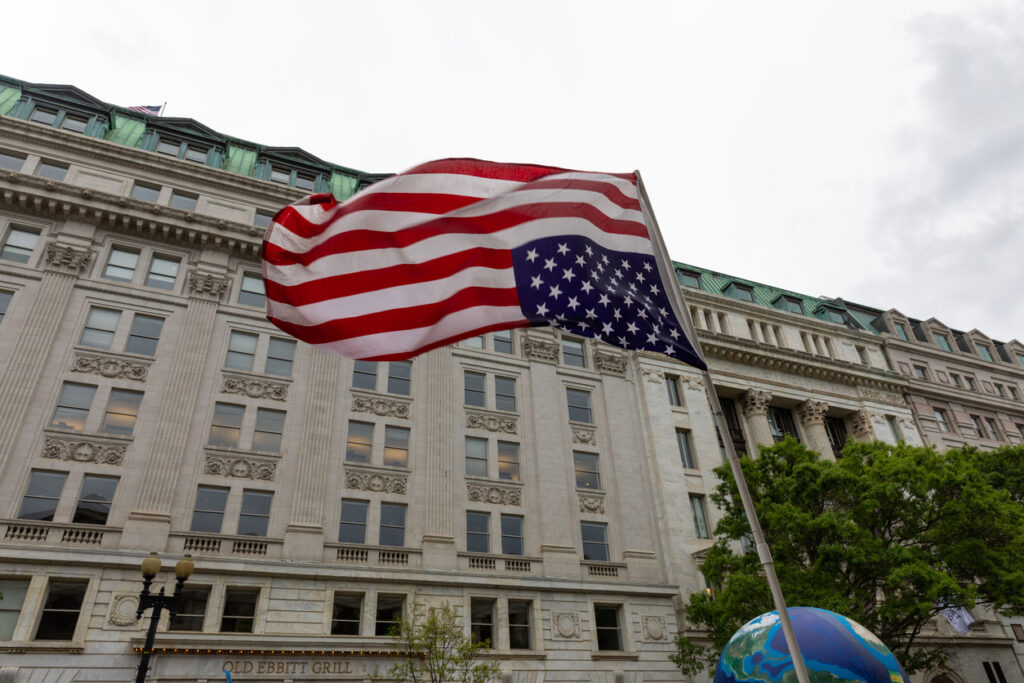
The site announcing America’s new design studio is a hot mess. That’s a clue.
President Trump’s recent executive order creates the “America by Design” initiative, which purports to “breath[e] new life into the design of sites where people interface with their Government.”
It elicited an immediate response from the design community. Starting with critiques of the website itself.
“How did you manage to fail so epically at making the most basic website?” AmericaByDesign.Fail asks in large font, beneath an undulating upside-down American flag. “Do you know that beautiful design is more than graphics? That it must also be usable, clear, and accessible?”
The Long Form
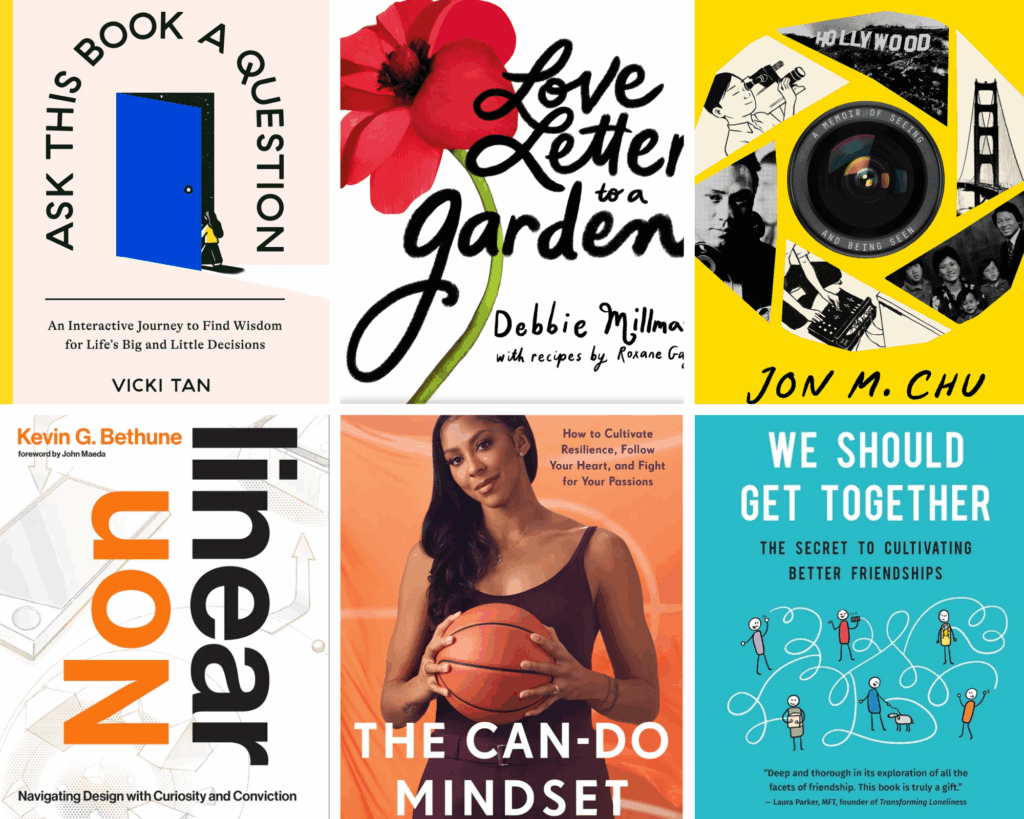
We’re launching an ongoing series of curated reading lists from the designers, leaders, and thinkers who shape conversations at Design Observer.
For this inaugural reading list, “The best books for designing a better life,” seven outstanding designers get personal, using research, memoir, and choose-your-own-adventure style prompts to help readers become happier, more authentic and connected versions of themselves.
A community of makers thrives on ideas; let’s read and thrive and build together.
Find the full list on our Bookshop.org shop, where proceeds from book sales support local booksellers and our editorial programs.
Happy reading!
Some Fine Print
Here’s a sampling of our latest and greatest from the Design Observer editorial and contributor network.
The airport as borderland: gateways for some, barriers for others.Airports launch billions of passenger journeys each year, but for people displaced, they can become prisons. Designing for these liminal spaces means tapping into their potential not just for streamlined travel, but also for sanctuary.
Say it with your chest: WNBA players fight for pay and justice on their t-shirts.Earning just 9% of league revenue, players push for fairness on and off the court. By Alexis Haut.
Introducing ‘AI Observer’ A new channel to meet the moment we’re in, using the tools we’ve always relied on: reporting, conversation, critique, context, discernment, community, and play. By Ellen McGirt.
What’s money for? A column about wealth, power, and purpose. By Tom Haslett.
Curious Clicks
Shoutout to these archival gems you’ve somehow resurfaced and been reading en masse lately. (Srsly how? And ty.)
How Shepard Fairey’s HOPE Poster Helped Elect Donald Trump.By Christopher Simmons.
Five Years of 100 Days.By Michael Bierut.
Her Story Meets His Story: Janet Bennett, Charles Kratka, and the Long Road to Credit at LAX. By Louise Sandhaus.
An Archive of Czech Film Posters.By John Foster.
Observed
What are you observing? Tell us.
Congratulations to designer Michael Anastassiades, who has been awarded this year’s London Design Medal. Other honorees include architect Norman Foster, activist Sinéad Burke, and emerging designer Rio Kobayashi.
Actor Jonathan Bailey plans to take a break from acting after Wicked: For Good drops this November. “With everything happening in the world right now, I’m going to stop acting for a bit next year and just focus on The Shameless Fund,” he says. The fund is a UK-based nonprofit dedicated to raising funds to combat anti-LBGTQ+ laws worldwide.
Taking fashion risks at the VMAs is often the best part of the show, she said, remembering Lady Gaga’s meat dress with nostalgia. (Tip of the hat to Ice Spice’s Bridgerton-inspired look.)
Turns out, AI dampens productivity. Also, it’s propping up the economy in an alarming way. “On the one hand, the United States is undergoing an extraordinary, AI-fueled economic boom,” writes Rogé Karma in the Atlantic. “On the other hand, evidence is piling up that AI is failing to deliver in the real world.”
A new Banksy mural just appeared on the side of the Royal Courts of Justice building in central London. It makes a statement.
The Black Family Who Built America is a new book that tells the story of the McKissack family, whose influence in American construction and design dates back to the 1800s. Moses McKissack was enslaved and brought to the U.S in 1790, and was trained as a brickmaster. The legacy continues: author Cheryl McKissick Daniel is the CEO of McKissick, the oldest Black-owned design/construction firm in the U.S.
In memoriam: Fashion icon and creator of the “power suit,” Giorgio Armani, has died. He was 91. “Giorgio was certainly an original. An artist. A visionary of sorts,” said Richard Gere, who wore Armani in the 1980 film American Gigolo. “I know there were those who he terrified because of his exacting nature. To me, he was a supremely talented pussycat.”
Giorgio Armani’s life in photos.
Figma’s shares slumped in Thursday trading, despite slightly better-than-expected sales and earnings figures for the second quarter. That said, “the company’s guidance for the Q3 and full-year periods disappointed investors and is prompting a big valuation pullback today,” reports Nasdaq.com.
“Like contenders for best in show at Crufts, where the perfect chihuahua is obliged to do battle with the perfect great dane,” behold, the wildly diverse shortlist for the British Stirling prize for excellence in architecture.
Carbon capture is likely to be less useful than hoped in tackling climate change. Researchers from Imperial College London and others warn in a new, peer-reviewed report that the Earth’s capacity to store carbon is nearing its limit and that greenhouse gases are at risk of being released back into the atmosphere. From the FT: “Big polluters, including Microsoft and Amazon, are among those that invested in technology-based carbon removal projects.”
Let’s all head to Baltimore. Artist Amy Sherald’s latest exhibition, “American Sublime,” will open on November 2 and run through April 5 at the Baltimore Museum of Art. Sherald’s solo show had been slated for the Smithsonian’s National Portrait Gallery; she pulled the show in July, citing censorship.
Break up big tech? U.S. government anti-trust cases against Google, Meta, Apple, and Amazon enjoyed a winning streak in the courts. Those days may be over, reports The Verge. “[I]t seems, substantial change to restore competition will not be forthcoming. To prevent a breakup, a tech titan only needs the system to flinch once.”
The city of Austin, Texas has revealed a new logo, and it’s not going well. I feel like logo design shouldn’t be this… what’s the word I’m looking for?
Pope Leo XIV confirmed his intent to include LGBTQ+ parishioners within the Catholic Church just ahead of a planned Holy Year pilgrimage of LGBTQ+ Catholics to the Vatican. “I heard the same message from Pope Leo that I heard from Pope Francis, which is the desire to welcome all people, including LGBTQ people,” says Fr. James Martin, a New York-based Jesuit author and editor, after meeting with the pontiff.
“In Mussolini’s Italy, even interiors were political.” Furnishing Fascism, a new book by architect, historian, and educator Ignacio G. Galán, shows how interior design helped shape a new Italian identity.
Chloe Malle is the new Anna Wintour, as the legendary editor departs from her day-to-day editorial duties at the US version of Vogue. Wintour will remain influential as Global Editorial Director, and Malle will report to her as one of Vogue’s 10 heads of editorial content around the world.
Draw a fish! Seriously. Make it swim. Spend all day doing it! (Seriously.)
Emmett Shine, designer, entrepreneur, and founder of the Little Plains branding studio, has written a short essay on creativity in the age of AI. “This summer brought more change in digital branding, product design, and marketing than I’ve ever seen,” he writes. To survive, you must build “teams that can stretch between craft and speed.”
— Ellen McGirt
Ellen@designobservercombigscoots-stagingcom-cn.b.tempurl.cc
Yesterday and Today
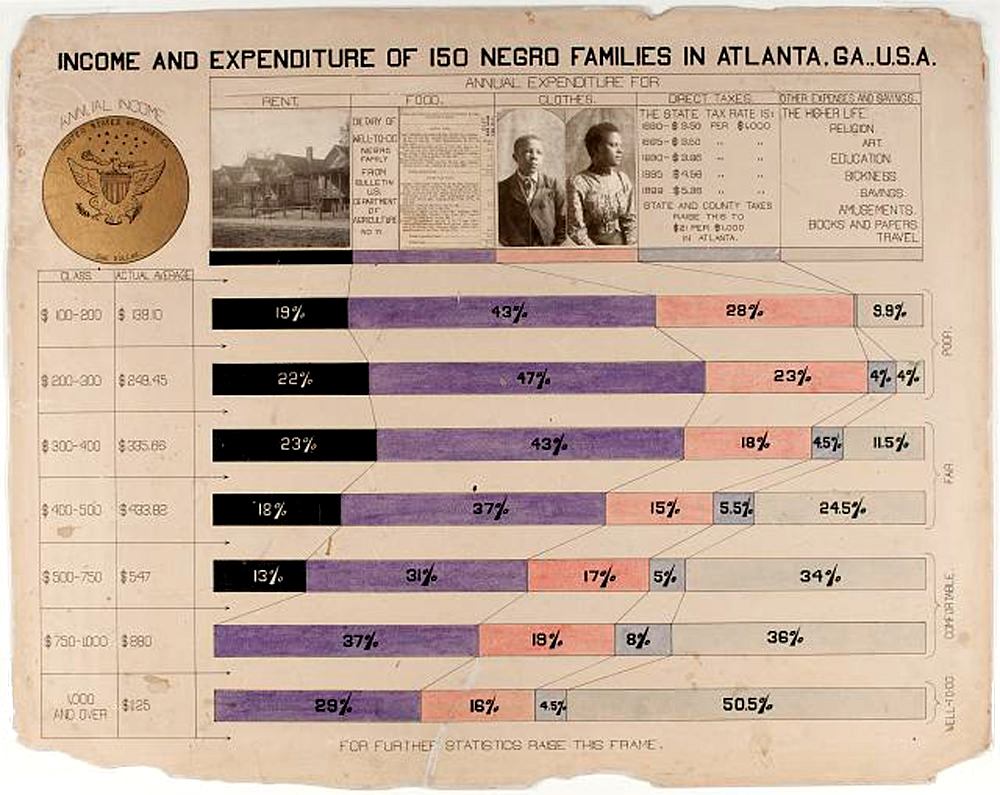
Designs with obviously harmful narratives — like the “America by Design” website — are dangerous, and they’re worth critiquing.
But narratives shaped by “good design” — and the ways in which we define “good design” in the first place — are worth critiquing, too.
Sometimes, they miss part of the story.
In 2020, Design Observer covered American graphic designer, artist, and pastor Cheryl D. Miller’s work collaborating with librarians at Stanford University to decolonize the history ofgraphic design by curating a database she called The History of Black Graphic Design.
“I studied art history right there with you,” she said of the project’s impetus. “I went to RISD. I went to Pratt. I went to MICA. What art history did I learn? Your art history. What design did I learn? Your design. You learned nothing of mine.”
—Rachel Paese, Associate Editor
Rachel@designobservercombigscoots-stagingcom-cn.b.tempurl.cc
This is the web version of The Observatory, our (now weekly) dispatch from the editors and contributors at Design Observer. Want it in your inbox? Sign up here. While you’re at it, come say hi on YouTube, Reddit, or Bluesky — and don’t miss the latest gigs on our Job Board.
Observed
View all
Observed
Share on Social


By Delaney Rebernik
 Delaney Rebernik is Design Observer’s Executive Editor. She’s also an independent journalist covering death and digital life, and a writer and consultant for purpose-driven organizations. As an award-winning editorial and communications leader, Delaney helps media brands; memberships; and other champions of community, knowledge, and justice tell vital stories and advance worthy missions. In her spare time, she consumes (and riffs on) horror and musical theater in equal measure. She lives in Brooklyn, New York, with her husband Todd and pup Spud, named for her favorite food. Learn more at delaneyrebernik.com, and connect on Bluesky and LinkedIn.
Related Posts
AI Observer
Dave Snyder|Analysis
The identity industrialists
AI Observer
David Z. Morris|Analysis
“Suddenly everyone’s life got a lot more similar”: AI isn’t just imitating creativity, it’s homogenizing thinking
AI Observer
Stephen Mackintosh|Analysis
Synthetic ‘Vtubers’ rock Twitch: three gaming creators on what it means to livestream in the age of genAI

AI Observer
Raphael Tsavkko Garcia|Analysis
AI actress Tilly Norwood ignites Hollywood debate on automation vs. authenticity
Related Posts
AI Observer
Dave Snyder|Analysis
The identity industrialists
AI Observer
David Z. Morris|Analysis
“Suddenly everyone’s life got a lot more similar”: AI isn’t just imitating creativity, it’s homogenizing thinking
AI Observer
Stephen Mackintosh|Analysis
Synthetic ‘Vtubers’ rock Twitch: three gaming creators on what it means to livestream in the age of genAI
AI Observer
Raphael Tsavkko Garcia|Analysis