



September 25, 2025
Aesthetic, turbocharged by AI
How an AI-powered fashion app promises instant style — and raises questions about artistry, stereotypes, and what we lose when design goes designer-less.
As a 20-something woman on social media, everyone and everything is trying to sell me something. Not just clothes or accessories, but atoms of an aesthetic that amplifies who I am at this moment in time. Am I librarian chic? Mob wife? Ballet core? Dark academia?
And if I land — for today at least — on “clean girl,” I don’t just need a slick back bun and athleisure; I also need a fluffy white comforter, and an iced matcha, and a vanity full of skin care products, and gold earrings, and a seashell-shaped jewelry plate, and a Rhode lip gloss phone case, and a monogrammed leather gratitude journal, and and and and
And now, a new AI-powered app promises to deliver an entire ensemble, tailored to my aesthetic du jour and exact dimensions, with little more than a selfie and ChatGPT-esque prompt.
Neuono, which made its runway debut at New York Fashion Week just days ago, “promises to bring couture within reach of anyone with a smartphone,” reports Xintian Tina Wang, who attended the show, in today’s Big Think. “Once a user uploads a selfie and completes a body scan … the app generates an avatar” with their loose likeness and precise measurements, she explains. Then, they’re prompted to type a few words describing the garment they want, and voila: “Within seconds, the design appears on their avatar with a price tag attached, ready to move into small-batch production.”
I’ll admit it: the prospect of generating well-fitting, on-trend clothes with a few screen taps is an exciting one for this editor, who’s been riffing on fashion since elementary school. (I was big on the duct-tape clothing trend.)
But Wang’s description of an audience ooing and ahhing over a quick, easy, designer-less fashion experience makes me concerned about what we’re giving up for the convenience.
Wang is, too. “As the luxury fashion industry eyes up tech to overcome the significant slowdown it’s seen in recent years, artistry hangs in the balance,” she writes. “What is gained or lost when design can flourish without the designer?”
The Neuono collection felt “pared down” compared to the “more daring collections” elsewhere at Fashion Week, Wang says. And when she tested the app herself, asking it to generate clothing with “Asian-inspired” elements, “the results leaned on tired tropes: a red dress with a mandarin collar, or a kimono dress emblazoned with cherry blossom,” she wrote to the DO team. “The gap between algorithm and artistry — and between cultural inspiration and stereotypes — was stark. Meanwhile, many ethnic fashion brands are pushing far beyond such motifs, creating bold, boundary-defying work that resists being reduced to a handful of symbols.”
For me, the joy of fashion is about playfulness and creativity. The outfit in my head, the conversation around a rack, and, sometimes, the hours spent digging through bins of clothing. Yes, I’ve found myself gritting my teeth while searching for a pair of everyday jeans that isn’t too long or too tight. But when I slow down enough to explore my own style, I’m less likely to urgently consume. More likely to find joy. Not the quick hit of dopamine that comes with a one-click purchase, but the true, sustaining joy of wearing something crafted with artistry.
Rachel Paese
Rachel@designobservercombigscoots-stagingcom-cn.b.tempurl.cc
LinkedIn
This edition of The Observatory was edited by Delaney Rebernik.
This is the web version of The Observatory, our (now weekly) dispatch from the editors and contributors at Design Observer. Want it in your inbox? Sign up here. While you’re at it, come say hi on YouTube, Reddit, or Bluesky — and don’t miss the latest gigs on our Job Board.
Design As Trust, Doubt
On our screens, through our conversations, and at our offices, AI asks us to trust in new ways. On this episode of Design As, host Lee Moreau speaks with TB Bardlavens, manager and director of product equity at Adobe and Creative Reaction Lab board member; Ryan Powell, head of user experience at Waymo; Terry Williams-Willcock, chief customer officer at RUSH; and Ellie Kemery, principal AI user research lead at SAP, about finding the spaces for designers to confront, or create, doubt.
“I keep pounding the drum on humans being in control and not just in the loop. Because even though that’s the most popular thing that people are saying these days… ‘make sure humans are in the loop’, but that’s a very passive approach and it takes the control away, actually. So, I mean, visibility is important, but control is more important.” — Ellie Kemery
Big Think
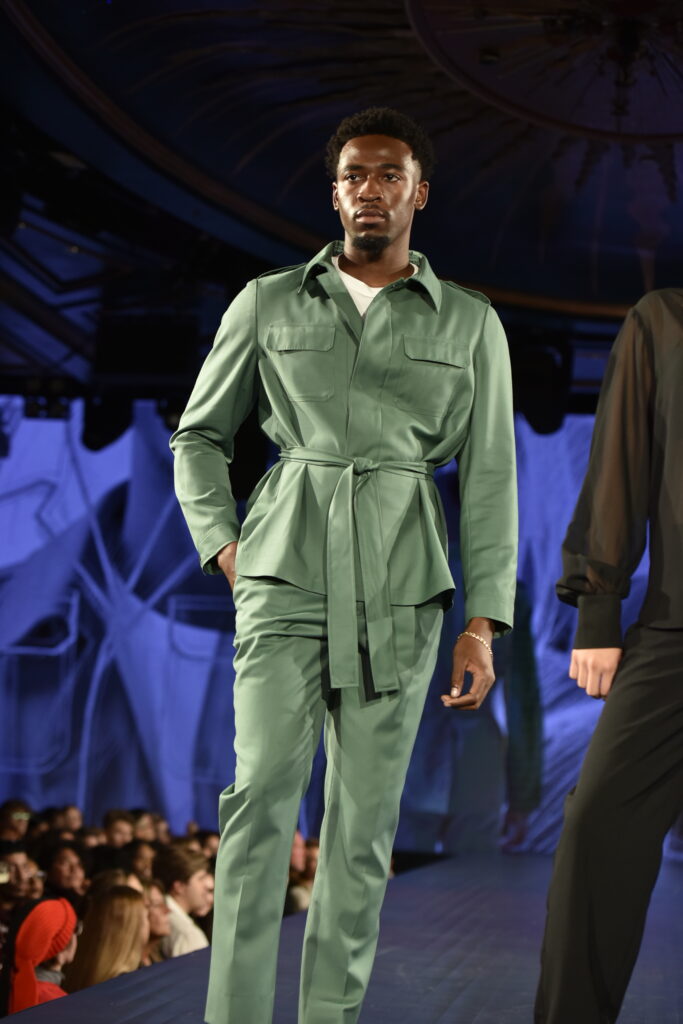
The runway went dark, and all eyes turned to the massive screen. Lines of text appeared inside a glowing prompt box: “create my revenge dress.” The words dissolved into digital sketches, the sketches unfurled into fabric patterns, and, finally, the animation faded out. When the lights snapped back on, a model in the exact red dress from the sketches strode onto the stage. The crowd erupted in aha noises as a design leapt from screen to runway, an unsettling awe pervading the room as fashion unfolded without the designer ever appearing.
The design was powered by Neuono, a mobile app from Australian luxury collective THDR Group, making its runway debut at New York Fashion Week 2025. First soft-launched at London Tech Week in June, the AI-powered app promises to bring couture within reach of anyone with a smartphone. …
Sean Fagan, Neuono’s co-founder and technology lead, argues that this business model tackles two of fashion’s oldest headaches: poor fit and overproduction. It also, he says, marks an advancement in on-demand fashion. Whereas many platforms take measurements and “dabble in customization,” Neuono is distinctive in its ability to deliver a garment as good as tailormade from a simple scan and prompt-based personalization.
As the luxury fashion industry eyes up tech to overcome the significant slowdown it’s seen in recent years, artistry hangs in the balance: what is gained or lost when design can flourish without the designer? AI-powered apps like Neuono, while promising solutions to some of fashion’s biggest challenges, also risk deepening its oversights.
Some fine print
Here’s a sampling of our latest and greatest from the Design Observer editorial and contributor network.
Ashley Lukasik is designing a more meaningful way to convene.The start of a 10-part series on design lessons learned from a multi-disciplinary immersion in Peru’s Sacred Valley.
On Location at the Aspen Institute Part 2: Redesigning Leadership.Inside access to the Aspen Institute’s 2025 Summit, where global leaders explore what courageous, trust-centered leadership looks like in times of upheaval.
The best books for designing a better life. Selections by seven outstanding designers using research, memoir, and choose-your-own-adventure style prompts to help readers become happier, more authentic and connected versions of themselves.
Less is liberation: Christine Platt talks Afrominimalism and designing a spacious life. When the author and advocate learned to live with — and do — less, she found so much more. By L’Oreal Thompson Payton.
Happenings
Philadelphia finally claims renowned kinetic artist Alexander Calder. Calder Gardens, an “otherworldly place” conceived by Swiss architects Herzog & de Meuron to celebrate the work of Philadelphia-born mobile artist opened on September 21. “It is one of the strangest cultural complexes to be built anywhere in recent years,” reports the Guardian. “A beguiling sequence of spaces take visitors on a journey of discovery deep into the ground.”
‘Coming Together: Reimagining America’s Downtowns,’opening on September 27 at the National Building Museum in Washington, D.C., is an in-depth look at how cities have been reshaping themselves in the post-COVID-19 pandemic era. It’s the first of three exhibits from the Museum’s Future Cities initiative, a multi-year, interdisciplinary exploration of the city “as a hub, catalyst, essential building block and reflection of society.” Design Observer’s own Sarah Gephardt was the lead designer for the exhibit.
Dutch Design Week 2025 is one of the world’s leading design festivals, bringing together over 2,600 designers across 120+ locations in Eindhoven, Netherlands. This year’s theme explores the future of design guided by five key missions: Living Environment, Thriving Planet, Digital Futures, Health & Well-being, and Equal Society. The festival introduces new “Coalitions & Co/Labs” platforms for collaborative problem-solving and features Daily Mission Days diving into each theme. October 18-26. Register here.
Adobe MAX 2025 — The Creativity Conference is Adobe’s flagship creativity conference featuring keynotes, workshops, photowalks, and free Adobe certification testing. The event includes “Sneaks,” where product teams reveal upcoming features. You can meet your creative heroes — including Aaron Draplin, Serwah Attafuah, and James Gunn. Attend in person in Los Angeles or join online for free. October 28-30.
Marketing AI Institute is holding a virtual AI Agencies Summit on November 20, from 12 to 5pm ET. Everything you need to know, here.
Observed
What are you observing? Tell us.
Another weekend of chaos for big employers, as they rush to protect thousands of employees in the US on H-1B visas. Here’s what you need to know. Characteristics of visa holders here; partly helpful breakdown by industry, here.
Who will save the Broadway musical? None of the 18 musicals that have opened on Broadway in the last year have been profitable.
We see your sphere and raise you one LED-adorned stadium made of 19,200 golden triangles. The new Prince Moulay Abdellah Stadium in Rabat, Morocco is a 68,700-seat venue by Populous in association with Oualalou + Choi, which offers a “shimmering, golden facade inspired by Rabat’s iconic palm-lined boulevards and Morocco’s artisanal heritage.”
In memoriam: Agnes Gund, a trailblazing philanthropist, longtime MoMA president, and champion of contemporary art, has died. She was 87. “She was a strong advocate for contemporary art for 20 years and more,” says Robert Storr, a former curator of painting and sculpture at the museum. “She wanted the museum to become fully engaged with contemporary art at a time when Bill Rubin was nearly the opposite, and Richard Oldenburg was wary.” She is also remembered for the Art for Justice Fund, which allocated $127 million to artists and advocates in the movement to end mass incarceration.
Ain’t no failurelike a live demo failure. Hey, maybe the WiFi was messed up?
Havas appoints Alberto Canteli as Executive Chairman, Africafollowing the appointment of Provit Chemmani as CEO Africa, based in Johannesburg. “This strategic appointment underscores Havas’ ambition to accelerate growth across the African continent, a region undergoing rapid transformation and rich with potential.” More on Chemmani here. From Canteli, on how brands have changed after the pandemic. “Especially young generations understand differently the balance between personal and professional life.”
Meet Brendan Carr, FCC chief, “warrior for free speech,” threatener of late-night talk show host Jimmy Kimmel, and someone so extreme that Senate Commerce Committee chair Ted Cruz said he sounded like a “mafia boss.”
Brave Bison, a public marketing group in the UK, acquired MTM, a corporate strategy consultancy, for up to £12 million. MTM’s clients include Google, Spotify, and Samsung. It’s Brave Bison’sfifth acquisition this year.
Wait. What are AI companies actually building? Amazon, Microsoft, Google, Meta, and OpenAI plan to spend at least $325 billion by the end of 2025. The New York Times has a guide to what they’re trying to do.
Reminder: The New York Timessued OpenAI and Microsoft, claiming copyright infringement of news content related to AI systems. The companies have denied those claims. So, some of that spend is going to lawyers, evidently.
Boulder, CO-based creative agency Fortnight Collective has promoted Drake Paul to creative director. His duties will include all the things: running creative efforts for clients, identifying new business and contributing to “BrandHacks®, Fortnight Collective’s two-week deep dives, in which agency teams brainstorm solutions for clients that navigate rapid cultural and market changes and optimize each project with the right mix of skills and experience.” I want to be invited to this.
Speaking of Fortnite Collective, they also created one of the edgiest get-out-the-vote campaigns in recent memory. #FlowToThePolls
In memoriam: Robert Redford, iconic actor, activist, and champion of independent filmmaking, has died. He was 89. “He changed so many lives,” says film critic Carrie Rickey. “And he changed movies, both as a director and as the head of Sundance. Who else can say that?”
OpenAI, along with the National Bureau of Economic Research, has released its latest research on how people are using ChatGPT. “The findings show that consumer adoption has broadened beyond early user groups, shrinking the gender gap in particular; that most conversations focus on everyday tasks like seeking information and practical guidance; and that usage continues to evolve in ways that create economic value through both personal and professional use.” Read the full working here.
It’s the eye contact, for me. Legendary photographer and civil rights icon Cecil J. Williams, made famous for his self-portrait of drinking from a ‘whites only’ water fountain in the segregated South, took the stage at New York Fashion Week.
What is luxury in an age of… whatever this age is. The Washington Post asked dozens of fashion industry professionals for their perspectives on what luxury means today. Spoiler alert: community, and a defrazzled attention span — untethered from one’s phone — are high on the list.
The Obama Presidential Center, currently under construction on Chicago’s South Side, has just commissioned 10 more artists for its campus-wide art program: Nick Cave, Nekisha Durrett, Jenny Holzer, Jules Julien, Idris Khan, Aliza Nisenbaum, Jack Pierson, Alison Saar, Kiki Smith, and Marie Watt. The center is scheduled to open in 2026.
Job Board
Assistant Professor-Tenure System at Michigan State University.
Art Director at Pandiscio Green.
Associate Director for Design (Design Director) at Manhattan Strategies.
View all jobs here.
Yesterday and today
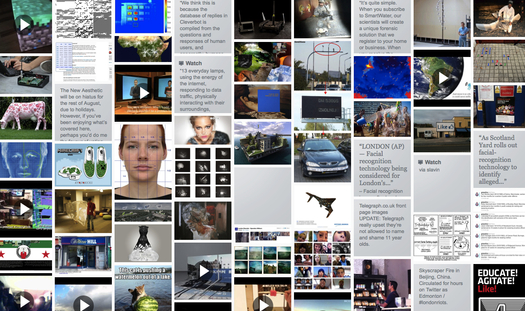
“Many of us grapple with the impact of screen culture — or digital culture, or whatever you want to call it — on the way we see the world and the things that are in it,” writes technology columnist Rob Walker in his prescient 2011 interview for Design Observer on the New Aesthetic, a project of James Bridle in which the artist and early AI scholar “collect[ed] images and things that seem to approach a new aesthetic of the future.” Bridle’s repository of choice? Tumblr — the TikTok of the millennium, for the uninitiated.
“From the very first post about the New Aesthetic I have been talking about what these images reveal about the underlying systems that produce them, and/or the human viewpoint which frames them,” writes Bridle in a 2013 blog post on the project. “It is impossible for me … with a lifetime of interacting with the internet and other systems, not to look at these images and immediately start to think about not what they look like, but how they came to be and what they become: the processes of capture, storage, and distribution; the actions of filters, codecs, algorithms, processes, databases, and transfer protocols; the weight of datacenters, servers, satellites, cables, routers, switches, modems, infrastructures physical and virtual; and the biases and articulations of disposition and intent encoded in all of these things, and our comprehension of them.”
That dizzying array of mechanisms propping up the aesthetics that stride so effortlessly across our screens, and now, our runways, deserves a critical eye.
“Technology is political. Everything is political,” Bridle writes in the post. “If you cannot perceive the politics, the politics are being done to you.”
— Delaney Rebernik, Executive editor
This is the web version of The Observatory, our (now weekly) dispatch from the editors and contributors at Design Observer. Want it in your inbox? Sign up here. While you’re at it, come say hi on YouTube, Reddit, or Bluesky — and don’t miss the latest gigs on our Job Board.
Observed
View all
Observed
Share on Social


By Rachel Paese
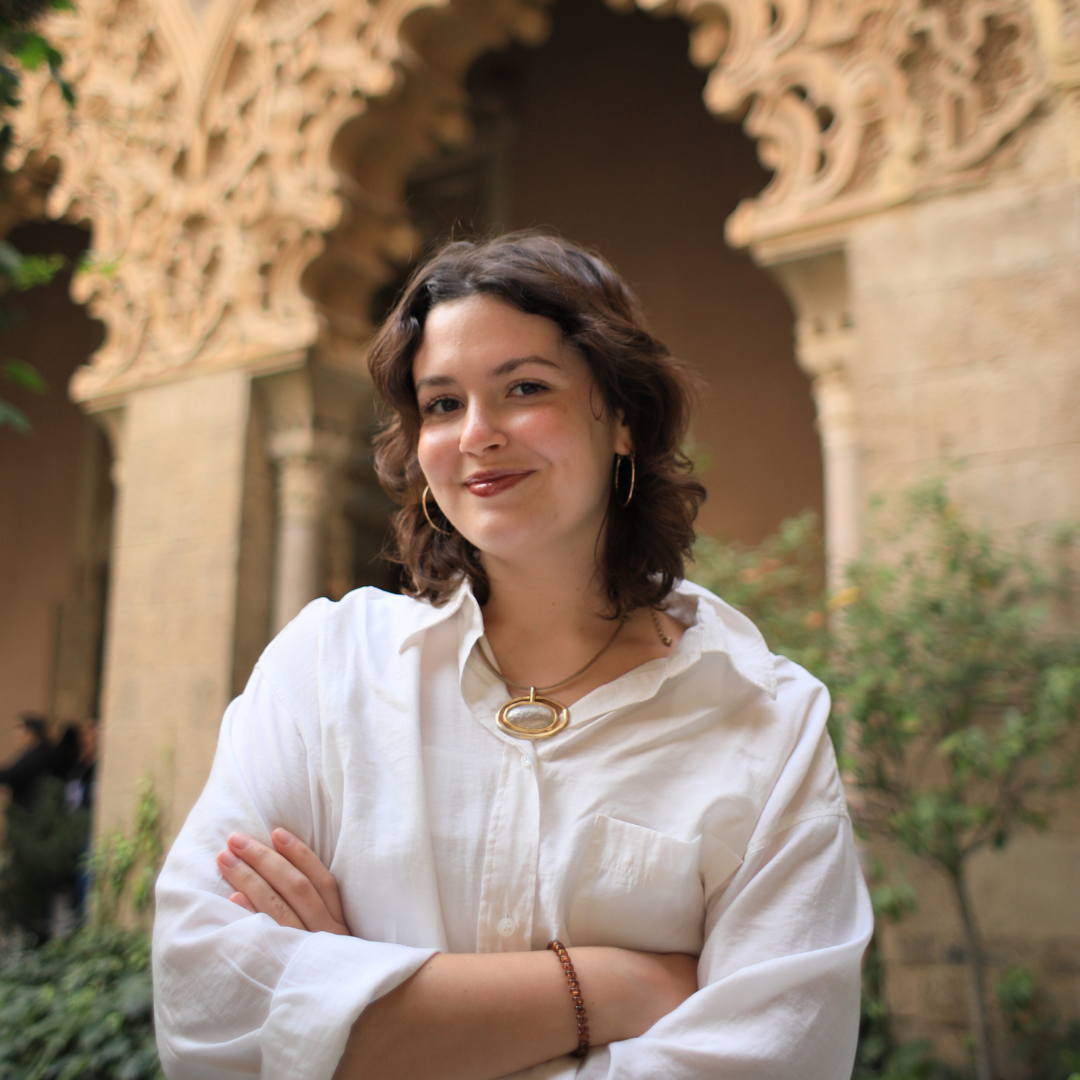 Rachel Paese is Design Observer’s Associate Editor. A recent graduate from The University of Kansas, where she earned a BA in English, Rachel honed her editing skills the old-fashioned way: by founding and leading her own multimedia magazine on campus. This, combined with her stint as a marketing intern at a community arts center, prepared her for her current role managing DO’s contributor network and social media content. Now wandering the cobblestone streets of Spain as a secondary English teacher, Rachel continues to explore how language, design, and storytelling help us make sense of the world — and find our place in it.
Related Posts
The Observatory Newsletter
Ellen McGirt|New Ideas
Gen-AI is a threat to human thinking
AI Observer
Dave Snyder|Analysis
The identity industrialists
The Observatory Newsletter
Ellen McGirt
Lessons in connoisseurship from the Golden Globes
AI Observer
David Z. Morris|Analysis
“Suddenly everyone’s life got a lot more similar”: AI isn’t just imitating creativity, it’s homogenizing thinking
Related Posts
The Observatory Newsletter
Ellen McGirt|New Ideas
Gen-AI is a threat to human thinking
AI Observer
Dave Snyder|Analysis
The identity industrialists
The Observatory Newsletter
Ellen McGirt
Lessons in connoisseurship from the Golden Globes
AI Observer
David Z. Morris|Analysis