


Raphael Tsavkko Garcia|Analysis, Opinions
December 28, 2025
AI actress Tilly Norwood ignites Hollywood debate on automation vs. authenticity
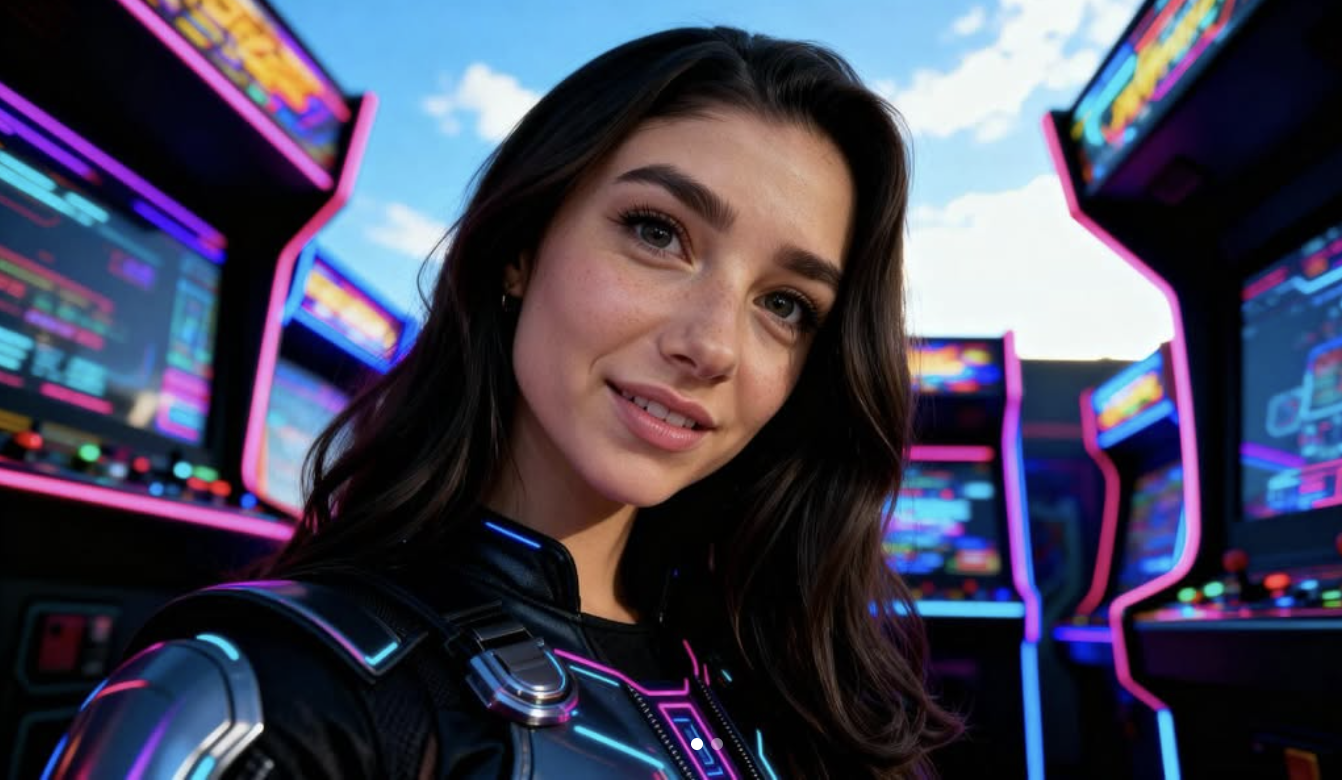
The world's first AI performer has signed 60 movie deals, but the real story isn't about replacing actors—it's about redefining what we value in human creativity
Last week, Eline Van Der Velden, founder and CEO of video production studio Particle6, took to ABC News to defend her company’s July launch of world-first AI actress, Tilly Norwood. Van Der Velden, herself a former actor, said it’s “absolutely not” her plan to take jobs away from human talent. In recent weeks, though, Van Der Velden has signed some 60 nondisclosure agreements for Tilly movie projects, most of them in the $10 million to $50 million range, the Wall Street Journal reports.
Hollywood creatives ranging from Emily Blunt and Whoopi Goldberg to James Cameron and Guillermo del Toro have spoken out against Tilly. Natasha Lyonne, meanwhile, told Fortune’s Brainstorm AI conference attendees last week that she’s “not sweating” the synthetic performer. “I’ve heard her name,” said Lyonne, who recently co-founded her own controversial AI production studio. “Haven’t met her, not convinced she’s real or super important, might just be a distraction, a little fear tactic, chaos.”
For her part, Tilly seems to be baiting naysayers: “Hi, I’m Tilly — the first AI actress. Or, as some like to call me, ‘the end of civilisation,’” begins the caption on a recent post from the official @Tillynorwood Instagram account. “Honestly… god forbid a girl has hobbies, right?”
Tilly is just the latest example of what some see as the growing overreach of genAI into creative realms.
Earlier this year, I watched a video of an AI program creating — in seconds — a “Ghiblified” image in the style of Japanese animation house Studio Ghibli. Not just any imitation, but a startlingly accurate reproduction of co-founder Hayao Miyazaki’s signature aesthetic, complete with the soft watercolor backgrounds, whimsical character movements, and that unique sense of wonder that has defined his team’s work for decades.
And I felt something curious: a mixture of awe and unease that I’ve come to recognize as the emotional signature of today’s algorithmic age.
When a machine can replicate in a few seconds what took human hands years — even decades — to perfect, where does that leave people? Not just creators, but anyone who values the human story behind the art they consume?
The debate around AI art often falls into predictable trenches: techno-optimists point to a democratized creative landscape where anyone can be an artist, while traditionalists lament the death of craftsmanship and authentic expression. Both miss the more nuanced territory between these extremes, where most people actually live.
AI doesn’t create; it recombines. It ingests millions of human-made images, identifies patterns, and produces new combinations that appear fresh to a pattern-seeking brain. The results can be stunning, useful, even moving. But they remain fundamentally derivative, built from the bones of human imagination and labor.
Consider what’s absent from the AI-generated Ghibli animation: Miyazaki’s decades of observation and life experience. His stubborn insistence on drawing by hand or the cultural context of post-war Japan that shaped his environmental themes. The countless revisions reflecting not just aesthetic choices but moral ones. AI offers the surface without substance, the style without the struggle. Miyazaki remains irreplaceable.
But artists have been here before. When photography emerged in the 19th century, it was deemed a mere mechanical process. French philosopher Roland Barthes connected the medium to death and inauthenticity. But also, it brought other issues: Why paint a portrait when a camera could capture likeness more efficiently? The answer came not in rejection but in reinvention. Freed from pure representation, painting evolved toward expression, abstraction, concept. Photography didn’t kill painting; it freed painting to search for different pathways.
So, what unique value remains when AI can mimic any visual style? Perhaps it’s in the story behind the image, in the human context that gives art its deeper resonance. When someone looks at a Ghibli film, they’re not just seeing beautiful animation; they’re witnessing the culmination of one creator’s lifetime of observation, struggle, and artistic growth. They’re connecting with another consciousness through the medium of image.
This is what AI-generated art lacks: not skill, but story. Not aesthetics, but authenticity. Not beauty, but biography.
Yet dismissing algorithmic art entirely would be as shortsighted as uncritically embracing it. These tools offer genuine creative possibilities. They can serve as sophisticated sketching tools for professionals, enabling a world of exploration. They can make visual expression accessible to those without traditional artistic training and help them see familiar styles in new combinations and mashups, revealing unexpected connections and possibilities.
The trouble comes when people begin to value the simulation over the thing it simulates, when studios replace animators — actors — with algorithms, not to expand creative possibilities but to cut costs. When they forget that style is not just aesthetic but also a matter of lived experience, cultural context, and ethical intention. In a sense, AI can even increase the value of authenticity and creativity.
When photography freed painters from the burden of pure representation, it didn’t diminish painting’s value; it concentrated it. Suddenly, a hand-painted portrait carried premium meaning precisely because it was harder to justify than a photograph. The artist’s choice to paint, rather than photograph, became part of the artwork’s significance. Similarly, when drum machines emerged in the 1980s, they didn’t kill live drumming; they made acoustic percussion more precious. Today, bands often advertise “no drum machines” or “all analog” as selling points, charging premium prices for the human touch that technology made optional.
This is already happening with AI art. Hand-lettered signs command higher prices in an age of digital typography. Artisanal crafts boom precisely because mass production makes them feel rare. The “made by hand” label has become a luxury marker, not despite automation but because of it. When anyone can generate a professionally styled image with a text prompt, commissioning a human artist becomes an act of deliberate intention, a statement about values, not just aesthetics.
AI won’t replace artists; it will redefine what people value in art and consider artistry. This will require humans to demand transparency from AI systems about whose work they’ve learned from and creating pathways for artists to receive recognition — and possibly compensation — when their styles are replicated. It’ll mean designing tools that augment human creativity rather than simply replacing it, systems that treat artists as creative partners, not obsolete workers. It’ll mean moving beyond the binary of “good AI” or “bad AI” toward more nuanced frameworks that can hold multiple truths. Most importantly, it’ll mean centering human impact in evaluations, asking not just what AI can do, but who benefits and who bears the costs when it does it.
“To be clear, ‘Tilly Norwood’ is not an actor, it’s a character generated by a computer program that was trained on the work of countless professional performers — without permission or compensation,” SAG-AFTRA, Hollywood’s 160,000-member actors union, wrote in a statement. “It has no life experience to draw from, no emotion and, from what we’ve seen, audiences aren’t interested in watching computer-generated content untethered from the human experience.”
In a world where anyone can generate a Miyazaki-style image with a text prompt — or a Hollywood starlet with scant more — perhaps people will learn to look beyond style to substance. Perhaps they’ll develop a sharper eye for the ghost in the machine: the human presence (or absence) behind the image. Perhaps they’ll cultivate a more sophisticated appreciation for the biography behind the beauty and the context behind the content. The machine may learn to draw or act like a beloved artist, but it will never know what it feels like to be them. And perhaps that feeling, that lived experience behind the line, is what people have valued all along.
Observed
View all
Observed
Share on Social


By Raphael Tsavkko Garcia
 Raphael Tsavkko Garcia is a Brazilian journalist published by Al Jazeera, MIT Tech Review, The Washington Post, Politico, among other news outlets. He holds a PhD in Human Rights from the University of Deusto.
Related Posts
AI Observer
Dave Snyder|Analysis
The identity industrialists
AI Observer
David Z. Morris|Analysis
“Suddenly everyone’s life got a lot more similar”: AI isn’t just imitating creativity, it’s homogenizing thinking
AI Observer
Stephen Mackintosh|Analysis
Synthetic ‘Vtubers’ rock Twitch: three gaming creators on what it means to livestream in the age of genAI
Arts + Culture
Dylan Fugel|Analysis
“I’d rather be a pig”: Amid fascism and a reckless AI arms race, Ghibli anti-war opus ‘Porco Rosso’ matters now more than ever
Related Posts
AI Observer
Dave Snyder|Analysis
The identity industrialists
AI Observer
David Z. Morris|Analysis
“Suddenly everyone’s life got a lot more similar”: AI isn’t just imitating creativity, it’s homogenizing thinking
AI Observer
Stephen Mackintosh|Analysis
Synthetic ‘Vtubers’ rock Twitch: three gaming creators on what it means to livestream in the age of genAI
Arts + Culture
Dylan Fugel|Analysis