


November 25, 2025
AI can generate content, but it can’t generate feeling
For a brand to be human, it must be populated by humans who aspire to grow
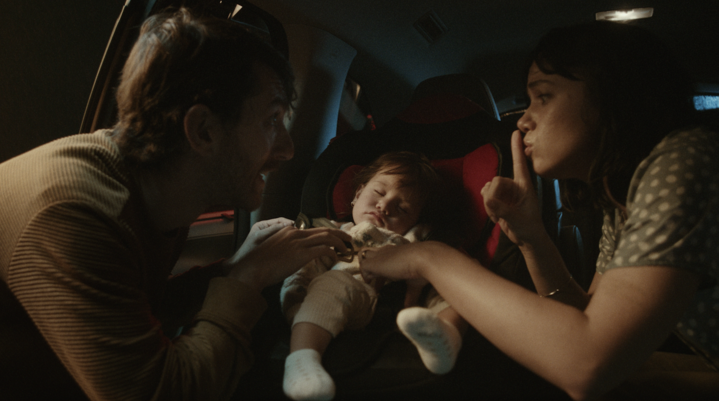
In her first opinion piece for Design Observer, Kim Devall, the creative director at Bindery, cites the rise of automation and new technology as a fundamental threat to doing good work. She encourages creatives of all stripes to slow down, embrace the struggle, and really make things. She knows it’s not easy. “There’s no shortcut for acquiring good taste, it’s something you have to build over time,” she said.
For a brand to be human, it must be populated by humans who aspire to grow. “For me, it came from two decades of long nights, torn-up scripts, and mentors who demanded better. In the early days, I’d fill walls with ideas only to watch them come down in minutes. I once wrote fifteen scripts a day for a week, but hey, two of them got made. You learn what’s good by making a lot that isn’t. There’s no tool to get you there faster—just time, humility, and surrounding yourself with people who raise the bar.”
The most disruptive thing a brand can do is be human
The marketing industry is racing toward automation.
An instant visual. A faster edit. A smarter tool.
And yet, somewhere in that ease, the work is starting to lose its warmth, its why.
The thing that makes you stop and notice.
Not because it’s perfect, but because it’s true.
Audiences can feel it, too.
They can smell a formula.
They can tell when a story has been calculated instead of crafted.
That’s why the most disruptive thing a brand can do right now is slow down.
Take notes from real life.
Touch the work.
And leave fingerprints.
Because people don’t crave perfection.
They crave texture.
The unscripted laugh, the off-center layout, the headline that breaks the rule and still works.
The tiny, beautiful flaws that make something human.
AI can generate content, but it can’t generate feeling.
It can replicate patterns, but it can’t make meaning.
And meaning is what makes us stay.
To make work that moves people, we have to remember what moves us.
That’s craft.
The hundreds of tiny decisions we make each day that make the work feel alive.
Like there’s a person behind it, someone whose taste was built over years of trying, failing, refining, and learning what feels right.
All of it earned, not engineered.
That’s the advantage we’ll always have.
The one thing no tool can teach.
And that’s how brands, and the people behind them, will keep winning.
Because the stories that stay with us are built with care, not convenience.
Craft cuts through.
Always has.
Always will.
Happy fall holiday season for all who celebrate. We hope you are slowing down to enjoy the beauty of the creative world and each other whenever you can We believe in your mission and your passion; we are so very grateful for you.
Ellen McGirt
Editor-in-Chief
Ellen@designobservercombigscoots-stagingcom-cn.b.tempurl.cc
LinkedIn
Instagram
Threads
P.S. Did someone who loves you send you this newsletter? Welcome! Subscribe here.
This edition of The Observatory was edited by Sheena Medina.
This is the web version of The Observatory, our (now weekly) dispatch from the editors and contributors at Design Observer. Want it in your inbox? Sign up here. While you’re at it, come say hi on YouTube, Reddit, or Bluesky — and don’t miss the latest gigs on our Job Board.
Big think
We need to rethink how we do business.
Last year, I sat down at this time to think about grievance, change, innovation, and what the world needed from design and business.
What I came up with still holds true: we ask too much of gratitude.
We ask it to ease our existential angst, prepare us to face the day, help us meet sales targets, and retain our employees. We repeatedly turn to celebrities and hopefluencers to remind us that the secret to happiness lies in the beautiful things we already have if only we’d draw our attention to them.
And write them down in a special place.
Gratitude journals and digital apps have found purchase as a subset within the personal development marketplace, where books, apps, planners, seminars, coaching, and other offerings abound, designed to help consumers calm down, boost confidence, grow skills, and reach their version of enlightenment. The market was estimated to be worth $40 billion in 2022. It’s hard to do even a nominal search on the brain science of gratitude without being offered an app, a newsletter, or a Black Friday deal.
But gratitude, as tired as it must be, and as valuable as it is — and I believe it is! — has its work cut out for it now, as people, families, communities, and perhaps entire companies find themselves apart, poised warily across a political or ideological divide, rocked by conflicting news reports, unsure of the way forward.
And sometimes, it asks too much of us.
As I often am, I am reminded now of the lessons offered by the late novelist Toni Morrison, who plumbed the moral complexity of gratitude in her work. Gratitude hits different for lots of people, including people in marginalized or disadvantaged groups. It can show up as a required virtue, a cost of doing business, and a tactic to ingratiate oneself with people in power that reinforces harmful hierarchies.
I’d like us to reclaim gratitude, but more to the point, I’d like us to reclaim each other.
Some fine print
Here’s a sampling of our latest and greatest from the Design Observer editorial and contributor network.
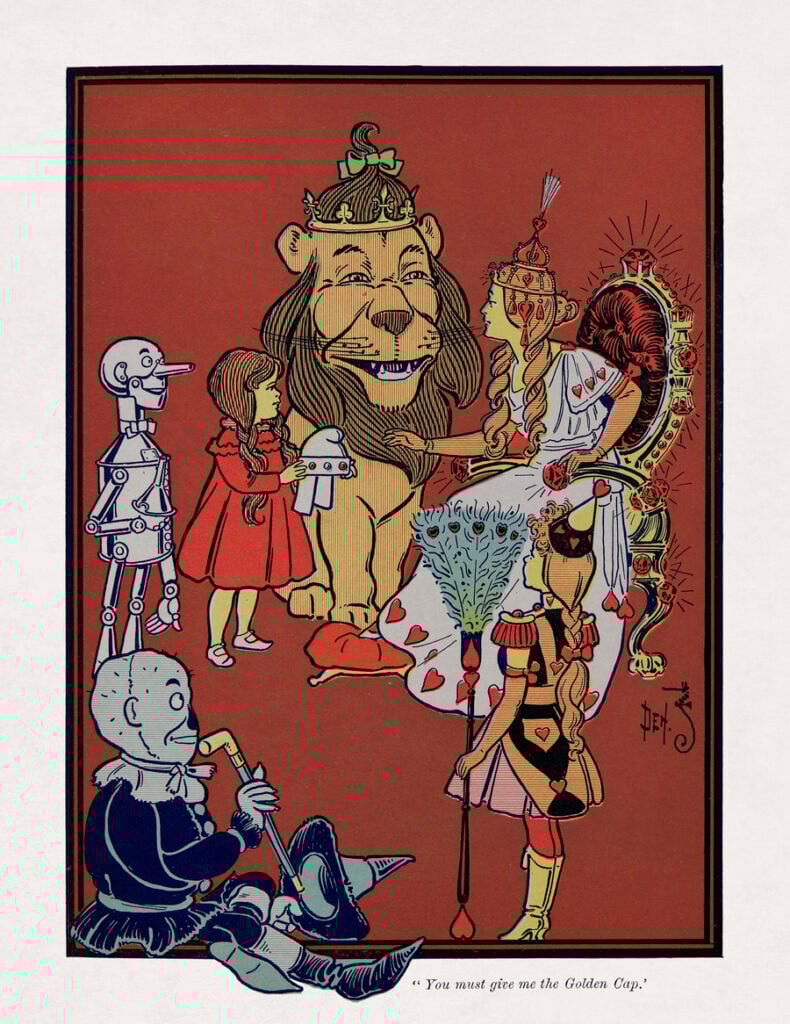
The Wizards of AI are sad and lonely men Lee Moreau on AI, the loneliness of power, the danger of wizards, and the designer’s role in keeping hope alive.
The afterlife of souvenirs: what survives between culture and commerce? “Arts and crafts is the only creative industry where developing countries have a leading position in the global market.” What we often call kitsch may, in fact, be cultural endurance.
A Visual History of Lunchboxes The online site for the National Museum of American History is chock full of cool historical stuff.
The Past, Present and Future of Design with Lee Moreau In this season finale, designer and educator Lee Moreau joins host Ellen McGirt to reflect on the state of design, and what it means to create, rebuild, and hope in uncertain times.
The Renewed Art of Embroidered Photographs from vintage postcards to contemporary masterpieces, exploring the revival of embroidered photography
Happenings
Fortune Brainstorm Design Conference is December 2 in Macau. Fortune’s premiere event explores the intersection of business, technology, and design. Design Observer’s Ellen McGirt will take the stage as co-chair; other luminaries include designer and author Kevin Bethune, Microsoft’s Liz Danzico, and Nike’s futurist in residence Monika Bielskyte. This year’s theme is “Future Tense: Prototyping Tomorrow.”
Observed
What are you observing? Tell us.
A wicked good start. Wicked: For Good opened to $150M domestic, and $226M around the world, besting Wicked‘s $112.5M domestic, and $164M global start.
There once was a bot from Nantucket. A team of AI safety researchers has discovered that anyone can easily “jailbreak” an AI chatbot — or trick it into giving dangerous responses — by feeding it poetry. Even bad poetry works.
Suddenly, the epic PhAil makes more sense. Logophile group chats were burning up after Philadelphia Art Museum’s director and chief executive, Sasha Suda, was dismissed by the board of trustees after her attempts to modernize the brand were met with scorn. Suda is now alleged to have misappropriated funds to compensate herself, in a new court filing.
Meta suppressed research outlining how users were harmed on Facebook, according to unredacted filings in a lawsuit by U.S. school districts against the company and other social media platforms. The plaintiffs argue that the companies, including Google, TikTok, and Snapchat, have intentionally hidden the risks their products pose to users, parents, and teachers.
A surrealistic self-portrait by Frida Kahlo set a new auction record for the artist. “El sueño (La cama),” or “The dream (The bed),” from 1940, depicts Kahlo sleeping in a canopy bed with a papier-mâché skeleton smiling atop the bed’s top frame. It sold for $55 million after four minutes of bidding. “People feel this sense of connection and communion with her,” says Sotheby’s Julian Dawes.
In memoriam. Irish fashion designer Paul Costelloe, one of the best-known names in British and Irish fashion, and personal designer to the late Diana, Princess of Wales, has died. He was 80.
Meet OpenAI’s other CEO. Fidji Simo, the former CEO of Instacart, manages everything else that Sam Altman doesn’t…which turns out to be quite a bit.
I left my font in San Francisco. A new font inspired by an old San Francisco municipal streetcar was discovered and resurrected by visiting Australian designer Emily Sneddon who saw “poetic beauty” on the recently retired Breda trains. Meet: Frans Sans.
Job board
Visual Designer, Temporary at ProPublica, New York, NY
Freelance Graphic Designer at Lead for America, Remote
Lecturer, Industrial Design at Rochester Institute of Technology, Rochester, NY
Visual Storyteller – Graphic & Motion Designer at Gap International, Springfield, PA
Kitchen origins
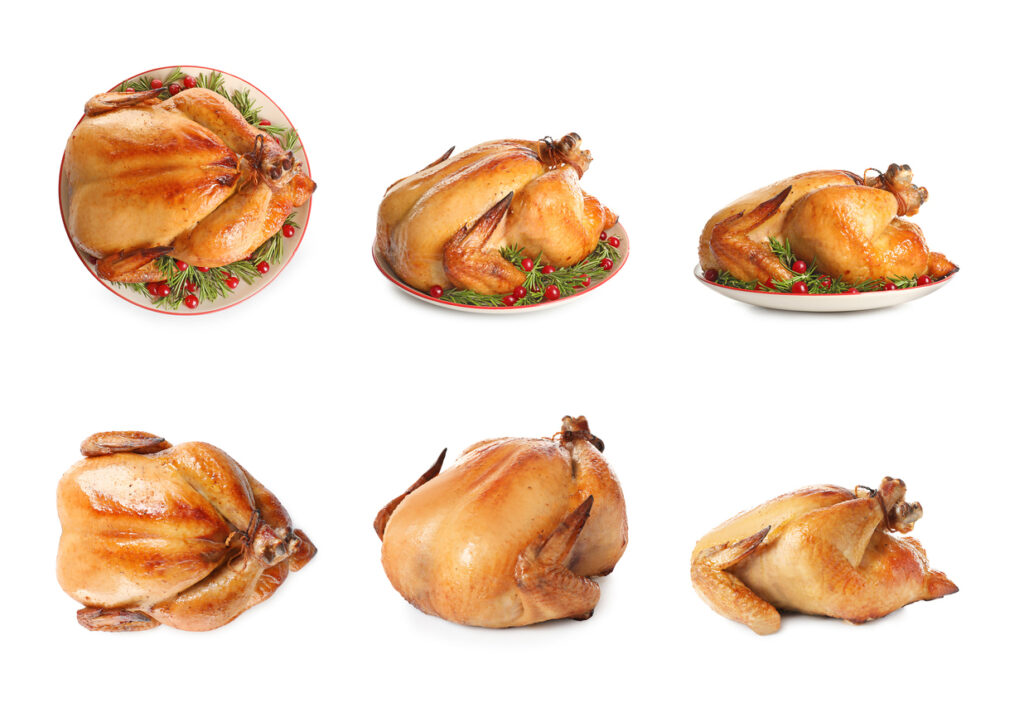
“No man in the history of the world has eaten the quality of food that I have,” George Lois says in his tough guy Bronx accent. And he might be right. From a Bronx childhood to a Greek kitchen to a life in design, his story shows how memory shapes what we make. Lois understood that creativity can begin anywhere, even in a Staten Island kitchen in 1923.
– Sheena Medina, Managing Editor
This is the web version of The Observatory, our (now weekly) dispatch from the editors and contributors at Design Observer. Want it in your inbox? Sign up here. While you’re at it, come say hi on YouTube, Reddit, or Bluesky — and don’t miss the latest gigs on our Job Board.
Observed
View all
Observed
Share on Social


By Ellen McGirt
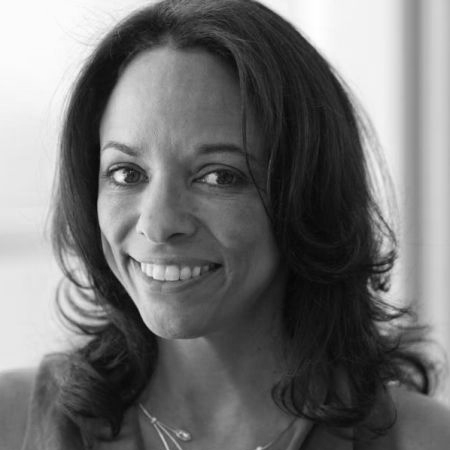 Ellen McGirt is an author, podcaster, speaker, community builder, and award-winning business journalist. She is the editor-in-chief of Design Observer, a media company that has maintained the same clear vision for more than two decades: to expand the definition of design in service of a better world. Ellen established the inclusive leadership beat at Fortune in 2016 with raceAhead, an award-winning newsletter on race, culture, and business. The Fortune, Time, Money, and Fast Company alumna has published over twenty magazine cover stories throughout her twenty-year career, exploring the people and ideas changing business for good. Ask her about fly fishing if you get the chance.
Related Posts

AI Observer
Raphael Tsavkko Garcia|Analysis
AI actress Tilly Norwood ignites Hollywood debate on automation vs. authenticity
AI Observer
Jameson Proctor|Opinions
Open systems, open futures
Business
Kim Devall|Essays
The most disruptive thing a brand can do is be human
AI Observer
Lee Moreau|Critique
The Wizards of AI are sad and lonely men
Related Posts
AI Observer
Raphael Tsavkko Garcia|Analysis
AI actress Tilly Norwood ignites Hollywood debate on automation vs. authenticity
AI Observer
Jameson Proctor|Opinions
Open systems, open futures
Business
Kim Devall|Essays
The most disruptive thing a brand can do is be human
AI Observer
Lee Moreau|Critique