


October 2, 2025
A new chapter of human ingenuity in the age of AI
AI may mark a turning point in how we create, but as TK Tennakoon writes, the hand that guides the brush, human ingenuity, remains irreplaceable.
Editor’s note: In his first opinion piece for Design Juice, creative director Taraka “TK” Tennakoon argues that fears around AI are threatening to overtake the conversation about the future of creativity. “Walk into any design conference, scroll through any LinkedIn feed, or sit in on a strategy meeting, and you’ll hear the same tired, bleating refrains: ‘AI will replace designers! AI can write better copy,’” he says. “And my personal favorite, ‘Meet your new creative director…AI!!’” He asserts that what’s driving these laments is a fundamental misunderstanding of both the technology and the humans who wield it. It’s time for a reframing. “It’s crucial to understand that volume of output is not the same as value,” he says. “That’s where the human element provides what no algorithm can: purpose, meaning, taste, and wisdom.”
The conversation around artificial intelligence has reached a fever pitch, with the noise arguably at its most clamorous within the creative industries: it’s coming for all our jobs.
But this narrative fundamentally mischaracterises both the technology and the creative process itself. As Professor Ahmed Elgammal, founder and director of the Art and Artificial Intelligence Laboratory at Rutgers, aptly notes, “AI doesn’t generate art, AI generates images. Making an image doesn’t make you an artist; it’s the artist behind the scene that makes it art.”
All too often, AI is positioned as the actual output. The creative asset in and of itself. This not only undermines the value of human craft but also severely limits the rewards that artificial intelligence might actually provide to creativity. The real opportunity lies not in replacement, but in partnership. AI isn’t an artist. But it can be cast as a better assistant.
Context can help. To understand our future with AI, let’s explore a parallel from the present and a precedent from the past.
The medical parallel
Consider how AI functions in contemporary medicine, where the stakes of getting it wrong are measured in human lives.
When a radiologist examines a CT scan for cancer, AI algorithms can process thousands of data points in seconds, flagging potential anomalies with statistical precision that far exceeds human pattern recognition. This recent meta-analysis, published by The Lancet Digital Health found that deep-learning algorithms correctly detected disease in 87% of cases, neatly keeping pace with human doctors, who showed an 86% success rate. But crucially, identifying an illness is not the same as treating a patient. Responding to the survey, Royal Australian College of General Practitioners (RACGP) president Dr. Harry Nespolon said, “It’s not ordering an ultrasound and getting an answer, it’s what you do with it.” AI cannot sit with a patient and explain a diagnosis with empathy. It cannot make nuanced judgment calls about when aggressive treatment might do more harm than good. “There are a million apps out there to tell you if a mole is a melanoma, but until AI can actually cut it out, you have to come see a GP.”
With AI as a diagnostic aid providing data, the doctor’s expertise and humanity remain at the core of effective treatment.
The Art Deco precedent
In the 1920s, artists faced a similar existential question: Would mechanisation render human creativity obsolete? The Art Deco movement emerged as a defiant answer.
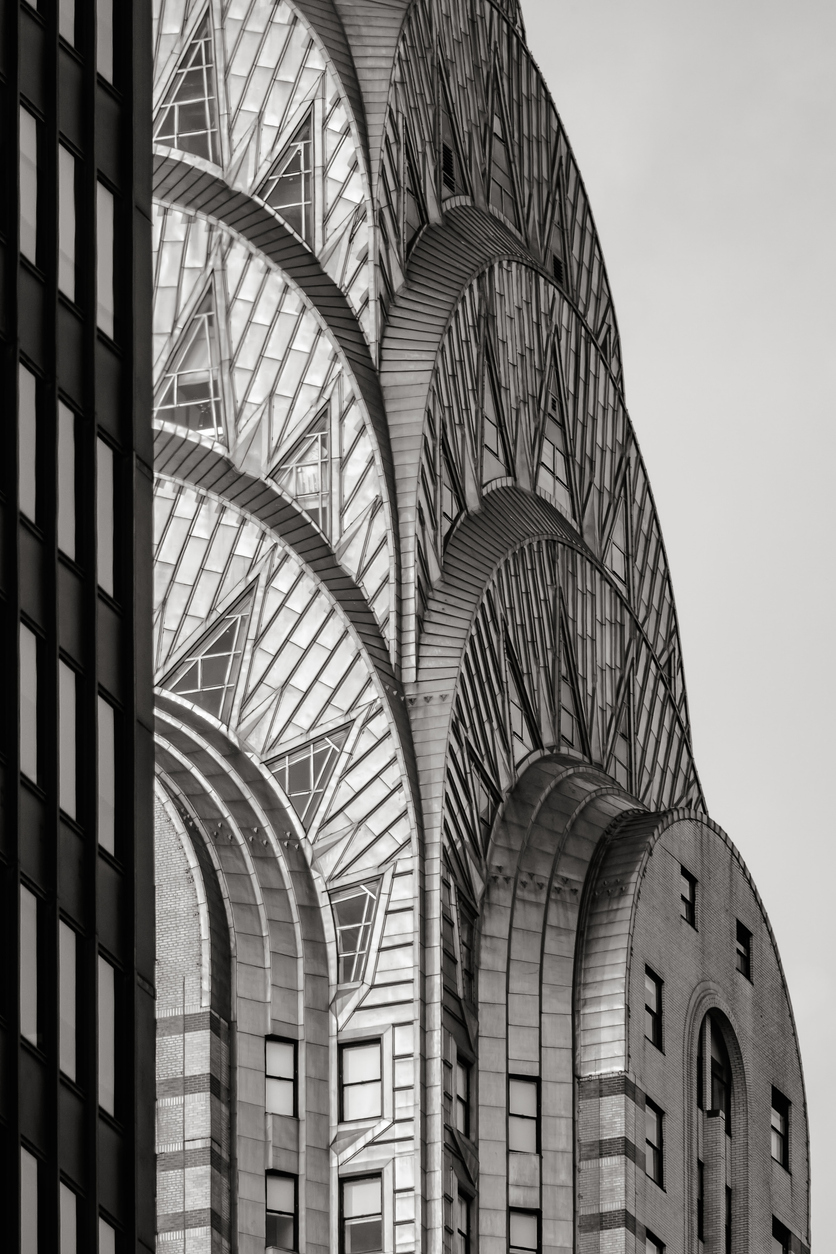
When industrial progress stirred fears of lost craft, these artists embraced the modern machine, but on their own terms. Art Deco craftspeople took mass production, machine precision, and new industrial materials, transforming them into expressions of luxury and distinctly human aspiration. Look at the Chrysler Building in New York. Its gleaming metalwork was enabled by industrial steel production and electroplating techniques. Its geometric patterns were informed by machine aesthetics. Yet every design decision, from eagle gargoyles to the stepped silhouette, to neo-Mayan motifs and the inexplicable-but-delightfully-intricate door handles, all reveal a human artistic intention that was no longer encumbered by the practical, but given liberty to soar.
Tech and humans: we are not the same
Every technological leap has prompted predictions of the end of creativity or expertise. It’s natural that AI stirs similar anxieties: this time the scale feels larger, the unknowns sharper. But, looking closely at both examples, a pattern emerges. Technology handles what it does best: processing complexity with speed, executing with precision, expanding possibility at scale. But it’s crucial to understand that volume of output is not the same as value. That’s where the human element provides what no algorithm can: purpose, meaning, taste, and wisdom.
This suggests something profound. Instead of asking “Will AI replace human creativity?” let’s now ask, “What becomes possible when human creativity is set free by artificial intelligence?”
As former OpenAI Marketing VP Krithika Shankarraman rather directly offered, human discernment is poised to be the deciding factor in quality: “Taste is going to become a distinguishing factor in the age of AI because there’s going to be so much drivel generated by AI.” When anyone can conjure endless images or text at the push of a button, true creativity lies in curation and craft.
A better way forward
Perhaps we need a new framework. If we’re discussing AI – Artificial Intelligence – we should acknowledge its essential counterpart: HI – Human Ingenuity.
‘Human Ingenuity’ encompasses everything that makes creative work distinctly, well, human. Synthesising seemingly disparate influences into coherent vision, making seemingly illogical connections that somehow make instinctive sense, understanding cultural context and emotional resonance, and imbuing work with meaning that transcends pure function.
While AI excels at pattern recognition, HI excels at pattern breaking. While AI optimises for established parameters, HI redefines what success looks like. While AI processes vast datasets, HI recognizes the one human truth that gives that data meaning.
The creative process redefined
With this framework, the creative process transforms from zero-sum competition into synergistic partnership. In design for example, AI can generate thousands of complementary color codes, but HI determines which become actual palettes and colourful possibilities to imbue a brand story with feeling. In writing, AI can research and suggest improvements, but HI provides voice, perspective, and emotional intelligence that transforms information into genuine communication.
AI handles frameworks, speed, complexity, and probability. Human Ingenuity overlays elegance, taste, story, and possibility.
AI may not signal creativity’s end, but certainly a new chapter in an ongoing evolution of the mediums we use. What doesn’t change is the hand that guides them. AI can serve as canvas or brush, but it cannot be the painter.
The painter, with all their vision and ineffable intuition, remains irreplaceably human. In an age of artificial intelligence, that touch, that ability to dream beyond the realms of reality, becomes not just valuable, it becomes the only thing that truly matters.
How to increase your HI
If there’s a takeaway for younger creatives, it’s this: AI doesn’t generate art, it generates images. Making an image doesn’t make you an artist; it’s the artist, and their discernment, that makes it art.
This is why your daily practice matters more than ever.
Cultivate your taste by seeking out work and culture that personally inspire you, especially beyond the algorithm. As one of my mentors put it: feed your brain. Second, sharpen your discernment by learning to edit just as much as you create. Third, stay curious across disciplines no matter how obscure. From vexillology to furniture-making and beyond, curiosity leads to originality through unexpected connections. (Personally, I find the fields closest to human life, like gastronomy, fashion and architecture, the most inspiring because we live our lives within them.) And most importantly, always bring the human purpose to the equation by asking Why before you press Make.
This is what it means to bring Human Ingenuity every day. Not outflanking the machine by speed, but by elevating up with the qualities only you can bring. Taste, wisdom, and purpose.
Observed
View all
Observed
Share on Social


By Taraka ‘TK’ Tennakoon
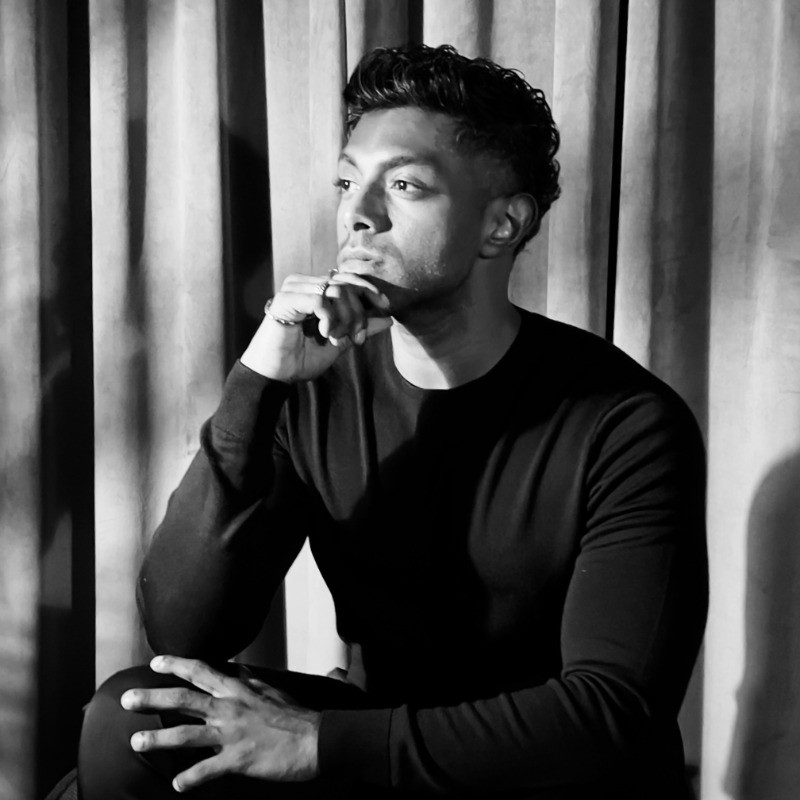 Taraka Tennakoon (also known as ‘TK’) is a multidisciplinary Creative Director with an award-winning record, an unmistakable aesthetic and the unrelenting belief that creativity and innovation can move the world in unexpected ways. Currently attached to AKQA, TK is an eternal optimist with wide-eyed ambitions. Inspired by Star Trek’s vision of a utopian future, the unbridled joy of the Eurovision Song Contest, and the bold silhouettes of Mugler, TK brings it all together in his work – exploring beauty, laughter, culture, and minimalism.
Related Posts
The Observatory Newsletter
Ellen McGirt|New Ideas
Gen-AI is a threat to human thinking
AI Observer
Dave Snyder|Analysis
The identity industrialists
The Observatory Newsletter
Ellen McGirt
Lessons in connoisseurship from the Golden Globes
AI Observer
David Z. Morris|Analysis
“Suddenly everyone’s life got a lot more similar”: AI isn’t just imitating creativity, it’s homogenizing thinking
Related Posts
The Observatory Newsletter
Ellen McGirt|New Ideas
Gen-AI is a threat to human thinking
AI Observer
Dave Snyder|Analysis
The identity industrialists
The Observatory Newsletter
Ellen McGirt
Lessons in connoisseurship from the Golden Globes
AI Observer
David Z. Morris|Analysis