


November 25, 2015
American Reich
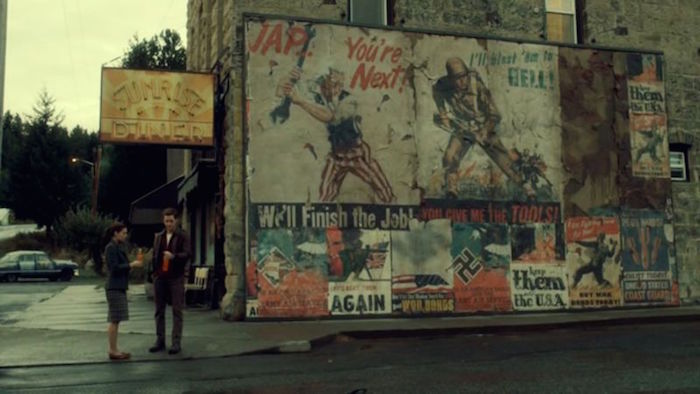


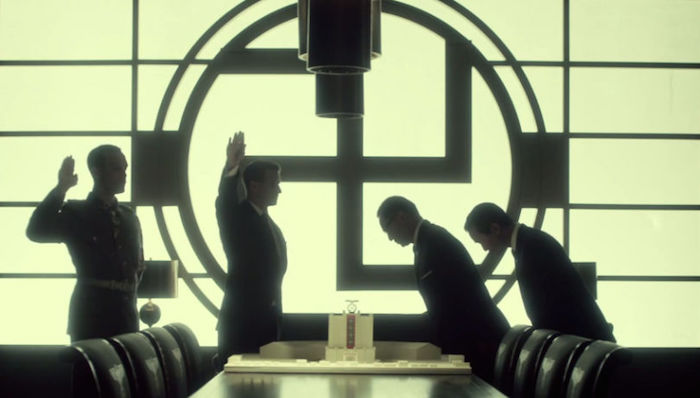
The sets could not look like a parody, so certain impulses were rejected. For example, Egner notes, “Early production art for the Times Square sequence included billboards for beer and sausages, but [showrunner Frank] Spotnitz had them changed to signs promoting the value of work and duty.” Even the SS uniforms included small details in insignia that subtly distinguished the brutal investigative branch from the even more venal SD (or security branch), which are vying with each other for power. Over in the neutral zone, US armed forces recruitment posters and other victory propaganda that were presumably hung prior to the ignominious defeat are fading, in tatters—and look incredibly real because, in fact, they are.

Since the ten episodes have labyrinthine plot turns, that last thing the viewer needs is to be distracted by visual anachronisms. The series’ production design (realized by a team that includes Alan Kobayashi, an alum of the Star Trek movies; Linda King, who worked on Jurassic World; and Neil Westlake, who workd on the Vampire Diaries) is so well curated, I was admiringly distracted by the flawless graphic design and inventive art direction, which is both haunting and seductive—and you might say, dangerously chic.
Observed
View all
Observed
Share on Social


By Steven Heller
 Steven Heller is the co-chair (with Lita Talarico) of the School of Visual Arts MFA Design / Designer as Author + Entrepreneur program and the SVA Masters Workshop in Rome. He writes the Visuals column for the New York Times Book Review, a weekly column for The Atlantic online and The Daily Heller.
Related Posts
Business
Kim Devall|Essays
The most disruptive thing a brand can do is be human
AI Observer
Lee Moreau|Critique
The Wizards of AI are sad and lonely men
Business
Louisa Eunice|Essays
The afterlife of souvenirs: what survives between culture and commerce?

Architecture
Bruce Miller|Essays
A haunting on the prairie
Related Posts
Business
Kim Devall|Essays
The most disruptive thing a brand can do is be human
AI Observer
Lee Moreau|Critique
The Wizards of AI are sad and lonely men
Business
Louisa Eunice|Essays
The afterlife of souvenirs: what survives between culture and commerce?
Architecture
Bruce Miller|Essays