


October 2, 2025
Fancy footwork
How transparency, consent, and imagination shape the future of human–AI collaboration.
Dancing with machine
Last February, I attended a half-day summit in Washington, DC, focused on the state of generative AI for political campaigns. The summit, co-hosted by Cooperative Impact Lab, Higher Ground Labs’ Progressive AI Lab, and Zinc Labs, brought together over 200 leaders, practitioners, and experts from progressive and Democratic organizing to explore how AI could help rethink how we generate content, manage data, and better engage people.
A new wave of designers has a thing or two to say about that.
“Step into Jonah King’s queer sci-fi virtual reality game Honey Fungus, and you’re immediately transported to a world that could only exist through the marriage of human imagination and machine learning,” writes Baxstar Jonmarie Ferguson in today’s Big Think. “Floating through a viscous digital landscape, you encounter creatures that defy biological classification: lush beings that are part human torso, part exotic mushroom, with forms that pulse and contort like alien dancers caught mid-performance.”
Across studios, classrooms, and independent projects, creators like King are experimenting with AI not to automate, but to collaborate: to extend human imagination, explore ethical use, and produce work that could not exist without the interplay of human and machine.
From virtual reality games that fold queer storytelling into algorithmic worlds, to role-playing experiences that adapt to each player’s choices, these artists are leading a different kind of conversation about AI, one that emphasizes creativity, consent, and agency. Even Design Observer’s founder, Jessica Helfand, became a 20-years-in-the-making overnight success in the art world by collaborating with AI, creating stunning character studies and portraits that reflect her distinctive vision. (More on her upcoming London show here.)
The ethical stakes of this work are clear. In our most recent season of the Design As podcast, we explore the tension between trust and doubt in design, a lens that applies equally well to human-machine collaboration: how can we engage these powerful tools with both optimism and critical scrutiny? For artists like King, the answer involves “building consent and transparency into their creative processes from the ground up.”
It’s not hard to imagine how much politics could benefit from the same approach: campaigns that embrace transparency, consent, and creativity in their use of AI might foster trust instead of suspicion, and agency instead of alienation.
Like it or not, we’re already dancing with machines. The question is: who’s leading?
Here’s to finding your own steps this week,
Sheena Medina
Managing Editor
sheena@designobservercombigscoots-stagingcom-cn.b.tempurl.cc
LinkedIn
Bluesky
This edition of The Observatory was edited by Delaney Rebernik.
This is the web version of The Observatory, our (now weekly) dispatch from the editors and contributors at Design Observer. Want it in your inbox? Sign up here. While you’re at it, come say hi on YouTube, Reddit, or Bluesky — and don’t miss the latest gigs on our Job Board.
Design Beyond Silicon Valley
In this bonus episode of Design As, hear exclusive audio taken at the Shapeshift Summit during a panel examining how businesses are breaking out of Silicon Valley to realize the potential of AI. It features insights from Ruth Kikin-Gil, responsible AI strategist at Microsoft; Liz Danzico, VP of design for Microsoft AI and founding chair of the MFA in Interaction Design at SVA; Ellie Kemery, principal AI user research lead at SAP Business AI; and moderator Kevin Bethune, CEO of dreams.design+life and author of Nonlinear: Navigating Design with Curiosity and Conviction.
“What does Silicon Valley get wrong about AI’s potential and even its consequences? And what, perhaps, are some clear differences of the work that you’re trying to drive within your respective organizations? How do we actually move from this sort of techno-optimist attitude to real applications that address the human systems?” – Kevin Bethune
Big Think
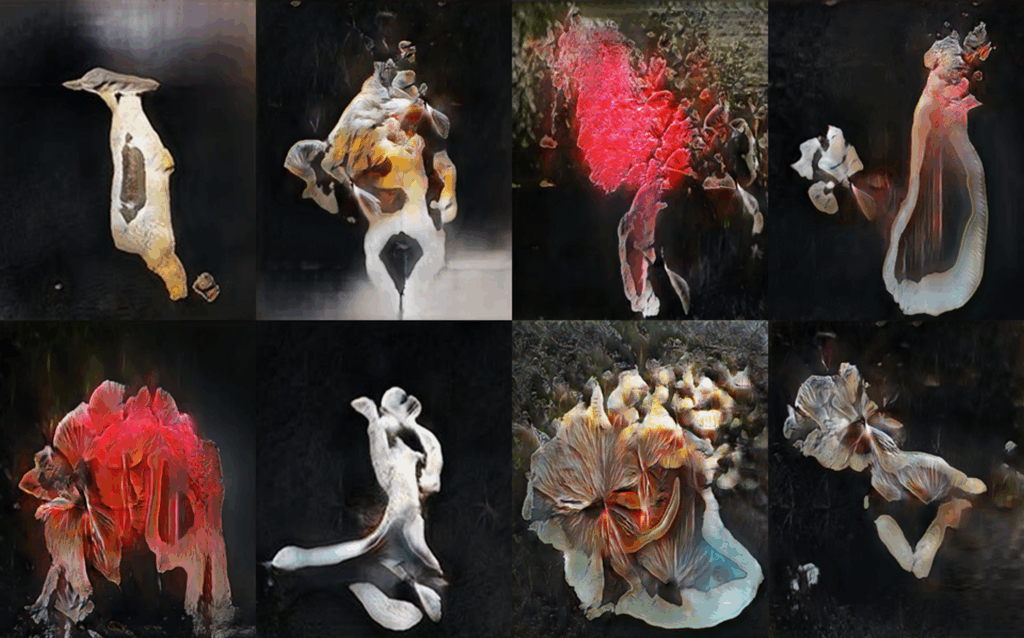
Step into Jonah King’s queer sci-fi virtual reality game Honey Fungus, and you’re immediately transported to a world that could only exist through the marriage of human imagination and machine learning. Floating through a viscous digital landscape, you encounter creatures that defy biological classification: lush beings that are part human torso, part exotic mushroom, with forms that pulse and contort like alien dancers caught mid-performance.
As you move deeper into this mycelial network, luminescent spores whisper to you in verses of poetry generated by AI that’s been trained on an unlikely pairing: Smithsonian botanical research archives and public-domain amateur erotica. …
As tech companies rush to automate human expression and policymakers scramble to catch up, creators like King are quietly taking a different tack: using AI not to replace human creativity but to enhance their artistic processes and creations. They represent a new wave of creators who prioritize ethical AI use, building consent and transparency into their creative processes from the ground up.
Read on.
Some fine print
Here’s a sampling of our latest and greatest from the Design Observer editorial and contributor network.
The layers of true value creation. Our modern perception of value is shaped by scarcity. Alternative systems that center abundance and relational exchange offer a more hopeful future. Part 2 in our series with Murmur Ring on design lessons learned from a multi-disciplinary immersion in Peru’s Sacred Valley. By Masha Safina.
Head in the boughs: ‘Designed Forests’ author Dan Handel on our thickety relationship with nature. From the Indians and European colonizers who scaled forest planning in the 1800s to the artist–tech bro trio who prototyped a blockchain-enabled, self-managing woodland in the 2010s, Designed Forests traces the characters and cultural histories of “forest thinking,” a term Handel coined to illuminate the human and nonhuman forces that have long designed forests and forested design. Interview by Delaney Rebernik.
The best books for designing a better life. Selections by seven outstanding designers using research, memoir, and choose-your-own-adventure style prompts to help readers become happier, more authentic and connected versions of themselves.
Happenings
‘Coming Together: Reimagining America’s Downtowns,’ which opened September 27 at the National Building Museum in Washington, DC, is an in-depth look at how cities have been reshaping themselves in the post-COVID-19 pandemic era. It’s the first of three exhibits from the Museum’s Future Cities initiative, a multi-year, interdisciplinary exploration of the city “as a hub, catalyst, essential building block and reflection of society.” Design Observer’s own Sarah Gephardt was the lead designer for the exhibit.
Dutch Design Week 2025 is one of the world’s leading design festivals, bringing together over 2,600 designers across 120+ locations in Eindhoven, Netherlands. This year’s theme explores the future of design guided by five key missions: Living Environment, Thriving Planet, Digital Futures, Health & Well-being, and Equal Society. The festival introduces new “Coalitions & Co/Labs” platforms for collaborative problem-solving and features Daily Mission Days diving into each theme. October 18-26. Register here.
Adobe MAX 2025 — The Creativity Conference is Adobe’s flagship creativity conference featuring keynotes, workshops, photowalks, and free Adobe certification testing. The event includes “Sneaks,” where product teams reveal upcoming features. You can meet your creative heroes — including Aaron Draplin, Serwah Attafuah, and James Gunn. Attend in person in Los Angeles or join online for free. October 28-30.
The 2025 AICAD Symposium, “Engaging Values,” will be held on November 12–14 at the Pratt Institute in Brooklyn. This year’s convening focuses on the intersection of values with art, design education, and practice. Registration and information here.
Marketing AI Institute is holding a virtual AI Agencies Summit on November 20, from 12 to 5pm ET. Everything you need to know, here.
Observed
What are you observing? Tell us.
Stinky shoes take the prize. Among this year’s outstanding crop of Ig® Nobel Prize (ignoble, get it?) winners are Indian industrial designer Vikash Kumar and student researcher Sarthak Mittal for their trailblazing work solving the unpleasant problem caused by the piles of smelly shoes that many travelers encounter while staying in youth hostels. Here is the white paper that earned them the Engineering Design Prize. Please read and share widely.
Vogue has a new real-time “designer leaderboard,” an engagement tool that seeks to measure designer buzz by tracking visitors to Vogue, Google searches, social engagements, and data from The RealReal. “Who’s winning in this season of debuts?”
Now that’s an obituary: “He was not only a great designer, he seemed to be having more fun than anyone else doing it.” Rest in joy: Tsutomo “Tom” Matano, the father of the Miata, who loved cars and the people who drove them, passed away on September 20 at the age of 77. Click through for the tributes.
Where’s Maurizio? Trickster-artist Maurizio Cattelan is staging a three-city scavenger hunt to locate editions of We are the Revolution (2025), a nine-inch-tall painted resin self-portrait of the artist. He is depicted barefoot, hanging helplessly on a wall via a nail through his collar; unlucky hunters can buy the limited edition for $1790.
So far, so good. Suzuki has unveiled its first new logo in 22 years, and so far…nobody hates it? Check it out here. According to the company, the refreshed emblem “embodies Suzuki’s unwavering commitment since its founding to ‘focus on the customer,’ as well as new possibilities for the future,” and comes with a new tagline, “By Your Side.”
The curator of a recent museum exhibition in Thailand that criticized authoritarian governments in China and Myanmar, among others, hastily fled the country after he was alerted that Thai officials had been looking for him. “We expected there would be some kind of formal hindrance, but we didn’t expect it to be that immediate,” said the curator, an artist known as Sai.
Tributes are pouring in for Yu Kongjian, the distinguished Chinese landscape architect and urbanist who died in a plane crash in Brazil’s Pantanal wetlands this week. Three others on board the single-engine Cessna were also killed: Brazilian filmmakers Luiz Ferraz and Rubens Crispim Junior, and pilot Marcelo Pereira de Barros. Yu, 62, was widely known for his “sponge city” concept, using nature-based solutions to absorb rainwater and mitigate the impacts of extreme weather.
Worth your time, if you have it: Yu Kongjian delivered the Sylvester Baxter lecture at Harvard in 2023, called “Adaptation: Political, Cultural and Ecological Design — My Journey to Heal the Planet.” The peasant’s son was destined to be a farmer until art intervened. “Drawing on traditional intellectual philosophies of Chinese landscape culture, the accumulated wisdom of centuries of Chinese farmers, and modern Western ecological science and planning and design theory, Yu began envisioning his own form of ecological utopia in the basement of Gund Hall.”
Every two years since 1959, the World Design Congress has convened leading architects and designers to talk about pressing issues. Last week’s two-day conference got right to the point: it’s time to put the planet first. “Is it time that we draw a line on talking about human-centered design?” asked Design Council’s CEO Minnie Moll. “Does it perpetuate this sense that humans are at the top of that pyramid?” More from Dezeen.
Lear deBessonet, the incoming artistic director of Lincoln Center Theater, is marking her debut with an American classic: a “full-throated” Broadway revival of Ragtime the musical based on E.L. Doctorow’s bestselling novel. “Because ‘Ragtime’ has, in fact, so many stories with multiple protagonists, there is an opportunity for people to connect with it in many different ways,” she says. Previews start October 16.
Global architecture firm 10 Design has been on a hiring spree. New CEO Sabrina Klor will lead the firm, following nearly two decades at UK-based Broadway Malyan; Bay Area architect Angela Wu has been appointed to oversee its expanding Bay Area operations.
A new exhibit explores the human fascination with ghosts. “Visualising the Supernatural” at Kunstmuseum Basel opens with a montage of clips from scary films, but quickly draws inspiration from the past. “There are many varying ghost traditions in the world, and we specifically chose to focus on the western hemisphere in the past 250 years,” says curator Eva Reifert.
Welcome to the entry-level void: what happens when junior design jobs disappear? The age of sliding into DMs, unpaid gigs, and soul-crushing hustle has begun. (Again.)
There are now 125 million more people estimated to be living in extreme poverty. It’s not just that the number has grown; the number reflects a new international poverty baseline of $3 a day, up from $2.15. From Our World In Data.
A new survey from Clutch, a professional services matchmaking firm, found that 57% of consumers couldn’t identify AI-generated photos, despite 66% being confident they could; 84% of consumers want brands to disclose AI imagery, and trust drops sharply if they don’t; and 95% of consumers have concerns about AI image usage, citing deception and ethics. More here.
In a personal post, designer and expert Kat Holmes talks about the looming dangers of intimate AI, as tech companies move to give AI bots more “personal context” for each user. “Without inclusive design practices at the heart of the AI age, we risk amplifying the cycle of exclusion on a massive scale,” she writes. As always, her prediction for the future is a career roadmap in disguise: “It’s vitally important to raise our understanding of people. Our curiosity about AI should be matched by our curiosity about human beings and the enduring emotional traits that will be most precious to our collective future.”
Job Board
Studio Operations & Marketing Coordinator at Impeccably Designed Homes, Yardley, PA.
Associate Designer at Impeccably Designed Homes, Yardley, PA.
Assistant / Associate Professor of Graphic Design at Winthrop University College of Visual and Performing Arts, Rock Hill, SC.
Assistant Professor of System Design at The Ohio State University, Columbus, OH.
Junior Designer at Tetrafab, Floyds Knobs, IN.
View all jobs here.
Yesterday and Today
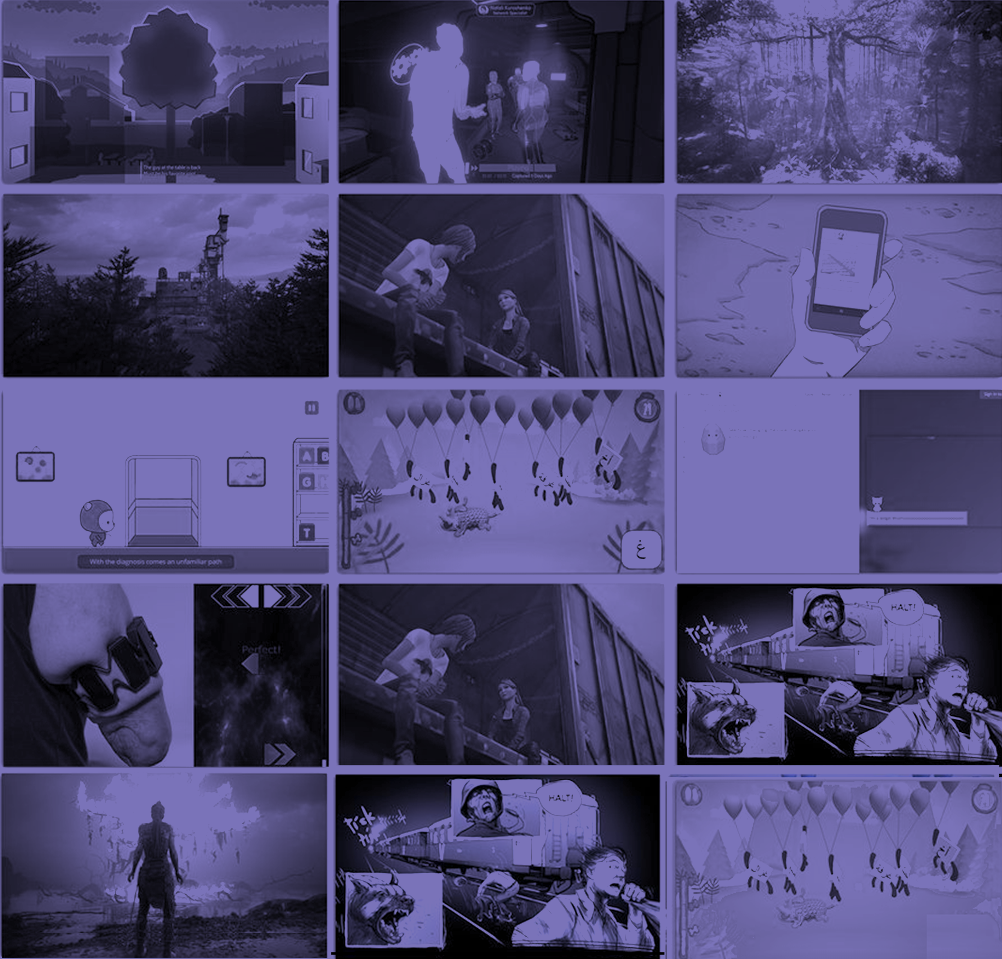
In 2023, Design Observer launched The Design Observer 20 (DO20), an initiative focused on highlighting 20 remarkable people, projects, and big ideas, all tackling urgent social needs. We called them “The Redesigners.”
Even then, we noticed a project that proves game design has the power to drive real-world change:
“Games for Change (G4C) has become a global community of social innovators, creators, and dreamers who are using art, storytelling, gameplay, science, and an increasingly sophisticated array of technological tools to make games that help people learn, build healthier communities, be more peaceful, and drive real-world change.”
Susan Pollack, the president of G4C, says game design, by nature, is already poised to make a difference. “Designing a game is a lot like creating a whole world, and when you think about it that way, it’s easy to see the connection between game design and impact — because isn’t making an impact really about designing the world we want?”
This year, Design Observer’s editorial team is compiling a new DO 20 list. This time, we’re focused on radical collaborations. Stay tuned.
— Rachel Paese, Associate Editor
This is the web version of The Observatory, our (now weekly) dispatch from the editors and contributors at Design Observer. Want it in your inbox? Sign up here. While you’re at it, come say hi on YouTube, Reddit, or Bluesky — and don’t miss the latest gigs on our Job Board.
Observed
View all
Observed
Share on Social


By Sheena Medina
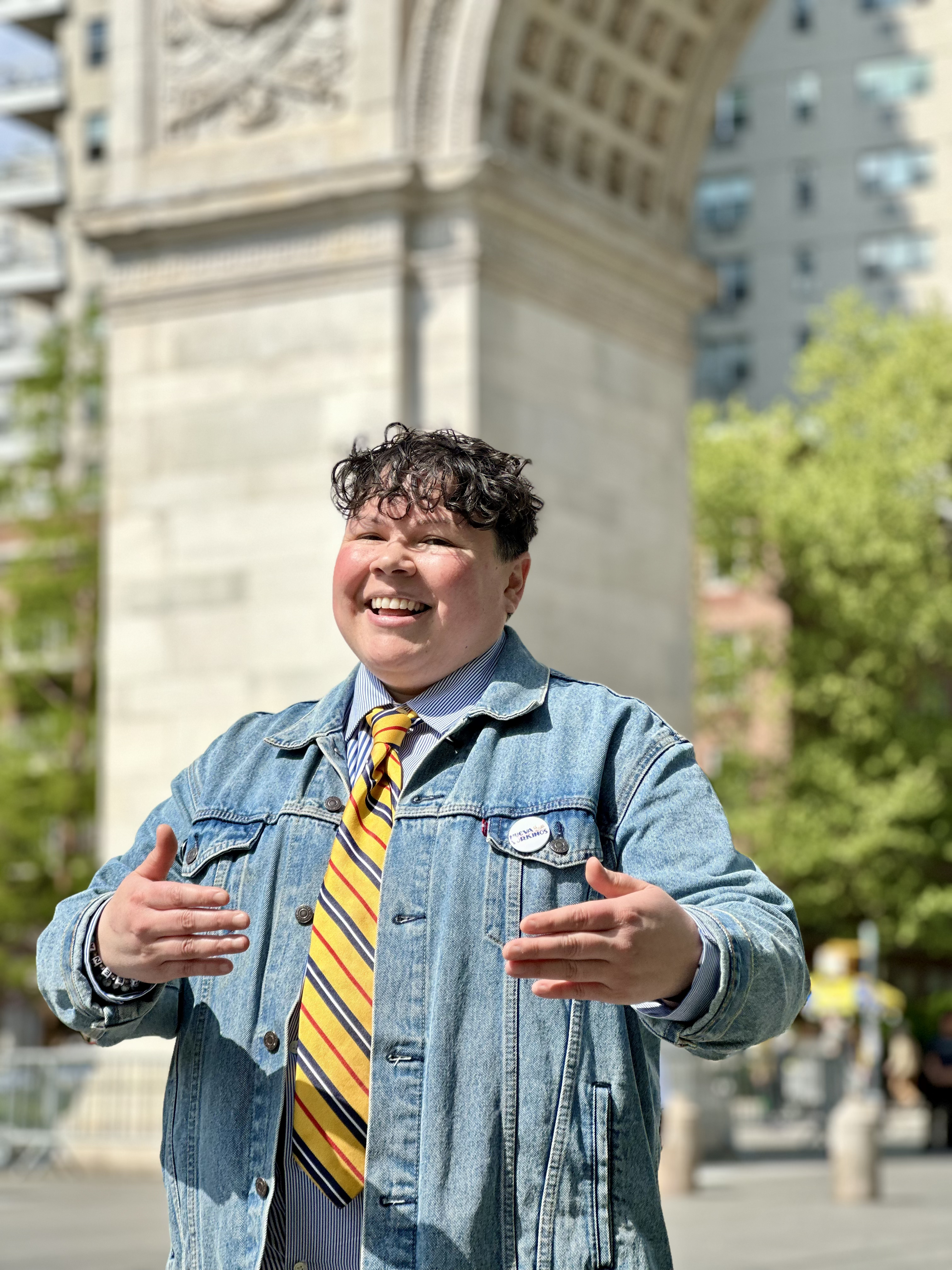 Sheena Medina is a writer, editor, and community advocate based in Brooklyn. As Managing Editor at Design Observer, she collaborates with a visionary team to drive conversations around design, equity, technology, and leadership. With over 15 years of experience in media and marketing, Sheena brings a unique blend of strategic insight and storytelling to her work, shaping content that sparks dialogue and fosters change. A proud Puerto Rican and longtime New Yorker, she’s dedicated to supporting her community both locally and on the island, often through her involvement in local politics and her commitment to amplifying diverse voices. Sheena is fluent in English, Spanish, and conversational Hindi. Find her @sheenamedina on social media, where she champions community and progress with a cup of masala chai in hand.
Related Posts

The Observatory Newsletter
Ellen McGirt|New Ideas
Gen-AI is a threat to human thinking
AI Observer
Dave Snyder|Analysis
The identity industrialists

The Observatory Newsletter
Ellen McGirt
Lessons in connoisseurship from the Golden Globes
AI Observer
David Z. Morris|Analysis
“Suddenly everyone’s life got a lot more similar”: AI isn’t just imitating creativity, it’s homogenizing thinking
Related Posts
The Observatory Newsletter
Ellen McGirt|New Ideas
Gen-AI is a threat to human thinking
AI Observer
Dave Snyder|Analysis
The identity industrialists
The Observatory Newsletter
Ellen McGirt
Lessons in connoisseurship from the Golden Globes
AI Observer
David Z. Morris|Analysis