


Véronique Vienne|Essays
June 23, 2016
Hear a Pin Drop
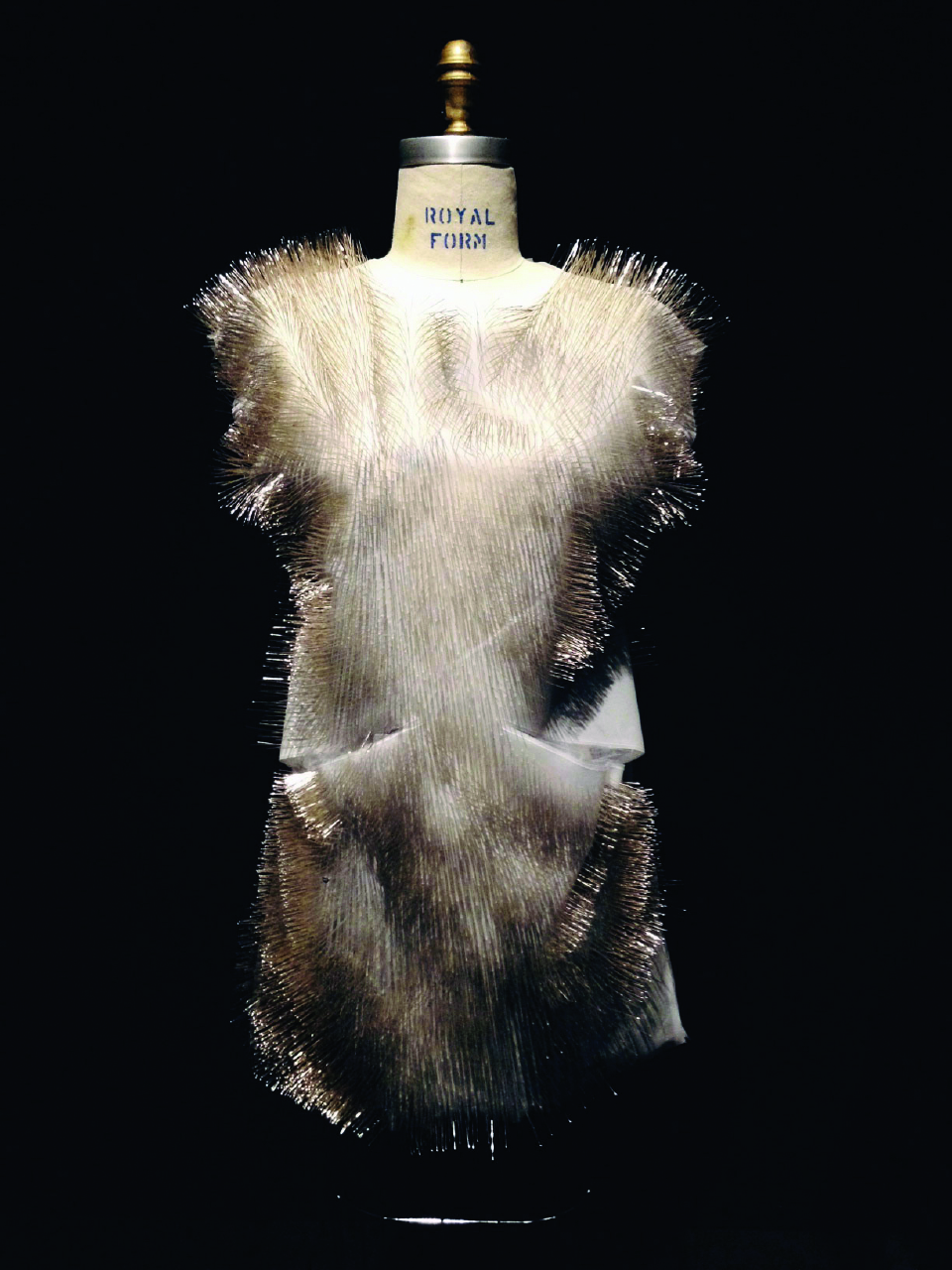
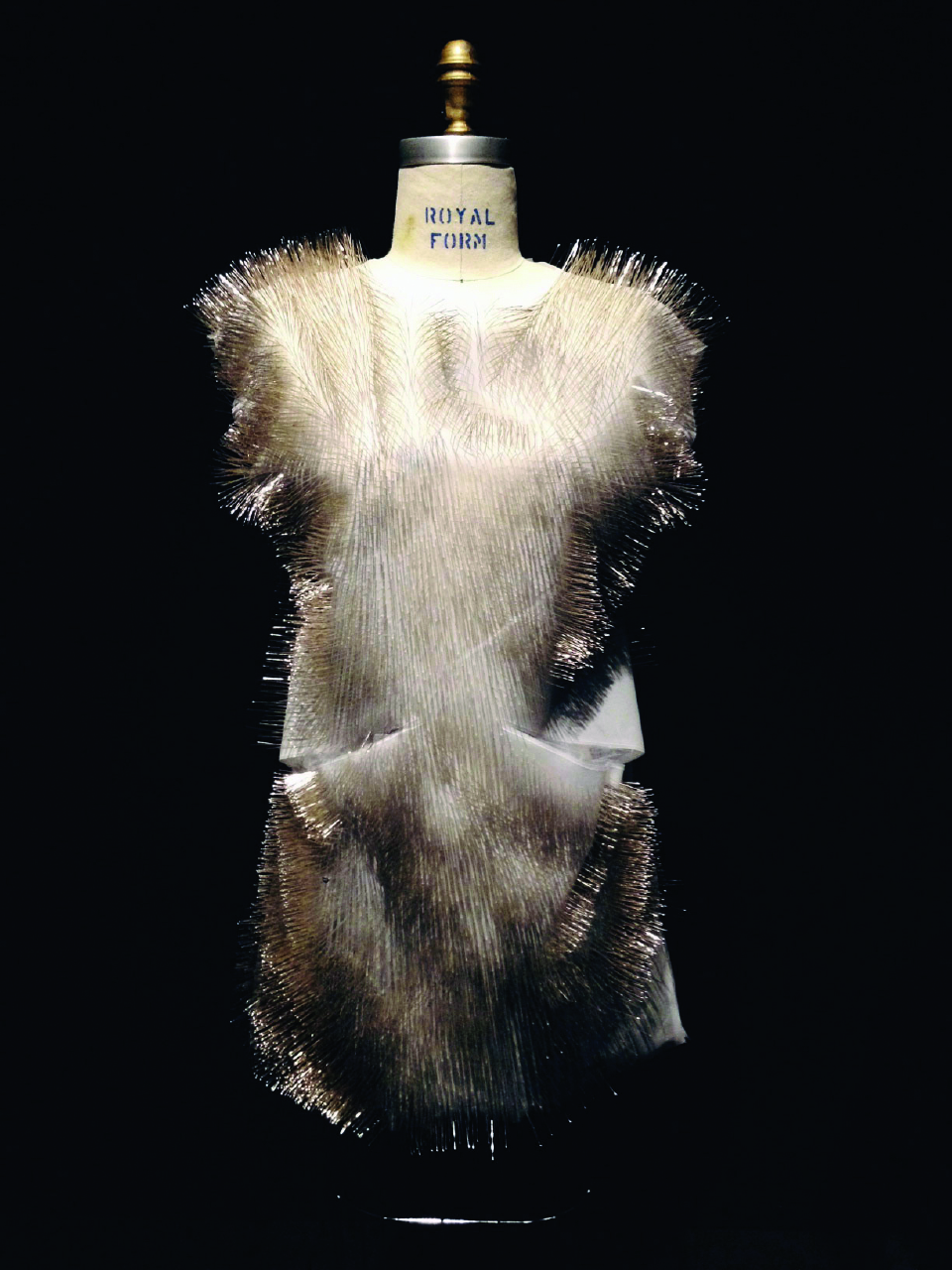
Ying Gao’s Incertitudes; photo by Christina Julien
There is a blurring of the line between the visible and the audible realms. Programmers are developing harmonic algorithms to convert photographs into melodies. Sounds, now integral to visual exploration, are also on the leading edge of sensory design.
The Chinese-born Canadian fashion designer, Ying Gao, uses voice activation technology to let garments react to audio signals. Gao’s apparel project is an example of the way the human voice and the eye can interact with each other seamlessly (pun intended). Gao’s experimental clothes are organza tunics covered with a silvery fleece that shimmers, shivers, and shudders like down feathers in the wind. The diaphanous garments are not soft and cuddly, though. They are, in fact, bristling with thousands of prickly pins that whisper as they move. Hidden under the gossamer, sensors detect ambient noises and muffled conversations. They use these faint sound waves to set the pins in motion. It’s all very confidential.
 Ying Gao’s Incertitudes
To read the complete article buy a copy of Observer Quarterly 1: The Acoustic Issue.
Observed
View all
Observed
Share on Social


By Véronique Vienne
Related Posts

Business
Kim Devall|Essays
The most disruptive thing a brand can do is be human

AI Observer
Lee Moreau|Critique
The Wizards of AI are sad and lonely men
Business
Louisa Eunice|Essays
The afterlife of souvenirs: what survives between culture and commerce?

Architecture
Bruce Miller|Essays
A haunting on the prairie
Related Posts
Business
Kim Devall|Essays
The most disruptive thing a brand can do is be human
AI Observer
Lee Moreau|Critique
The Wizards of AI are sad and lonely men
Business
Louisa Eunice|Essays
The afterlife of souvenirs: what survives between culture and commerce?
Architecture
Bruce Miller|Essays