


Laura Tarrish|Hunter | Gatherer
December 31, 2009
Hunter | Gatherer: Mari Andrews
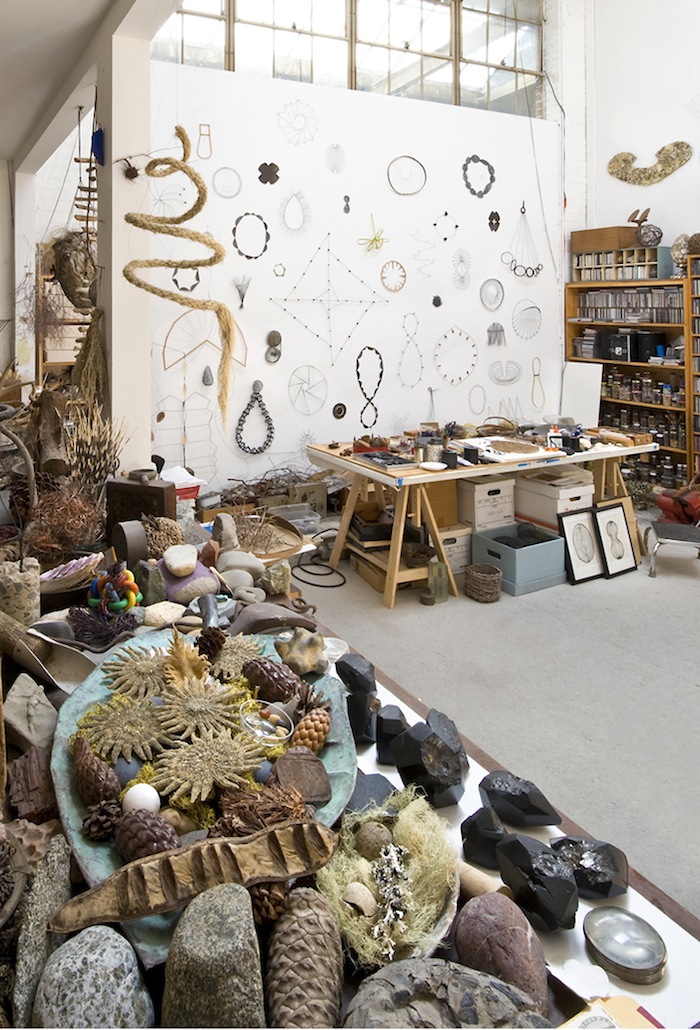
As a compulsive collector myself, I am fascinated by the drive in other artists to gather, sort and reconfigure their treasures. Entering the studio of California artist Mari Andrews is like walking into a magical life-size cabinet of curiosities. Emerging from a family of scientists, it is not surprising that Mari’s artwork often stems from the desire to distill objects, tools, and concepts down to their innate structure. She has a long-held attraction to the natural world and her studio displays an impressive collection of the objects she saves from her travels. You enter her workspace along a wall of jars, each labeled and holding soil specimens from her frequent hikes. The color palette is astounding from an unlikely salmon hue to rich yellow ochre and every possible shade of earth tones in between. Everywhere you turn you find collections of objects from her outdoor explorations: a basket of impossibly hued lichen, striped quills from a porcupine, pods, bark, bones, pinecones, stones, magnolia leaves … all elements that find their way into her wire sculptures.
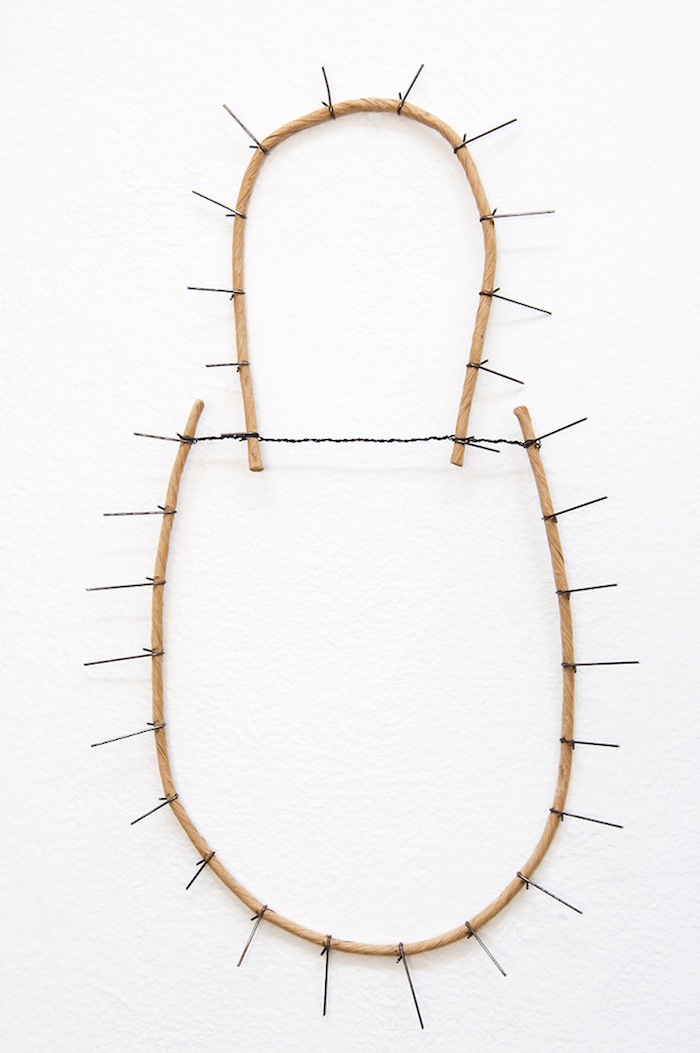
Split, 2011, wire, paper, 13 x 8 x 1”
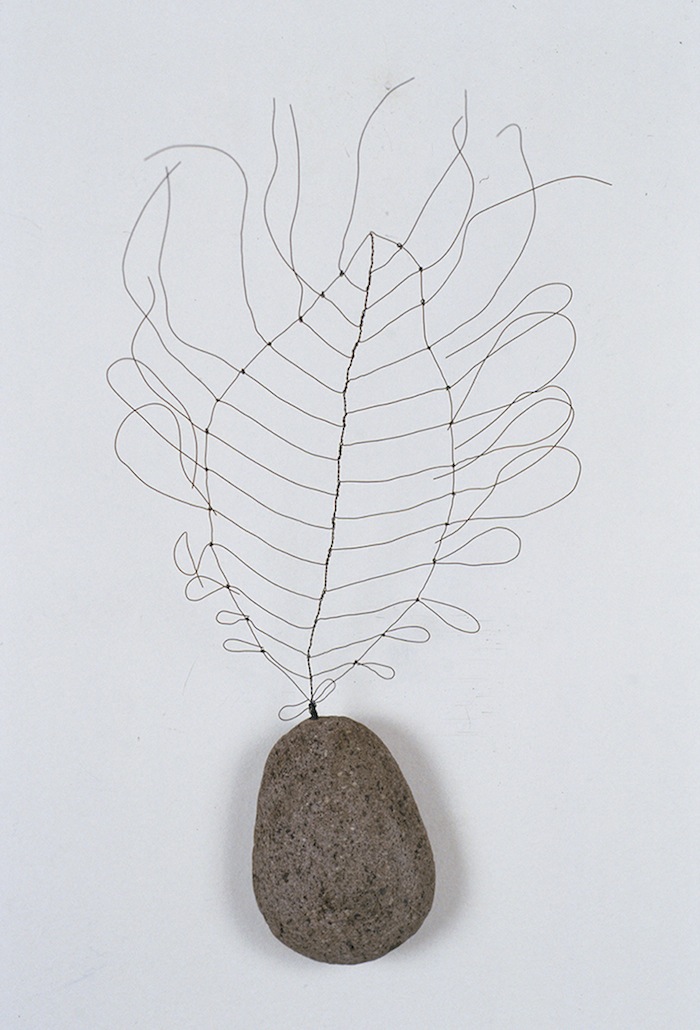
Sprout, 2005, stone, wire, 15 x 9 x 1”

Vortex, 2008, wire, tree moss, 24 x 20 x 5”
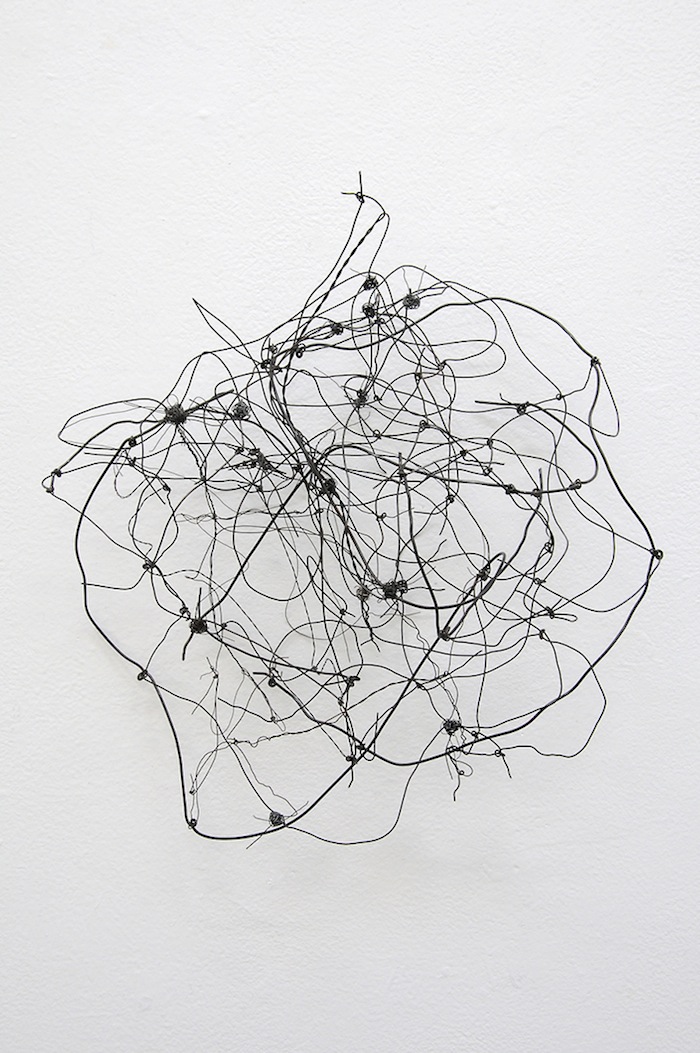
Dense Sparkle, 2012, wire, 13 x 13 x 5”
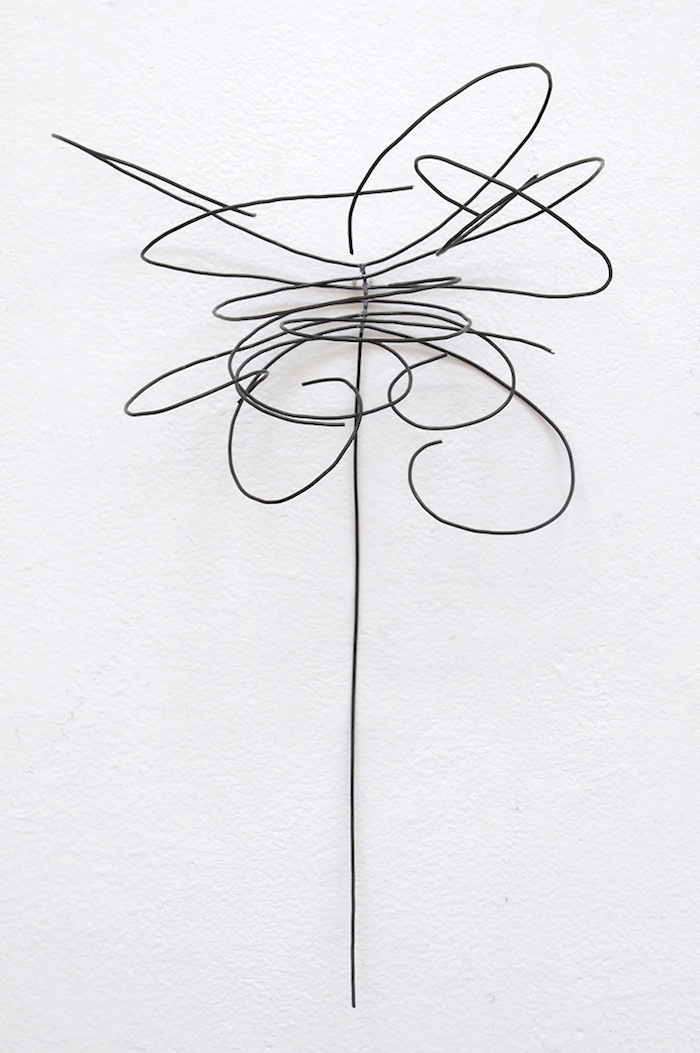
Curly 2, 2012, steel, 15 x 9 x 5”
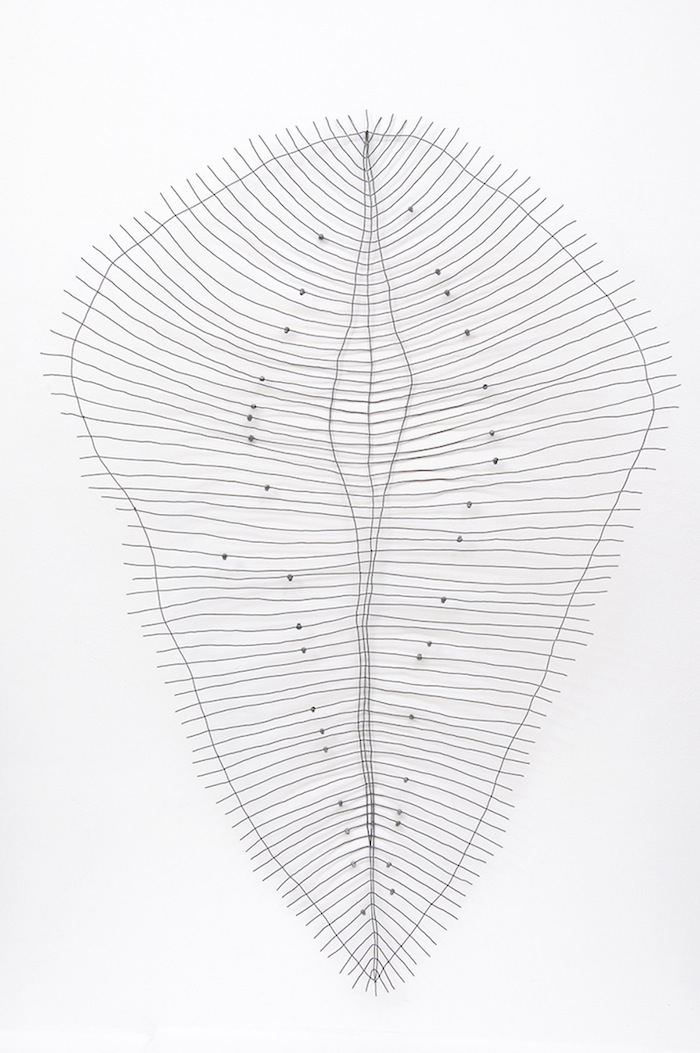
Big Leaf, 2011, steel, lead, 57 x 41 x 3”
Andrews literally draws with wire, coaxing graceful lines from the steel. She transforms hard-edged materials into delicate biomorphic shapes and conversely uses botanical ephemera to create hybrid forms that seem structural and manmade. Although each piece stands on its own, grouped together in installations they are even more powerful. Shadows cast by her almost calligraphic forms provide another dimension to the work. Early in her career, Mari Andrews found inspiration in Native American petroglyphs and you can still see similar forms cropping up in her sculpted drawings. Often created from elements that traditionally imply a certain permanence such as steel and stone, there is an unexpected dynamic and kinetic quality to her installations. In Propensitos Gravitas, steel rods with smooth stones attached punctuate the space with lyrical effect, cascading off the gallery wall.
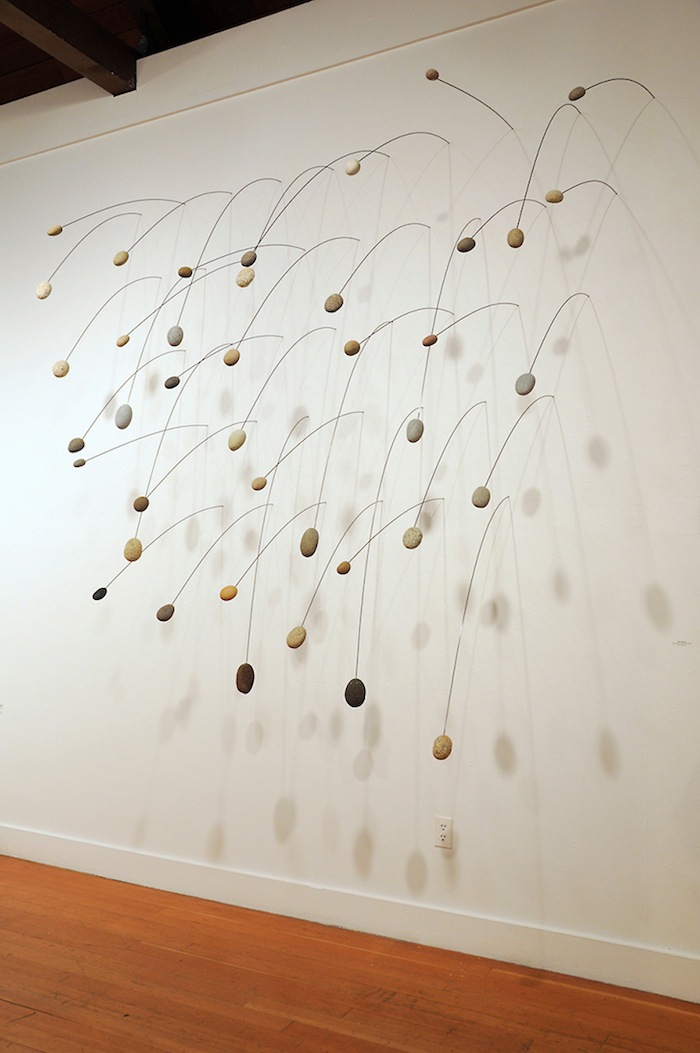
Propensitus Gravitas, 2010 steel, stone
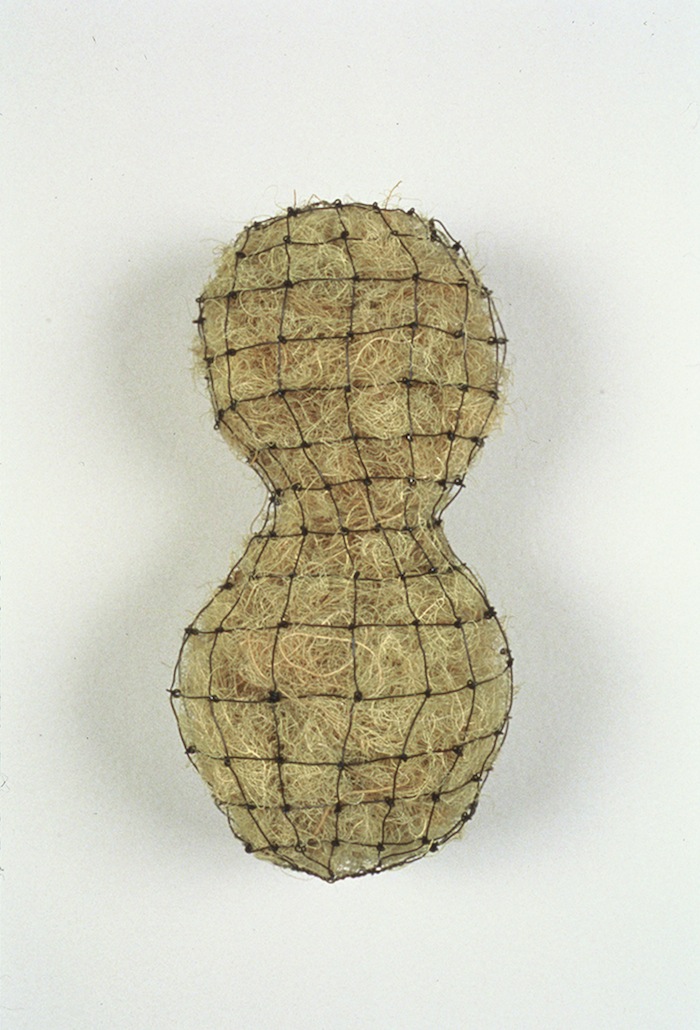
Peanut, 2003 wire, tree moss, 8 x 4 x 4”
Her current exhibit, Gravitational Pull at the Tayloe Piggott Gallery in Jackson, Wyoming, began as an exploration of navigation: ancient compasses; sundials; ways of marking time, distance and direction. As she delved deeper into these topics, other tangents presented themselves and Andrews embraced the deviations. “I follow my intuition in making my work and welcome the accidents and left turns. I love the concept in Zen Buddhism of the koan—which is the riddle, the mystery, the unresolvable story. I’m happiest when the work takes me in a direction I don’t know, or it manifests itself differently than I expect. To me, that is the physical manifestation of a koan.”
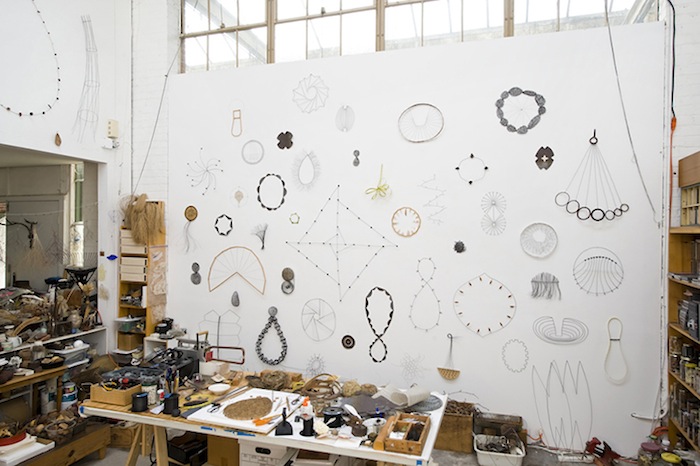
Studio, 2014; photo by Sibila Savage
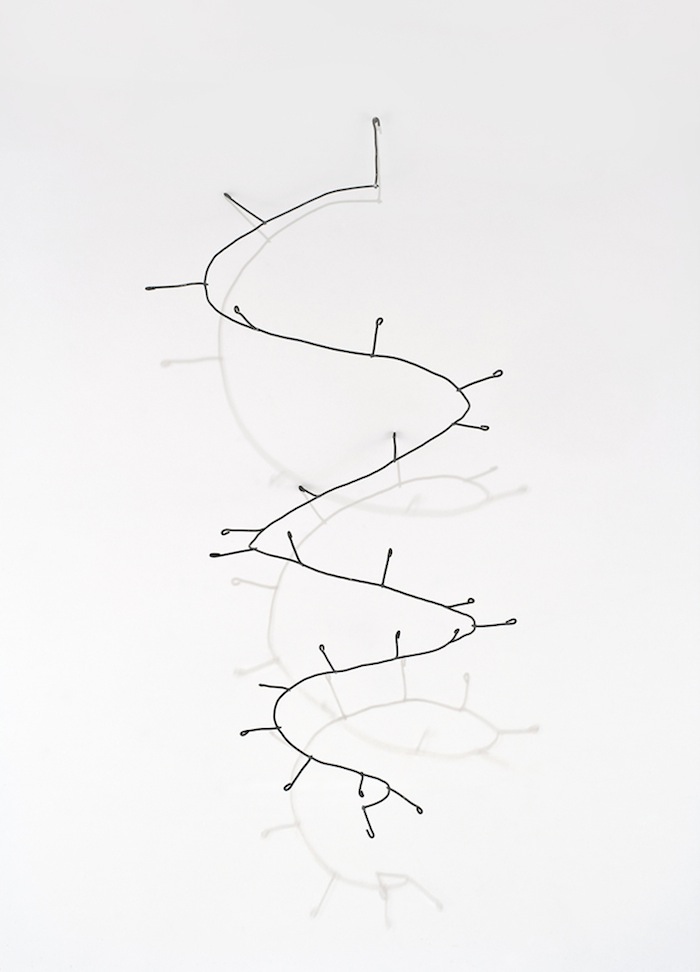
Descending, 2014, steel, 21 x 10 x 10”; photo by Sibila Savage
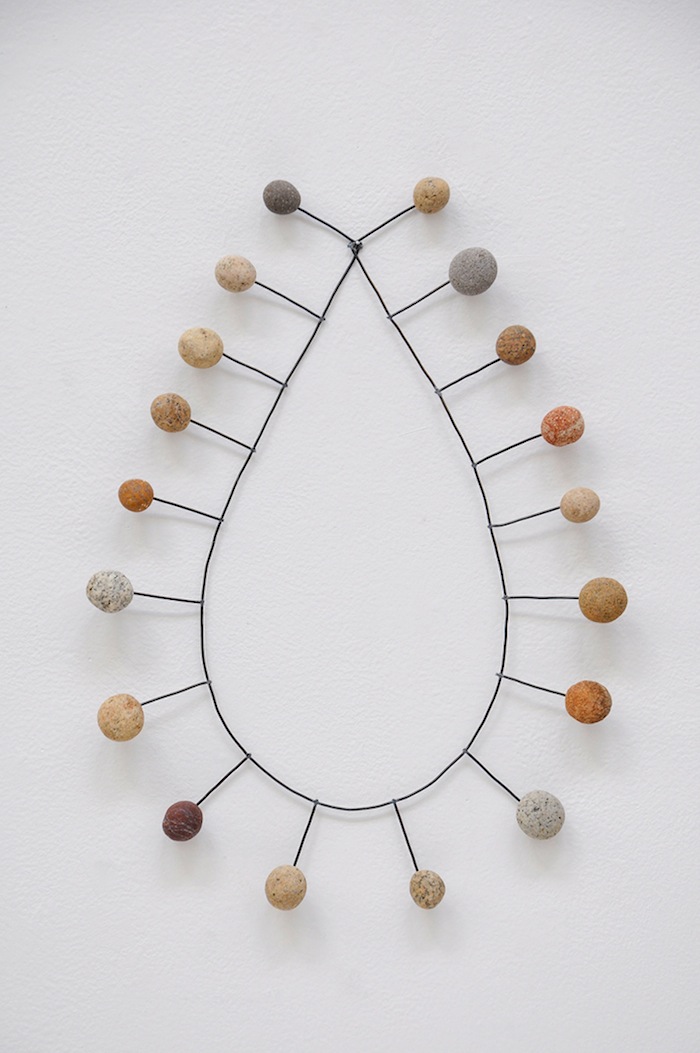
Compass 2, 2014 steel, stone, 15 x 14 x 1”

Catcher, 2014 steel, wire, 9 3/4 x 10 x ¼”
With a reverence for the allure of the natural world, Mari Andrews’ works highlight the fragile and the ephemeral in our often over-looked surroundings and may even make a collector of many of us … or, at the very least, encourage us to look upon our environs and the simple elements found there with a less jaundiced eye.
Observed
View all
Observed
Share on Social


By Laura Tarrish
 Laura Tarrish is a collage illustrator and a compulsive ephemera collector currently based in Portland, Oregon. Her editorial clients have included Apple Computer, Chronicle Books, The Washington Post, and United Airlines. As the founder of Bridgetown Papers, Laura has created custom work for individuals including Isabel Allende, Tom Brokaw and Bob & Lee Woodruff. She has been a contributor to Uppercase Magazine and Felt & Wire.
Related Posts
The Observatory Newsletter
Ellen McGirt|New Ideas
Gen-AI is a threat to human thinking

AI Observer
Dave Snyder|Analysis
The identity industrialists
The Observatory Newsletter
Ellen McGirt
Lessons in connoisseurship from the Golden Globes
AI Observer
David Z. Morris|Analysis
“Suddenly everyone’s life got a lot more similar”: AI isn’t just imitating creativity, it’s homogenizing thinking
Related Posts
The Observatory Newsletter
Ellen McGirt|New Ideas
Gen-AI is a threat to human thinking
AI Observer
Dave Snyder|Analysis
The identity industrialists
The Observatory Newsletter
Ellen McGirt
Lessons in connoisseurship from the Golden Globes
AI Observer
David Z. Morris|Analysis