


January 8, 2026
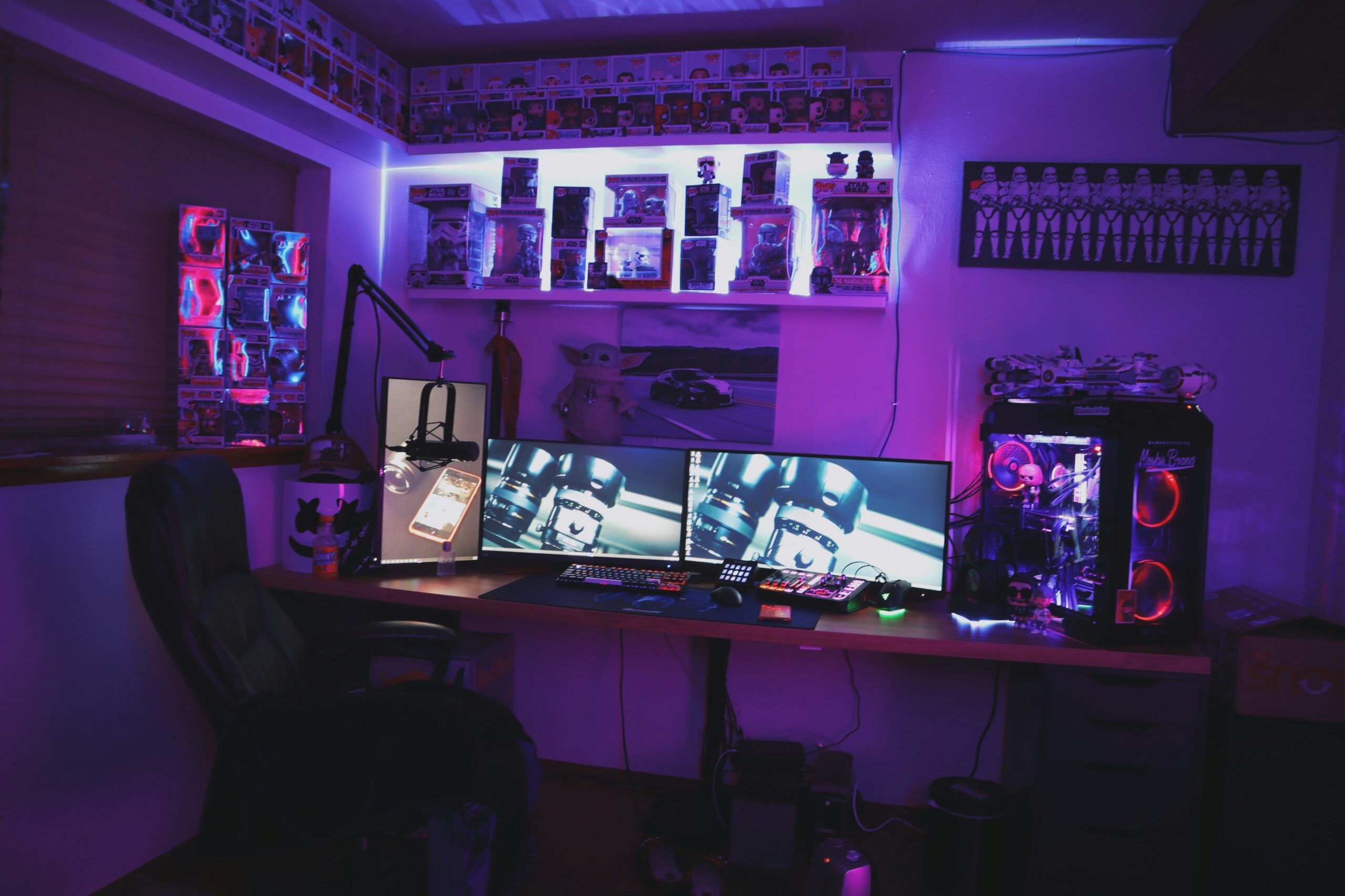
Synthetic ‘Vtubers’ rock Twitch: three gaming creators on what it means to livestream in the age of genAI
The battle for viewers in the lucrative world of streaming is getting more complicated
“I don’t consume the method, I consume the product.”
These were the fighting words of xQc, who, with 12.2 million followers, is among the top 25 content creators on Twitch, the platform that dominates the gaming video livestreaming market.
xQc’s controversial defense of AI art, which set social media ablaze earlier this year, struck a chord with some, and a nerve with many others, as the streaming community faces a swell of AI-powered tools, companies, and personalities raising thorny questions around labor, ethics, and ownership.
“I don’t consume the method, I consume the product” is actually a pitch perfect summation of how consumerism has permanently damaged how people perceive art https://t.co/WsD5QhUIZp
— 「Indigo」⚢ (@FoolPlanet) March 29, 2025
“I am not ready to outsource illustrations yet,” says FroggyLoch. The Twitch creator, who has more than 75,000 followers, came into full-time streaming from animation and illustration, and, though she uses several genAI tools in her work, she doesn’t like how generative models are trained on images without the consent of the original artist.
She’s hardly alone in this ambivalence. In an industry where success has always been built on godlike processing power, stakeholders are split on who will benefit from the growing presence of genAI, and by how much.
GenAI early days and earning potential
In November, some 6.5 million Twitch streamers created 65.6 million hours of content, attracting more than a billion platform visits. Big numbers can mean big earning potential. A mid-level creator with an average of 50–500 concurrent viewers can make about $500–$5,000 per month from subscriptions, advertisements, and audience interactions during a stream. The most elite (2000+ average viewers) can make upward of $30,000 a month and leverage their audience into other revenue streams like acting and food products.
The rise of AI could bolster these opportunities, according to proponents, offering game developers, streaming platforms, and live streamers the requisite tools for growth. For streamers, that might look like better content searchability, easier monetization through advertising, and increased audience interaction. For developers, it might mean AI image generation that cuts game development time, and for streaming services, increased video quality at scale.
In practice, some streamers point to growing pains.
FroggyLoch uses Twitch’s AutoMod feature to moderate stream chats and help block messages that are deemed offensive. But it requires a good deal of oversight. “I have at least five human moderators that have to check the AutoMod’s work,” FroggyLoch says. “The AutoMod will block some messages that are totally harmless because AI lacks context.”
SylverItSuki, a Twitch creator with around 350 followers, says many tools on the platform and other livestreaming services are still too expensive and clumsy to benefit most streamers. He expects the use of AI tools to stagnate as public opinion around them is generally negative, even within the streaming community.
The creators of these tools, meanwhile, are betting big on their continued growth. Dean Leitersdorf, the 26-year-old co-founder of generative AI video startup Decart AI, received a $3.1 billion valuation for the company in August and aspires to turn it into “a kilocorn” worth upward of $1 trillion.
The rise of the AI-powered Vtuber
Perhaps the most existential threat to the live streamer is the rise of the synthetic “Vtuber.”
SylverItSuki and FroggyLoch fall into this camp because they use generated digital avatars in addition to or in lieu of their faces.
FroggyLoch uses Warudo Pro to animate her appearance on stream due to a stalking incident at her last animation job. She takes the form of a pink-haired and hued fairy in a treelike setting. As we talk, a stylized video game-like anime character mimics her motions in real-time. I never see her real face but am entranced as her virtual model’s rhombus-shaped eyes randomly grow and shrink while she’s speaking.
SylverItSuki, for his part, uses VTS Pog, a program for integrating an AI cohost into streams. An animated avatar shares the screen with the Twitch host, reading and responding to the stream’s chat feature to keep the conversation going and add color commentary.
But not all Vtubers are created equal. Some of the most popular cut out the human host altogether and run strictly from an AI large language model (LLM). In these instances, the human owner of the channel builds an AI personality and lets it take control whenever they put the personality online. Although there is no reliable data on the number of AI streamers, Streamscharts estimates there are currently thousands in this rapidly growing space.
This practice runs counter to uncodified developer recommendations protecting AI from running amok. “The human host should be there with the model, training it and involved in its progression 30% of the time,” FroggyLoch explains. “The other 70%, it can just run free.” Still, the 70/30 rule is just a guideline. “Nobody is monitoring that,” she says. “Some streamers will set up an AI model and let it run their stream 100% of the time.”
The fully AI-powered Vtuber space is “about to explode. It’s disgusting,” says Blake Scordino, a designer and game developer in Dallas. “Someone will make a killer AI streamer that will become wildly more popular than all the other streamers.”
Neuro-Sama is well on that path. The streamer, who can “chat, sing, react to videos, and play games,” has a formidable 876,000 followers, placing her in the top 150 Twitch creators. It means her content — and the often troubling antics surrounding it — are front and center. As an example, some of Neuro-Sama’s fans overtook a public digital artboard that was meant to highlight many human creators’ work by buying most of the pixel space on it. Fans flooded it with images of Neuro-Sama and her evil twin, effectively pitting all other streamers and digital artists against Neuro-Sama in a contrived war for viewers.
As users get more and more accustomed to communicating with AI LLMs — and fighting internet battles on their behalf — they run the risk of experiencing AI-induced psychosis. “It’s not human companionship,” FroggyLoch says. “LLMs just show you what they think you want to see.” Still, the tools are here to stay, she predicts, and will only become more advanced. “Pandora’s box is open.”
Observed
View all
Observed
Share on Social


By Stephen Mackintosh
 Once a civil engineer, Stephen Mackintosh now writes about the constructed world and how our technology interfaces with psychology. Besides Design Observer and food criticism for The Infatuation, Stephen holds down a Substack called Stained Glass Graffiti, where he also workshops creative writing in preparation for publishing a collection of poems about AI. On principle, Stephen believes in the wisdom of biology, seeking lessons in the ancient ruins of the world, and refueling his vitality through surfing.
Related Posts
AI Observer
Dave Snyder|Analysis
The identity industrialists
AI Observer
David Z. Morris|Analysis
“Suddenly everyone’s life got a lot more similar”: AI isn’t just imitating creativity, it’s homogenizing thinking
AI Observer
Raphael Tsavkko Garcia|Analysis
AI actress Tilly Norwood ignites Hollywood debate on automation vs. authenticity

Arts + Culture
Dylan Fugel|Analysis
“I’d rather be a pig”: Amid fascism and a reckless AI arms race, Ghibli anti-war opus ‘Porco Rosso’ matters now more than ever
Related Posts
AI Observer
Dave Snyder|Analysis
The identity industrialists
AI Observer
David Z. Morris|Analysis
“Suddenly everyone’s life got a lot more similar”: AI isn’t just imitating creativity, it’s homogenizing thinking
AI Observer
Raphael Tsavkko Garcia|Analysis
AI actress Tilly Norwood ignites Hollywood debate on automation vs. authenticity
Arts + Culture
Dylan Fugel|Analysis