



Kit Hinrichs, Delphine Hirasuna|Books
May 14, 2013
The Alphabet Card

Editor’s Note: The Alphabet Card is the first book in the Obsessions series from Studio Hinrichs. The series focuses on objects, topics and themes that fascinate and fixate, often for inexplicable reasons. Kit Hinrichs’ Alphabet Cards collection grew out of his interest in vintage typography, early printing techniques and popular trends from different eras. The following excerpt is published here with permission of the authors.
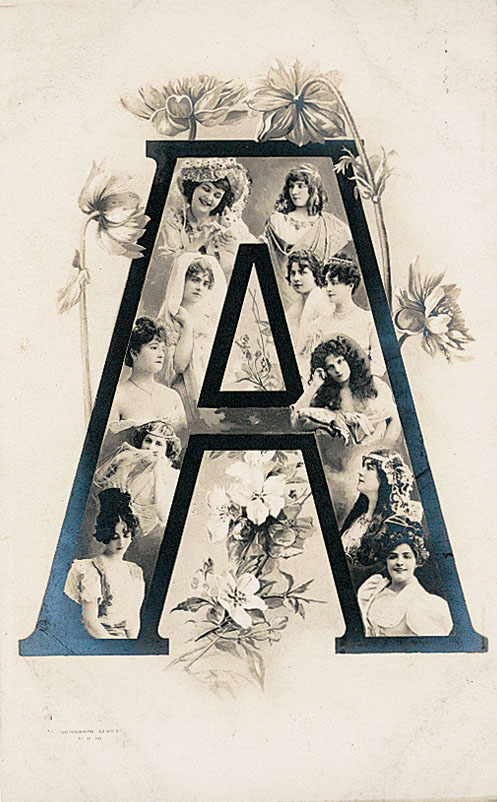
The year 1913 marked the peak of the picture postcard craze. Even though the population in America was less than 100 million, nearly 970 million picture postcards were sold in the U.S. alone. At a time when most people did not own a camera and color commercial printing was in its infancy, the little picture postcards were a delight to view. Collecting and displaying picture postcards in scrapbooks became a popular pastime. Manufacturers encouraged this by issuing postcards in sets so that the public would want to own the whole series.
Alphabet letter postcards were favored by card makers and collectors alike. Consumers knew that each series consisted of 26 postcards and could quickly identify which ones they needed to complete their collection by noting which letters in the alphabet were missing. Hundreds of thousands of alphabet letter postcards in every variation were produced, but by the 1920s, postcard makers had pretty much ceased designing alphabet postcards. The telephone and automobile made casual communications easier. The introduction of offset lithography, along with the invention of roll-film cameras, made printing photographs of real things, people and places in full color more affordable and desirable. The demand for idealized alphabet postcards plummeted by the end of World War I — and then disappeared completely.






Observed
View all
Observed
Share on Social


By Kit Hinrichs & Delphine Hirasuna
Related Posts

Design Impact
Ellen McGirt|Books
No mandates, only opportunities: IBM’s Phil Gilbert on rethinking change

Education
The Editors|Books
Your October reading list: The Design of Horror | The Horror of Design

Innovation
Vicki Tan|Books
How can I design at a time like this?

AI Observer
John Maeda|Books
Should we teach AI to reflect human values, emotions, and intentions?
Related Posts
Design Impact
Ellen McGirt|Books
No mandates, only opportunities: IBM’s Phil Gilbert on rethinking change
Education
The Editors|Books
Your October reading list: The Design of Horror | The Horror of Design
Innovation
Vicki Tan|Books
How can I design at a time like this?
AI Observer
John Maeda|Books