



Lee Moreau, Ellen McGirt|Audio
November 11, 2025
The Past, Present and Future of Design with Lee Moreau, DB|BD Season 12 Finale
In this season finale, designer and educator Lee Moreau joins host Ellen McGirt to reflect on the state of design, and what it means to create, rebuild, and hope in uncertain times.
Everything that's being dismantled right now will have to be rebuilt or versions of it will have to be rebuilt. And that's going to be a space for us.
– Lee Moreau, on the state of design in 2025
Season 12 of The Design of Business | The Business of Design closes with a deeply personal conversation between Ellen McGirt and Lee Moreau, exploring how design helps us understand where we’ve been and imagine where we’re going.
In this unexpectedly emotional conversation with DB|BD host Ellen McGirt, Moreau gets real about the state of design. He explains why design is a practice of reckoning with the past as much as it is of designing for the future. He also reflects on his conversations with other designers about balancing the threats and possibilities of AI. And he shares why he is cautiously optimistic that there will always be a place in our world for designers and design.
“Everything that’s being dismantled right now will have to be rebuilt or versions of it will have to be rebuilt. And that’s going to be a space for us,” Moreau says. “And some of that will be done by corporations, some of that will be done by us working in concert with governments…You know, I think all that is a huge opportunity for [designers] to make things right again.”
Stay tuned after the interview for McGirt’s’ season 12 recap!
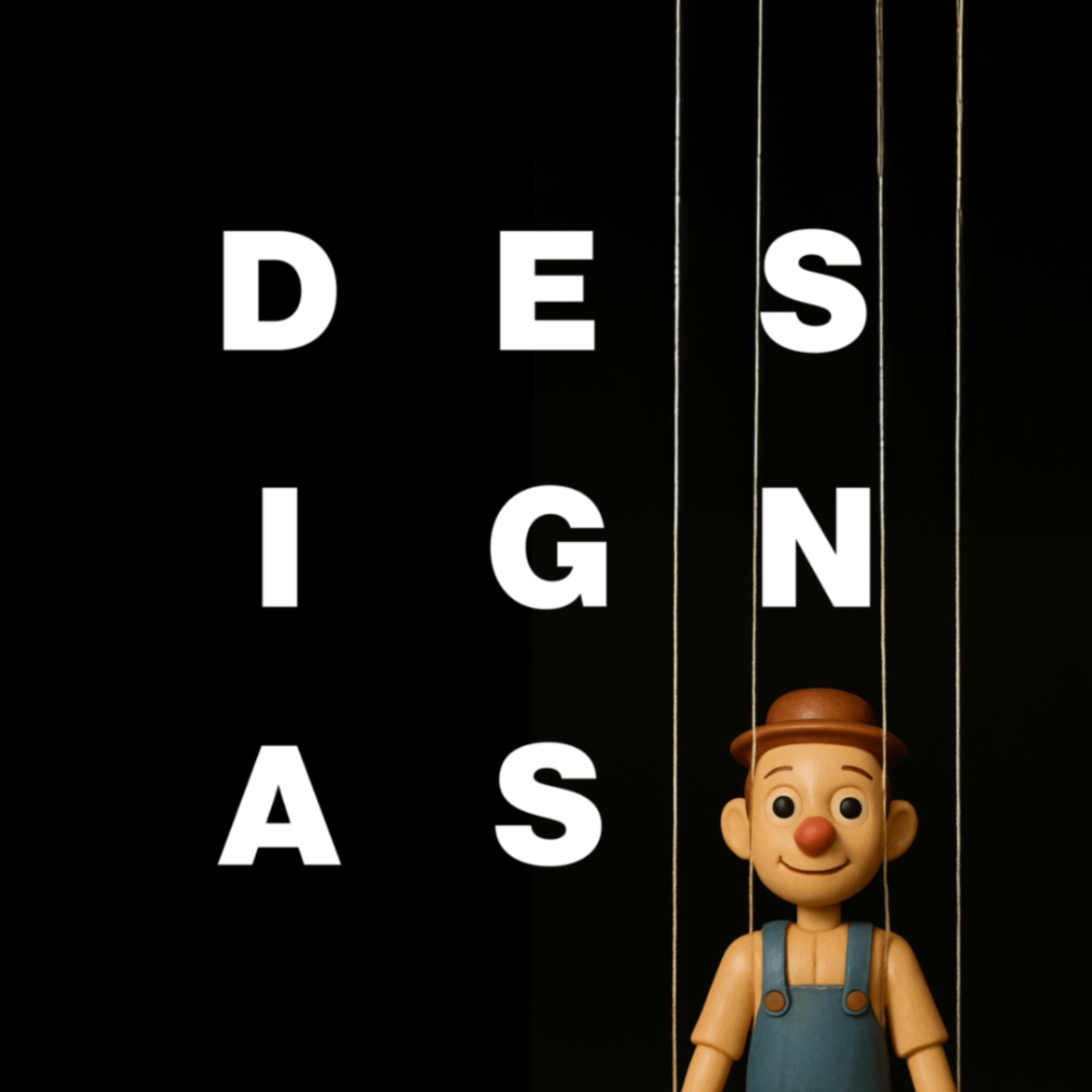
Lee Moreau is the host of the Design Observer podcasts Design As and The Futures Archive. He is also a Professor of the Practice of Design at Northeastern University and the founder and director of Other Tomorrows, a design and strategy consultancy based in Boston.
On this season of DB|BD, we are Designing for the Unknown. Host Ellen McGirt asks visionary designers how they navigate uncertainty- whether it be technological disruption, global crises, or shifting cultural norms.
Transcript
Ellen McGirt Hello, dear listeners. Welcome to the final episode of season 12. It might have been a strange year, but it’s been a fantastic one for this podcast. We’ve talked to the brightest design minds about how we move forward in an uncertain world. We have an excellent recap at the end, so please stay for that. But I begin our last episode with a conversation with one of my favorite conversationalists, Lee Moreau, who happens to be the host of one of Design Observer’s other popular podcasts, Design As. Like so many people in design and design adjacent fields, Lee embodies the modern call to live a creative, eclectic life, better known in social media parlance as, hey, you can just do things. Lee just does things. An architect, turned strategist, a professor, an experience designer, a maker, and a consultant across industries, distance, and difference. He makes it all look easy. I wouldn’t be surprised if he did community theater in his spare time. But just doing things seems to be the secret to something more than just being a busy, interesting person. It forms a sort of practice, one that helps anyone become a more humble, curious, and open person. We need more of those. We need more Lees. What we talked about, and in fact what the entire season turned out to be about, was the delicate art of being human, showing up in conversation and trying to get shit done, doing good work, occasionally getting into good trouble, and of course, doing it with other people. Radical collaboration, the thing that great designers are great at, and the thing that we all need to learn to do now, will be Design Observer’s editorial quest for the next few months, and my conversation with Lee was the perfect way for us to start. I’m Ellen McGirt, and this is the Design of Business, the Business of Design. And this season, we’re designing for the unknown, together. I think most of our listeners know you, Lee, but for for those who may not, can you just give us a quick rundown of your background as a designer and just how you spend your days now?
Lee Moreau Ellen, thanks so much for having me again. I spend my days juggling sort of multiple lives, which most of us do, right? So like jumping between different things and trying to find balance and all those things that the self-help books tell us try to to try to figure it out. I’m doing that between with one leg in a studio that I run here in Boston called Other Tomorrow’s, which is a design studio where we help large organizations imagine their futures and then help to implement them or bring them to life or to try to make tough choices. I have another leg that’s at Northeastern University where I’m professor of practice and design. And there I help teach graduate students experience design in a program that we run. And then also undergrads, I teach the sort of large format lecture class where I try to seduce designers, or potential designers, or people who frankly never had the permission to think about having design in their life, but who probably have it there anyway. I try to find and identify that design and bring it to life and honor it and hopefully influence them into coming closer to our world. And then obviously a lot of the time that I spent with you, Ellen, is in the podcast studio and in thinking about the editorial spine through which design and equity and conversations about our future all intersect. So that’s both through the Futures Archive initially, which is how I started this world of podcasting and now most recently in Design As, which is a podcast about having hard, hard conversations, bringing dialogue to life in ways that I think we were searching for for some time and and that was even before the recent presidential election, which we’re now searching to find more ways that we can talk and find common ground.
Ellen McGirt Well, I I have to lay praise on your name, Lee. You are an expert in having challenging and difficult conversations and you make it look so easy and people don’t even know they’re having them.
Lee Moreau Coming from you, that’s amazing. Ellen, please.
Ellen McGirt You really are good at this. I wanna dig into all of them, the podcast in particular. I want to spend some time there, but let’s go in the order in which you gave us. I wanna ask you about your client work. Has imagining a better future for your clients changed? Has it become more challenging? You really have been working through the entire arc of the conversation of design and design thinking, new technological tools coming online. You’ve been there for all of it. So I’m curious if you look back one year, two years, five years, what’s the arc for your client?
Lee Moreau You know, it’s interesting you you said the word better and I think that’s something that, from the moment we named the studio, we called it Other Tomorrows, explicitly because we actually needed to acknowledge that not all futures, not all tomorrows are better. In fact, it’s important for us to hold a place for the idea that frankly, some of the tomorrows we we could we might have will not be better. And if we don’t imagine both the bright, shiny, happy tomorrow, which I’m a eternal optimist. And I believe in people, and I think one day. Well, I think tomorrow will be better. It might just not be the direct tomorrow. It might be a few down the line. I do think things are moving in a direction, wow I can’t even know I don’t even know how to say that.
Ellen McGirt We’re doing just fine. We’re having an emotional moment here in our separate studios, listeners. We’re really this we’re digging right in.
Lee Moreau But but you know, the name came before, at a time when I think we needed to both be hopeful and also acknowledge the reality. And we kind of that’s just been really brought to life in the last several months where we both have to kind of hold a place for optimism and togetherness and community, but also realize that we’re not all on the same page. And we need to be thinking about that. It’s not just shiny happy. Don’t just like close your eyes and look at the, you know, the share price, the look of the stock market, the Dow Jones. I mean, there there we can we can confuse ourselves with so many data points and things like that. But frankly, it’s just being open to the idea that things are not predictable. So with my clients, I try to make space for all of that. And I think you know, most of our clients are also receptive. They’re living in the same world that we’re talking about here, right? While they may need to hit certain marks or let’s say meet their objectives, that they’ve set out and da da da and told their shareholders and everything. That doesn’t mean when they go to bed at night they’re not thinking about other things. And so let’s bring that all to life and try to be productive with that space.
Ellen McGirt You know, it’s, I’m getting emotional listening to you, Lee, and I’m also recalling a conversation I had as a much younger middle aged reporter. I was interviewing a designer, who was part of a of a large children’s hospital renovation. He was talking about the hallway in and out of the hospital, which he had turned into an actual journey. And there’s animals and there’s thoughts and there’s colors. And he walked me through very, very specifically what the journey was. And then he said something that’s hard for me to get out without getting my my my throat caught here is he said, you know, you come into the hospital, we serve very, very sick children and their families. This is a journey in. Not everyone’s gonna take this journey out. And I thought, my first thought was like, My God, you can’t say that to the parents. You can’t say things like that. But yet that actually is the job of design to be able to hold space for the actual experience that people might have. And to me, it took me years to realize just what a gift and a skill that was that he was able to do that and talk to all the stakeholders, you know, everybody from the construction construction crew to the parents who sat on the review committee.
Lee Moreau And you can use that kind of capacity both in a forward direction, also retrospectively, right? Because I think a lot of what we have to do as designers, you know, using our storytelling abilities is yes, we want to talk about potential futures, but we also want to get real about the past. And sometimes getting real about the past is telling and it it’s not sugarcoating it. It’s actually just bringing those narratives to life and creating a thread. I, you know, I have a a client in the the footwear space. And, you know, one of the things we have to get real about is the fact that we’re making twenty six billion pairs of shoes this year on planet Earth. And we’ve been doing that more or less for decades, and we have no pathway for what’s gonna happen to those things after. And so looking back at where we started, You know, it’s the unintended consequences that we’re wrangling with now were seated long time ago. And we have to get real about that, where we are now, and then where we’re going in the future. And so that story that you told about the children’s hospital is is remarkably sobering when you reduce it to one, right? A single person. But the scale of that is also important. So the scale of one and then the scale of millions, billions, etcetera. That’s the thing that I think we were not planning for when I was getting my education, right? We had no sense of scale. And it’s only been in the last couple of decades that that started to emerge for us with great thinkers like Jamer Hunt, Danielle Meadows. I mean, people that have started to put this together over the last few decades. And we really owe them a huge debt.
Ellen McGirt We sure do. You mentioned two of my favorites. I well, I love them all equally, but those are two of my favorites. You also talk to students at a couple of levels, right? Really grad, pre-professional, and also just walking into the world, still their frontal cortex is still being formed. And I think they must be very lucky to have this body of work and you specifically at their fingertips to think about scale in this way. We just did a community survey that was really wonderful to see, you know, the Design Observer audience really asking us what they needed. And one comment in particular spoke exactly to the complexity that you just discussed. It’s like, how do you navigate this messy thing called design and their sort of young pre-middle of their careers? And I’m thinking they’re looking for tactics, strategies, words, phrases, hand signals, anything to be the person who can have that difficult conversation when you don’t have position power on a team or in an organization. So as a as a shaper of of of young and emerging minds, how do you advise your students walking into the world about how you know how to maintain this level of candor and courage and openness when shit gets pretty squirrely pretty quick if you squint and look at it.
Lee Moreau Yeah, I think it’s a great question. I think there are two different levels of student that I’m often engaged with. So there’s some and who are design students and they self-identify as design students, they know that they have command of something in design, whatever it is. They just don’t know what to do with it, right? So, like how do I leverage this remarkable skill I’m starting to feel that is part of my identity? And how can I use it to accomplish things that will make me happy? For some of those students, it’s making beautiful drawings and illustrations and book design. For others, it’s helping to influence outcomes at a bigger scale, working in government. How can design help us get a mortgage more effectively and more fairly, right? How could your…and that’s that will improve lives. How can we use design to you know, accelerate our learning and understanding of things in the world? And and you know, helping students find ways to leverage their capabilities using their craft to have an impact, right? That kind of word that we tend to use. That’s relatively easy, right? Like and and a lot of it’s about determination and do they have the grit to go out there because it takes a long time to find your place, right? The other group of students I talk to have no sense that design is part of their life. And on a lot of these for these students, I look at the footwear they’re wearing, you know, what are the shoes they have, or like what music are they listening to, or the t-shirt they might have, or the water bottle that they inevitably, inevitably bring to class. And I try to see like, okay, triangulate from those things, where is design in their life? And if I can I identify that and draw that out and make them realize that design was there all along, that just, you know, they they just need to kind of like lean into it a little bit more. I just want to like set some of them off on a onto a course for, and many of those students will not have design be so central in their life, but it will be part of the menu, let’s say. It’ll be something that they a skill set that they can lean into or kind of I don’t know. It’s almost like a a hat that you wear once in a while. It’s like, oh, right now I’m gonna I’m gonna think like a designer and that’s gonna make this other thing that I’m doing as an accountant or as a I don’t know, gymnast, whatever it is, you know, possible. And so I think design can help us in a lot of different domains and parts of our lives. And and that’s really what my job is.
Ellen McGirt It sounds to me, reading between the lines, that what you’re saying is that with an attention to the world and attention to process and attention to materials and attention to people, you can develop a muscle for looking at the world as it is, which is over time will help you to be a more courageous communicator of how the world actually works. You can’t rush it.
Lee Moreau Yes, you have to sit with it.
Ellen McGirt Yeah. This is this is hard in the modern world. I let’s move to your podcast work. I have to officially….
Lee Moreau Sorry, is it it’s hard to just sit with things in the modern world? ‘Cause you know th that that’s a whole other show.
Ellen McGirt That is a whole other show. Do you want to sit with that?
Lee Moreau No, no, unfortunately I do that enough. But I think you know, it’s one of those things where, you know, I even take for granted how how little time we actually spend in these topics, right? And you know, it’s it becomes harder and harder all the time.
Ellen McGirt I just wrote the essay for The Observatory newsletter where we where we’re celebrating the the season finale of the latest Design As series and thank you so very much. I just I’ve just finished listening to it. It’s amazing. And I wrote I wrote about a very difficult summer that I was having and I turned to novels, which I hadn’t read in a long time. I just turned to m recommended by nobody I knew, a human stranger or just an algorithm, things I would never choose on my own. And just the act of giving myself to a world that someone had so carefully built was so good for my brain. And it, you know, it just it helped feed what I needed to do to continue to hit some of the big things I needed to pay attention to. So I think I think you’re right. Anything we can do, no matter how frantic we can feel to reclaim that that reflection time, it’s probably just as important as some of the actual practice work that we do.
Lee Moreau That sounds so nourishing. Making space through I what I imagine is fiction or some novel. I mean, you know, that’s that is that’s space that we need to occupy.
Ellen McGirt Yeah, it was there was no transaction involved. I just wanted to occupy another world. Usually I’m reading something that tries to make will make me smarter at a conference. It’s like something like that. I just wanna survive the transaction with other human beings. Speaking of which, now let’s talk about your podcast work. I have to thank you. Lee, you’re building such an incredible body of work on the Design Observer platform and I’m so grateful for it. You you’ve hosted two podcasts for Design Observer. The Futures Archive was first and then Design As. Both shows include a diverse range of perspectives on what design has been and what it could be. Design As is currently in its third season, you know, I didn’t like I didn’t know how we were gonna pull this off and we did it and you did it beautifully. Shout out to Adina Karp for her amazing leadership as well. But let’s go back to the start. Where did the idea for Design As come from and how has the show evolved over the seasons?
Lee Moreau Design As started, you know, coming out of the pandemic. I think there was a hunger for real conversation. I think there was a sense like we, God, everyone was starved. And you you remember those days, like, oh, I just want to talk to somebody and and can I meet in person? That’d be amazing. And Cindy Chastain and Jess Greco at MasterCard had reached out to us about you know, is there a way that we can start having conversations again? And it was just a kind of provocation. And I think the idea kind of swelled up and we started to say, Well, let’s convene these conversations in person with Chatham House rule. You know, everything stays in the room. We hosted these events in New York and that became the seed, the kind of like very initial seed for what these this podcast would become. And the idea that now it’s not for everyone, but the idea it would it would start to get people talking. And I think we leaned on Design Observer’s reputation for convening conversations. This idea that Design Observer, at least as long as I remember, over 20 years, has been a place where you could turn to to have a really engaging conversation in the early days of blogging and now on podcasts, and through your newsletters. Can we use this space to create a program that will allow this kind of conversation to continue? So you know, the first season was bringing together some experts on a few topics that we thought were really interesting, talking about issues of democracy, design, scale, et cetera. And and then by chance the Design Research Society conference, the DRS Conference was going to be hosted at at Northeastern, where I teach. And it just seemed like a great moment to have all these incredible researchers and authors and writers and speakers all at the same place. And can we just bring them into the booth? And so the conversation just went straight from the podium into the booth. And we just sort of carried out. Yeah, I think you described it at one point as this sort of green room confessional kind of idea. And I think it’s really worked.
Ellen McGirt Yeah, it really has worked. And people come off there, you know, you’ve got that the adrenaline rush and the oxytocin of the roar of the crowd, and you want to really dig in, especially if you didn’t get into something that you didn’t get a chance to talk about. And we replicated that model for season three. It’s so special. It was recorded on site at the Shapeshift, Shape Shift Summit at the Institute of Design in Chicago back in May. And I was there. I got to see you work. I got to have dinner with you. It was wonderful. Can you can you tell us a little bit about the vibe there and then what happened in the booth?
Lee Moreau I had been to Illinois Tech’s campus before, because I’m an architecture fan. I’m trained as an architect and it’s a incredible collection of Mies buildings and a lot of buildings by design luminaries. But I’d never been to the Institute of Design. And when I we we got there and it’s this new fancy building, it’s really impressive. But the conversation was around responsible AI. And there was clearly a couple of different camps in the room. It was a convening brought together by Anijo Matthew, the dean, as well as Albert Schum, who’s a special advisor to the ID. And there was two camps, one of which was like go-getter kind of technology, basically the people that develop this technology talking about its potential and how amazing it is. And that was great. And you know, to be honest, they were very open to to debate. On on the other side was a lot of people, both from the design community but also from the tech community who were saying, let’s put the brakes on here or at least like take, you know, take a beat and see where this is all laying out. And so right of the way you could, while it wasn’t a tense environment, it was clear that there was a couple of different positions that were being held in in space at one time. For me, that’s a great opportunity for dialog. And it was playing out right before our eyes.
Ellen McGirt So you had five episodes and a bonus. Is that right? Do I have that right?
Lee Moreau Yeah. So we were basically pulling people off the stage, some of which were had just come off a panel or some sort of discussion. And we stitched them together across a series of themes. And those themes were kind of tensions between you know different topics that we thought were interesting. So the idea of being fast and slow, the idea of being both creative and then consumptive. We felt like there was in the in the design community, there’s a lot of tension about like what do we do with these tools? Like these, you know, AI tools have been pretty much framed as a significant threat to our talents and abilities as designers. But obviously there’s a lot of potential there too, as with every technology, depending on where it goes. And so you take any one of those topics around design, and we were just trying to find moments of dialog and conversation. And frankly, there was a lot of alignment among some of the people that had presented. The interesting thing was the position that they held. So some of these people are in academia, some of them are working at these big tech companies, some of them are in startups. And so how you kind of frame your use of AI, depending on the the environment that you’re using it in, is very, very different. And I think that comes through in the episodes.
Ellen McGirt I do too. Let’s take fast and slow. I thought that conversation was really meaningful. Where did you come out on the fast and slow? Did you it change your philosophy at all?
Lee Moreau You know, I think I always think that we have to have room for thinking about what we’re doing. I don’t think we’re automatons. I don’t think designers go into the field of design so that we just churn out stuff. In fact I I think that’s that’s generally not the orientation that most designers have. In that particular episode, I think there was a one of the things that we did is we had behavioral scientist or behavioral designer Ruth Schmidt kind of do the first piece that we wanted to show. Because I think talking about behavioral design in the framing of AI, I think is really important because it puts us in the position to say, like, where does a design, where where should the designer sit in all of this? Should we be just pushing out content willy-nilly and not thinking about it? Or do we need, is our job, our responsibility as designers to stop and think and take time? I think this episode lays that out really well. And I think by ending with Ruth kicken-Gill from Microsoft, who is basically the person who is parading around this guide to like responsible AI that she’s really been championing within Microsoft, it showed that the voices are there to do this hard work, but we have to be listening to them and we have to give them space. You know, to Microsoft’s credit, they are making space for that. The degree to which they’re that’s actually influencing how things are happening, I don’t know. But the fact that she was there speaking on behalf of the company, I thought said a lot about where we’re at right now. It’s also worth noting the people that weren’t in the room, right? OpenAI wasn’t in the room. There were certain other you know, technology companies that were not present, but that’s just where the conversation is right now.
Ellen McGirt Microsoft is sort of an incredible design forward organization now, which I didn’t I did not see that coming.
Lee Moreau And has been for decades.
Ellen McGirt Are you seeing a resurgence of design as a value that’s being embraced by organizations?
Lee Moreau You know, my personal opinion is that all technology that meets human life on some level is filtered through a designer. Whether that’s actually someone who’s trained as a designer, like me and many of my colleagues, or through people living their daily lives who are just trying to fumble through, that is an active design. So this notion that, you know, everyone is a designer, on some level I totally believe. The difference is that some of us do it professionally and we do it for other people, and that’s a responsibility and a cross that we have to bear. So with that, I think there’s no question that design is still relevant in a lot of these conversations. To be honest, I think we sort of priced ourselves out of the market a little bit. I think that we’re, you know, I’ve said this before to you, I think we’re going through this market correction of design and its influence on large companies, but I don’t think, you know, the final chapter has been written. I just think we have to find another way forward. And I actually think sadly, many of the things that are happening in our lives now. I’m speaking as somebody in the United States at the moment, under the particular government that we’re living in. Everything that’s being dismantled right now will have to be rebuilt or versions of it will have to be rebuilt. And that’s going to be a space for us. And some of that will be done by corporations, some of that will be done by us working in concert with governments. Hopefully this government, meaning the government of the United States of America, not necessarily the current administration. You know, I think all that is a huge opportunity for us to make things right again. You know, I think what’s happening in corporate culture is exactly also mirror mirroring a little bit what’s happening outside of corporate culture and the rest of culture. Yeah, there’s the space for us. I mean, do you what are you hearing, Ellen? Because I, you know, I have to think this way, partly, you know, because my career and my identity are so tied to it. And so to think of anything else would be almost absurd.
Ellen McGirt No, and you are a realistic optimist. I can it comes through so clearly. I’m hearing a lot of pain and a lot of preparation. One thing that I’ve been spending a lot of time thinking about, which is the need to collaborate with people who are very different from ourselves or or will be coming back from a journey of whatever sorts, you know, whether it’s ideological or political, and needing to look at the pieces. I’m not gonna say rubble, though that’s what I’m picturing, and then move ahead to an to another tomorrow. I think that people are struggling with that piece. Being able to plan, it’s not even a potential time to think. Every time there’s a the somebody says the word tariffs, entire divisions within organizations, even nonprofits, even NGOs, is like immediately is disrupted and nobody’s at their best and everybody’s tired. The other thing that I’m I’m spending a lot of time thinking about or hearing is how do you plan for a better future, even if it’s with with shareholders, with stakeholders, with your customers, with communities., when people are this angry and it’s the rise of grievance. And grievance from unusual places, from majority culture places which had not expressed this level of grievance before. So there’s when I talk to senior leaders, they’re thinking a lot about what that looks like, about political unrest, what it means to lead or construct teams and you know, all the benefits of diversity and working together, which means that we grow together, we become familiar with people and cultures and ideas different from our own, and that that gets baked into all of that human stuff feels at risk. So that’s that’s what people I know are very worried about, and a lot of my reporting has been, which is why we’re focusing on the idea of radical collaboration for our editorial programming in 2026, because any type of collaboration right now feels kind of radical and scary, but in fact. It’s all around. There’s there are beacons of good ideas and good light and good spirit all around. I think our job is now to draw our attention to those beacons.
Lee Moreau There’s a pathway for design here. And I, you know, so like part of me was hoping you would help me see that, and you did. And let me explain. So the pathway that I see for design is when you articulate this notion of grievance. Like when you ask people, and I do, you know, customer interviews and user interviews, patient interview, whatever you want to call them. I talk to people about their lives. And when you ask them about their aspirations and the thing they care about, the things they value, nobody talks about grievance. You know, nobody sits back and says, like, fuck this, and I don’t want to like talk about that. And like these people have something that I don’t have. Nobody does that. They talk about like their family, they talk about you know getting healthy, they talk about financial future, they talk about education. Nobody talks about grievance. What design needs to do is like talk to people or create pathways to talking to people so we can embrace those aspirations that we all have and we all share, align on those things and move forward. We’ve got to move past this. And I think we just have to reframe conversation. And we’re doing that here at Design Observer. I I I’m thrilled to be part of that, but there’s so much work to do, and I know it’s daunting. And so we’re all looking at each other going, like, is this for real? Are we gonna be able to pull this off?
Ellen McGirt And and besides listening to every one of our podcasts, which I’m so grateful for, and I’m so grateful for your voice, Lee, what have you learned about reframing conversations that someone listening to this podcast can take away? Particularly if they’re new, young, nervous, or don’t have the position power that they need to feel that they will be heard.
Lee Moreau Yeah. I think we’ve we spend far too much time analyzing problematizing, struggling with really silly data points that are right in front of us that everybody thinks we need to be focused on, right? And we’re missing the bigger things. And so I have the good fortune as a consultant to go into organizations and say, like, you know, I I know you have metrics. I know you have things you’re trying to do, but we need to strip all that stuff away and look at what really matters. And when we can do that, and when we’re in a a kind of a safe place where we can have those conversations. And a lot of a lot of times, you know, when I’m working with a client, I’m often describing a corporate culture that maybe hasn’t been doing it right for some time. And I don’t have to say why that is, but like to be graceful about that and say like, look, we have to be in a safe enough space where we can have a conversation about the things that we hoped to do that didn’t work out and maybe the redirect ourselves to other outcomes. And if you can create those kind of environments for safe conversation, you can get a lot of work done and you can be very productive. If you can’t do that, we struggle. And I think frankly zooming out into the culture that we live in right now, that is what we’re struggling with from as a as a society.
Ellen McGirt I imagine I’m picturing these rooms that you’re in, virtual or real or in real life. And I am imagining you’re setting the stage to have these kinds of conversations, pushing aside the the the reams of data and trying to get real with people, that you’re scanning the room looking for somebody to light up. That’s gonna be your ally in that moment. They have a story like they’ve been like finally someone is saying this thing. They have a story, they have an insight. So I imagine that part of that…
Lee Moreau Happens every time.
Ellen McGirt Yeah! I mean part of that has got to be the leadership in that room is reassuring them in that moment that they can tell their story and give their thoughts, no matter how unprepared they may be or how inarticulate they they feel, that this is now a contribution they can make. That seems to me like the the trick.
Lee Moreau Yeah, and I I think it’s important t to articulate that the approach that I use and many of my colleagues use is not for everyone. Not everyone wants consultants to come at people from outside, right? To come in and and reimagine their worlds. That’s not for everyone. But for those people that it does work for, I think it can be incredibly powerful because again, this is the the power of design, the power of storytelling, the power of creating a safe space for dialog and when you do that right, I think it can you know, I’ve seen it. I think it can be really powerful.
Ellen McGirt How have you learned to manage uncertainty, given that your very reason for being is to imagine other paths forward?
Lee Moreau Wow, that’s a great question. And one that I should have been prepared for, but I wasn’t.
Ellen McGirt See, this is what conversation is. It’s big messy. Let’s just wander around till we get there.
Lee Moreau I don’t think I have a great let’s say hook. I don’t I’m not gonna write a self help book about the topic of dealing with uncertainty. But I think that and the way that I have learned to approach this frankly comes from having a fair amount of experience and just being comfortable in my own skin and being able to sit in a room. And that’s a lot of what we do, Ellen. You know, we take someone off a stage and you bring them into a room and just talk to talk to them and feel comfortable engaging in conversation and having some faith that that will lead you somewhere. I think the the challenge that we face right now, In the face of uncertainty, we just tune out, we turn off, we look away. And that’s the wrong thing. I think what we need to be doing is like looking straight ahead, confronting our fear, being comfortable enough to sit in a room, sit in a place, sit with a human, and engaging them. I I think this is a very easy thing to say. It’s not necessarily easy to do it. And I think a lot of the young people that I teach have never and many of them who were, let’s say, frankly were in high school during the during the pandemic. Are struggling to learn the skill of just being with someone. And I know there’s a lot of people smarter than me that are doing work on some of these demographic groups that have been profoundly affected by the pandemic, but also by social media and other things that we face with new technologies emerging. But if we can just find space to be together. Things will move. I believe things move into in a way that leans into shared outcomes. And when we lean into shared outcomes, meaning you and I will be here tomorrow and the day after that and that’s okay. That’s what we need to be talking about.
Ellen McGirt What a gift. Lee, thank you for showing up and being in conversation with me and all of your amazing guests and our audience who adores you.
Lee Moreau I can’t believe I just said any of that. I’m so stunned, but I’m just looking at your face while I’m talking. So yeah.
Ellen McGirt You said you said the thing. You said the thing. And you you reminded us that to be a true leader, an executive level leader, your number one job is to show up and be human.
Lee Moreau You know, I have gotten used to the idea that I’m not gonna be great. Like, you know, ’cause I, you know, sometimes I lean into perfectionism. Which probably would surprise you. But on in doing this thing, I have learned over time, and Adina’s been really helpful with this, is just like I don’t need to worry about being on point the whole time. But if you can just hit your mark once or twice, and the mark is not something you anticipated. It just like happened. And I think you just conjured something out of me that, you know, that’s the art.
Ellen McGirt Lee Moreau, thank you so very much. You are so precious to the Design Observer audience and me.
Ellen McGirt Well, dear listeners, we’ve done it. We’ve reached the final episode of the 12th season of The Design of Business, The Business of Design. Completing any season of this show or any show is a significant feat. It takes thinking, creativity, and endless scheduling emails to put together a season of a show that can reflect the trends, challenges, and evolution of the world of design and society, often in real time. I thank Alexis Haut, our amazing producer, for all of that. But in that way, every season of DBBD is a time capsule of sorts. And what is there to say about this year 2025? A year that isn’t quite over, but feels like it’s lasted a decade. For many, it’s been a trying one, personally, professionally, politically. This is something we anticipated here at Design Observer, or at least we tried to. Back in January, a virtual lifetime ago, our amazing producer Alexis and I came up with the following theme for the season: designing for the unknown. We wanted to focus on how designers and businesses navigate uncertainties like technological disruption, global crises, or shifting cultural norms. When I reflect on whether we lived up to that focus we drew back in the dark, chilly days of January, I hear Lee’s words of wisdom in my head: perfection isn’t the goal. The goal is to hit your mark once or twice, even if the mark is something you didn’t anticipate. And we did hit some marks. Our guests this season were from a variety of fields designing for and through unique and pressing challenges. They were honest about sometimes feeling lost in the woods and collaborating with people they didn’t always agree with. And they were also honest about hope and possibility. So we’re leaving you with a few words of encouragement from some of the brilliant redesigners we spoke to this season. We hope they will carry you through these last months of 2025 and beyond. We started the season with architect Michael Eliason. He helped us understand how Los Angeles could rebuild in the wake of the horrific fires that tore through the city just after the new year.
Michael Eliason It’s it’s really just having a a really broader understanding that the way that we design our city, the way that we have designed our cities and neighborhoods for the last fifty years has not really been conducive to these places where people can thrive and where people will be able to adapt to a changing climate. And so when we start to look at things comprehensively, but like when we start to look at like mobility and climate and community amenities and and housing and housing different types and typologies and affordabilities in a more comprehensive way. Like we can we can create the cities that we always talk about wanting to have, but can never really seem to induce through our current kind of status quo.
Ellen McGirt We also spoke with two women who refuse to accept that we are stuck with the limited agricultural systems that have been in place globally for generations. Up first there was MasterCard’s Tara Nathan, the founder of Community Pass, which she calls a MasterCard for Pigs.
Tara Nathan So there’s been a lot of studies that show that interventions in agriculture have the greatest impact on poverty alleviation. So that numerically, I think that’s true. So if you believe the axiom that economic growth creates poverty alleviation, and I think we saw that over the past 50 years, which is why we’re focused on agriculture. 60% of across Africa of the people are smallholder farmers. They’re in agriculture or touch it. Across the African continent, depending on the country, between 30 to 40% of GDP comes from agriculture. So finding ways to improve productivity and to create sustainable, commercially sustainable ecosystems that are scalable for them. To me will have the greatest impact on poverty.
Ellen McGirt And let’s not forget about Sana Javeri Kadri, who at 23 years old founded Diaspora Co., a single origin spice company that is revolutionizing the 500-year-old $5 billion spice industry.
Sana Javeri Kadri One of the things that colonialism did to the spice trade is it commodified the spice trade. So it means that the price of spices, like the price of turmeric, is set based on global demand and supply. Right? So a a farmer might say, Actually, given my labor bill, my water bill, and like what I need to earn, I need to be charging a dollar per kilogram, but the market price is only fifty cents per kilogram. He’s just taking a loss, right? So we are actually decoupling it from the the commodity system and saying, you don’t need to look at that. You tell me what you need to grow something truly beautiful, and like truly the highest quality commercially available. And we will work our business model upwards from there to compensate you what is needed. And that means we’re paying about 4X, but sometimes it’s 10X, you know, what the commodity price is, and sometimes it’s 2X.
Ellen McGirt Our 12th season has also featured some inspiring creatives, people whose work and talents have been seen the world over, and who shared what pushes them forward when they can barely see the path in front of them. Remember when I interviewed Jon M. Chu, the director of Wicked at the Great Place to Work Summit in Las Vegas? How cool was that! Here he is on directing the hit film Crazy Rich Asians.
Jon M. Chi My mom, my sister, my cousin sent me this book, Crazy Rich Asians. And in reading that book, it was the story of Rachel Chu, an Asian American going to Asia for the first time. And I understood what that was. I understood what it felt like to go to Taiwan and feel like, whoa, everyone looks like me, so I don’t get strange looks, so I don’t get I don’t feel I feel like they’re all my cousins, so they’re all treating me differently. And then they also call you a foreigner, foreign devil. And then you’re like, oh I’m not a part of this either. And I love that this was going to be this delicious travelog movie. But in the at the center of it that this I it was gonna be how much you’re not how much you’re worth, but your self-worth. And I knew that this was the thing that scared me the most, going back to that student short that I never wanted to touch again, to declare myself as an Asian American filmmaker and not be scared anymore that people could box me in.
Ellen McGirt And then there were these gems from Tony Bynum, the director of the Institute for Design’s new ID Academy.
Tony Bynum One of the things I tell my students here at the at the graduate school and I I tell our clients as well that this next horizon of design, I don’t think anyone’s actually put a name on it. It’s not about creating artifacts. It’s not about designing things. It’s about enabling outcomes. And so when I think about designers working with organizations. Yeah, the the artifacts of design have to be created. The wireframes, the journey maps, whatever you’re using. To some aim, to some outcome. Let’s apply that a little bit more broadly. We might not even call it design, but we might call it the facilitation of collective emergence.
Ellen McGirt Okay.
Tony Bynum I’m making that up.
Ellen McGirt No, let’s let’s keep going. Let’s let’s name it now. Look even if it’s just let’s name it now.
Tony Bynum We are we are catalyst of sort of a collective empathy, if you will.
Ellen McGirt So I could go on forever, but we do have to release you back into your real life at some point. So I’ll leave you with a little something from beloved Debbie Milman, a designer and all-around creative who this year celebrated 20 years of her seminal podcast, Design Matters. Here Debbie reads from an excerpt from her book, Love Letter to a Garden. It’s about beauty, it’s about memory, and it’s about love. All things that can be pretty hopeful.
Debbie Millman Okay, so this is called a waterfall in Brooklyn. My grandparents lived in a little row house with a big backyard in Borough Park, Brooklyn. There was a chain link fence at the end of the yard which opened to a shared pathway between all of the houses. The trees there were huge, and as a little girl, standing beneath them made me feel like I was in a forest. I remember running as fast as I could through this deep dark ravine until I reached the end of the path. There I found myself facing a waterfall. Surging waves curled and fell over the edge of the alleyway and tumbled down until I couldn’t see them anymore. There was a waterfall in Brooklyn. This memory couldn’t be real, and I have no idea what inspired it. Several years ago I decided to investigate. I went to Google Maps, typed in my grandparents’ address, and chose the aerial satellite view. It was surreal seeing the same row of houses, the same school nearby, the same long avenues. Unsurprisingly, there was no waterfall. But towering high above the houses were the trees, lush and verdant. They were really there. Suddenly I was a little girl on a little block in Brooklyn, standing beneath a canopy of towering trees as tall as the sky. As I sit with this memory, I understand how it seemed possible to a child that this forest could lead to a waterfall.
Ellen McGirt And that’s a wrap on season 12 of the Design of Business, the Business of Design. We’ll be back in 2026. In the meantime, keep up with us by subscribing to our newsletter and catching up on past episodes of DBBD and Design As.
Show Credits: The Design of Business, the Business of Design is a podcast from Design Observer. Design Observer was co-founded by Jessica Helfand. Our show is written and produced by the amazing Alexis Haut. We’d be lost without her. Our theme music is by Warner Meadows. Justin D. Wright of SeapLane Armada mixed and mastered this episode. Thanks as always to Sheena Medina, Sarah Gephardt, Rachel Paese, and the entire Design Observer team. And for more long form content about the people redesigning our world, please consider subscribing to our newsletters, The Design of Business, and The Observatory at Designobserver.com.
Observed
View all
Observed
Share on Social


By Lee Moreau & Ellen McGirt
 Lee Moreau is the host of Design As and The Futures Archive. He is Professor of the Practice of Art + Design at Northeastern University College of Arts, Media and Design as well as the Founder and Director of Other Tomorrows, a design and strategy consultancy based in Boston.
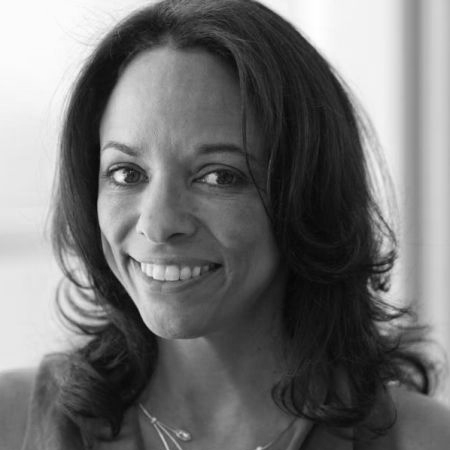 Ellen McGirt is an author, podcaster, speaker, community builder, and award-winning business journalist. She is the editor-in-chief of Design Observer, a media company that has maintained the same clear vision for more than two decades: to expand the definition of design in service of a better world. Ellen established the inclusive leadership beat at Fortune in 2016 with raceAhead, an award-winning newsletter on race, culture, and business. The Fortune, Time, Money, and Fast Company alumna has published over twenty magazine cover stories throughout her twenty-year career, exploring the people and ideas changing business for good. Ask her about fly fishing if you get the chance.
Related Posts
Related Posts