


July 10, 2025
Walkie talkie: An architect-turned-tour guide on designing presence in Lisbon
In a rapidly changing Lisbon, where tourists consume more than they observe, tour guides design not just routes, but memory — a subtle authorship of truth.
Tour guides are designers of presence and the present. I sometimes say I am in the business of selling oxygen for the mind — a moment to look up, to slow down, to let the city seep in through the cracks. It is a job that can be delirious, frivolous, and factual all at the same time. Our work, daunting and direct, is to make memories.
Even after a career as an architect, being a guide in Lisbon has made me rethink what it means to design. Design, at its best, doesn’t just say “go here” — it quietly suggests how to be here. A good building is argued into existence, step by logical step, until the experience makes sense. And in a way, that’s exactly what I do now. I design experiences, not elevations. The logic still matters, but now it’s delivered in anecdotes, in tone, in pacing. I help people understand that a building covered in beautiful tiles isn’t just beautiful, it tells a story: from the importance of pattern making, to the history of mining and extracting cobalt, to a history of cross-cultural exchange and national identity. I guide people not just through streets, but into states of mind — slightly less rushed, slightly more awake.
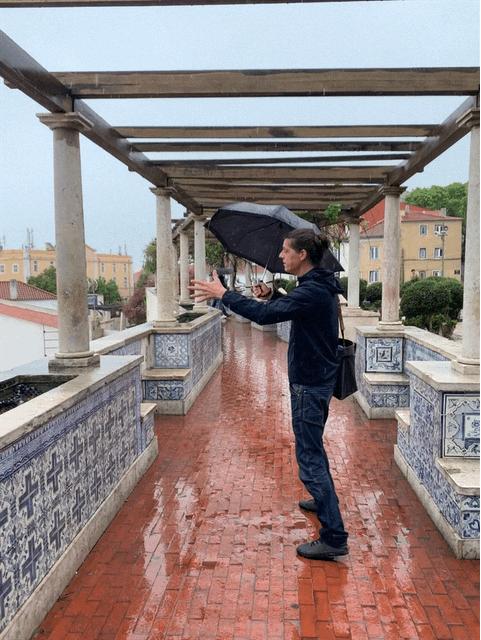
In Lisbon, this craft is especially layered. I’ve been watching it for years now. The city has shifted under my feet — not just physically (although the cobblestones do a pretty good job of that on their own), but spiritually. In Portugal, tourism is booming. In 2024, tourism grew by 9.3%, following a 19.2% surge in 2023 — a record-breaking year when overnight stays grew by 37% and tourism revenue increased by 18.5%. The Secretary of State for Tourism, Nuno Fazenda, called this a “structural change” for tourism. This does not come without its challenges.
Gone is the typical — the quiet charm that first made people fall for this place. The rehabilitation of Lisbon’s historic center has mainly focused on the development of hotels and short-term rentals, leading to intense gentrification, social exclusion, and a localized housing crisis — doubling the average price per square meter in the last 10 years. Investors bring their capital, creating a housing market that is detached from the realities of local incomes and social needs. “Where are the locals?”, my clients ask. Not here.
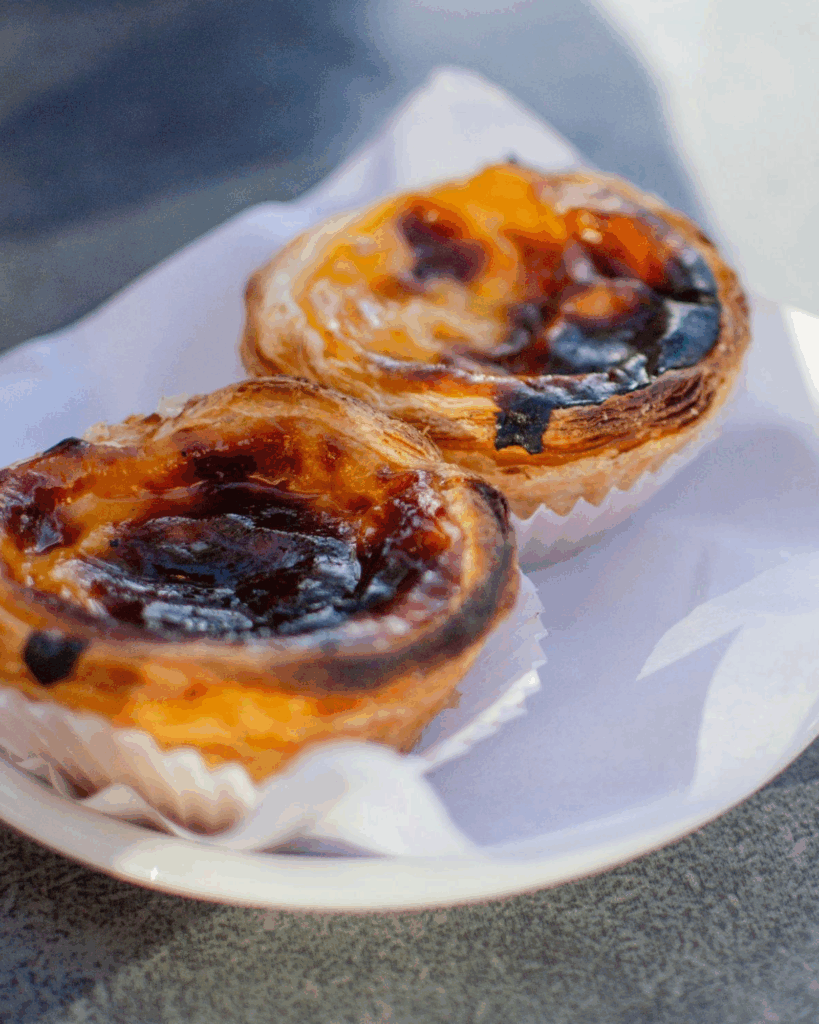
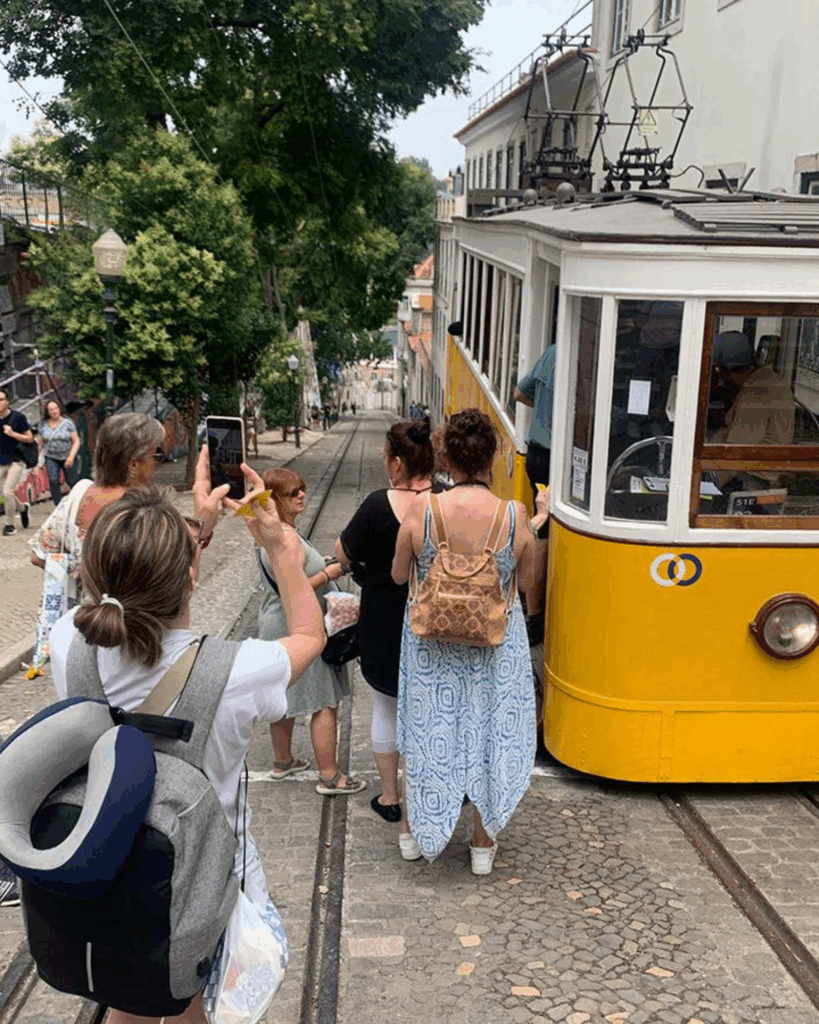
Foreign investment curiosity and local identity crisis has killed the community. And in its place, new habits are forming. Chief among them: queuing. There are queues in front of curated brunch spots, in front of tiled façades and panoramic selfies, for pastel de nata, the yellow tram, churches, and national monuments. The city has become a stream. A continuous, shimmering scroll.


What most visitors don’t realize is just how spatially illiterate many of us have become. We’re taught to look, but not to see. To move through cities as consumers, not as readers.
Some clients are keen to move through my “office” — the city — with speed and ambition. They want the views, the lists, the iconic shots. Consuming a city often means chasing quick hits—pastel de nata, pork sandwiches, scenic seafood spots. Lisbon has become a stage for that kind of instant satisfaction, curated and clickable. And fair enough—the city delivers. It’s a buffet of curated pleasures, designed with tourist appetites in mind.
But when I walk the city with clients, I read the city with them, not just as a menu. I translate the desire for the delicious into something more lasting: social history, emotional texture, the quiet politics of who serves and who gets served. It’s not about denying the joy of a good custard tart, it’s about offering something to digest afterward.
And then there’s the deeper challenge — the one that haunts many of us working in this space: to create emptiness within a full city. To carve out solitude in a sea of visitors. To offer a pocket of quiet attention in a place constantly being recorded, uploaded, hashtagged — a break in the scroll.
Tourism, after all, is a strange balance of adaptation and relaxation. But guiding it, shaping it, designing the experience — that’s something far more deliberate. As a guide, I’m adapting to the weather, the political climate, the route, the sudden desires of my clients. Watching for wonder. Watching for disconnection. Responding, subtly, to both.
There’s a bit I do about the 1755 earthquake that always gets a chuckle — saints! sewage! seismology! sweets! — followed immediately by a sincere reflection on how tragedy reshapes space. The destruction of Lisbon, on November 1, 1755, led to many changes: a new sewage and drainage system in the heart of the city, the expulsion of the Jesuit order out of Portugal, the emergence of seismology as a scientific discipline, and the proliferation of the Port wine industry.
Sometimes I catch myself mid-tour thinking, “This is just me playing my greatest hits,” and other times I find myself genuinely astonished all over again, standing in front of a façade that catches the light just right, or watching someone connect dots they didn’t know were there.
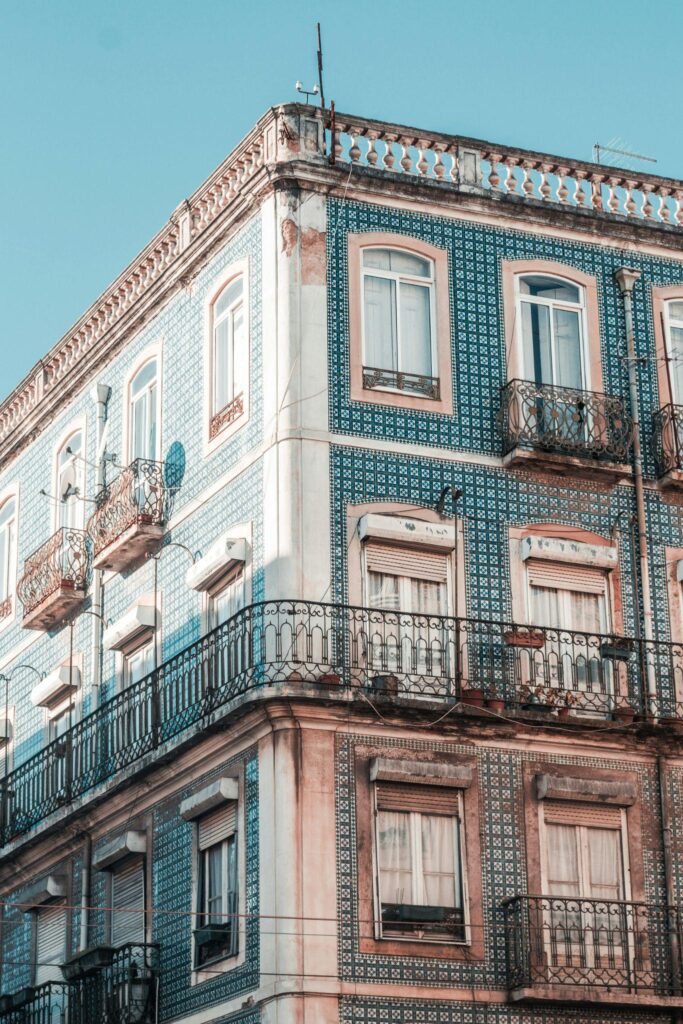
I try to shift, gently, visitors’ inclination to consume. I invite people to walk slower. To breathe in the volume of a space. To notice the curve of a building, the conversation between a Roman foundation and a Moorish wall, to see the ghost of an imperial ambition still clinging to a street name. I want them to read the city like a palimpsest — its margins, its edits, its half-erased intentions.
I want them to understand how different neighborhoods connect, how to navigate the hilly layout and narrow streets, and how to bring physical and social geography together. And most importantly, introduce a bit of architectural awareness — a feeling that transcends the litany of ephemeral stories about this city.
Tour guiding, like architecture, is about shaping experience. But unlike buildings, tours must breathe. They flex, they improvise. No two clients are the same, no two walks follow the same line. That’s the shift: from permanence to presence. From monuments to moments. From building walls to building atmosphere.
Observed
View all
Observed
Share on Social


By Bert de Muynck
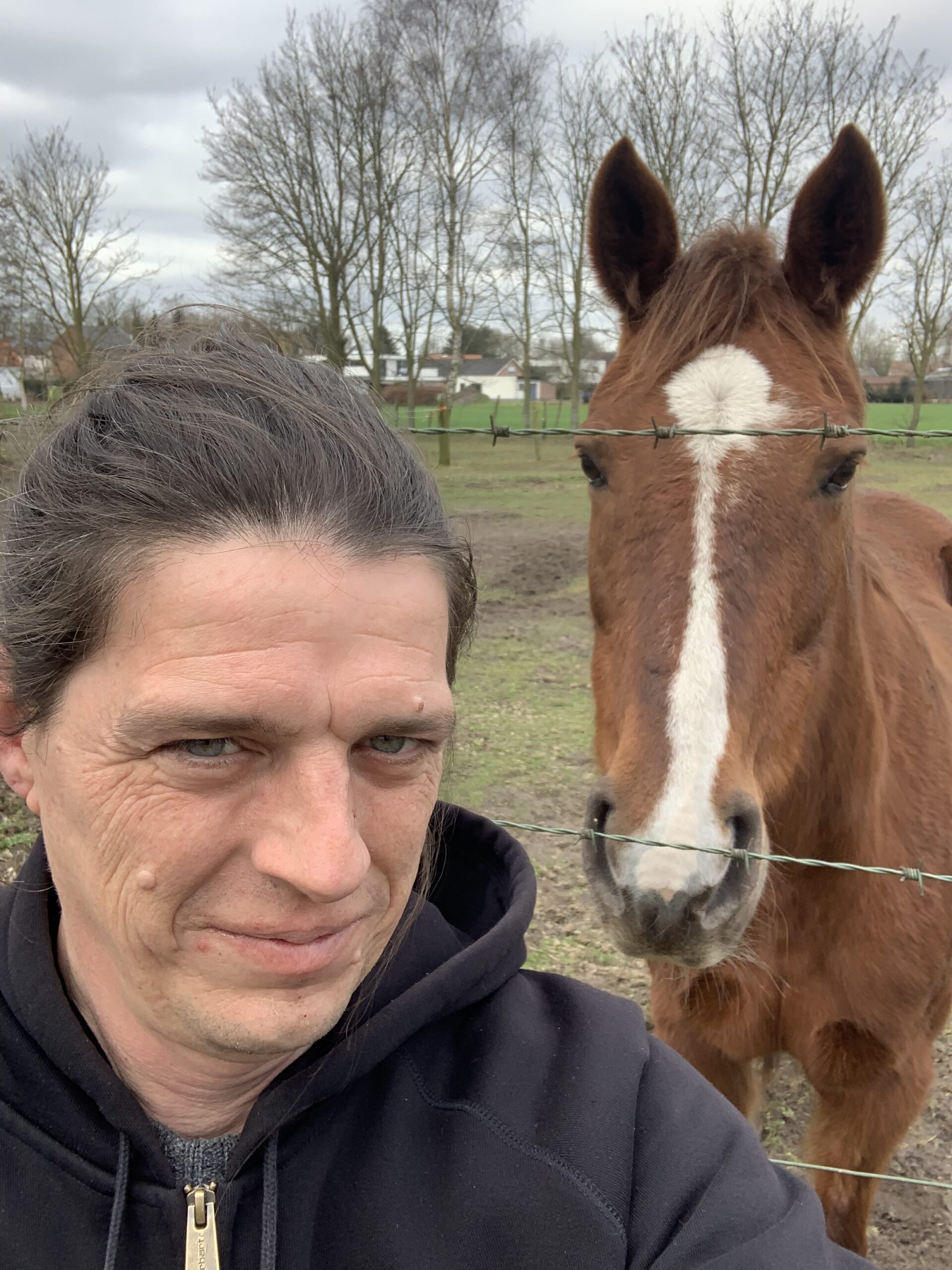 Bert de Muynck [Belgium, 1977] is an architect, writer, architecture critic, and co-director of MovingCities. He lived and worked in Amsterdam [2001-06], Beijing [2006-09], Shanghai [2009-18], and now Lisbon [2018-…], alternating between the world of academic appointments, exhibition design, architectural curating, consultancy, publication, and private guiding and hospitality. Established in Beijing in 2007 by Bert de Muynck (1977, Belgium) and Mónica Carriço (1978, Portugal), MovingCities operates as embedded architects, engaging in publishing, collaboration, research, and public programs. They have led research, lectures, and workshops across China, Israel, Italy, Sweden, the Netherlands, Finland, and Indonesia.
Related Posts
Business
Kim Devall|Essays
The most disruptive thing a brand can do is be human
AI Observer
Lee Moreau|Critique
The Wizards of AI are sad and lonely men

Business
Louisa Eunice|Essays
The afterlife of souvenirs: what survives between culture and commerce?
Architecture
Bruce Miller|Essays
A haunting on the prairie
Related Posts
Business
Kim Devall|Essays
The most disruptive thing a brand can do is be human
AI Observer
Lee Moreau|Critique
The Wizards of AI are sad and lonely men
Business
Louisa Eunice|Essays
The afterlife of souvenirs: what survives between culture and commerce?
Architecture
Bruce Miller|Essays