


Ellen McGirt|Fresh Ink, The Design of Horror | The Horror of Design
November 7, 2025
What happens when the social safety net disappears?
From haunted woods to social design: how horror, empathy, and infrastructure reveal what it really means to cope.
“Don’t follow the cat into the woods. That’s how they lure you in.”
It was sage advice from my editorial right-hand, Delaney Rebernik. One of our cats, the more outgoing of our two black rescue shorthairs, Eddie, has always been fond of escaping and wandering.
We’d learned the hard way to put a GPS tracker on him and quickly found that he often chose to visit — typically when I was home alone — an undeveloped woodsy area a mile or so from our home. It was far enough away from any suburban subdivision to feel like its own forgotten place; it was overgrown and wild, with occasional crumbling outbuildings and ancient handheld farm implements dotting the thick woods.
In short, it looked like the Blair Witch’s cousin lived there.
In theory, I was more afraid, at least for Eddie, of the coyotes we occasionally heard. Still, standing on the side of the remote road at midnight, watching my dauntless cat emerge from the obviously haunted woods, only to turn tail and defiantly walk back in, I told Delaney I’d officially had it. “It’s a common theme — dark spirits use pets to trick you,” she smiled, in lieu of the cat management tips I’d expected. “Don’t go after him, whatever you do.”
This is how I learned of her interest in the dark arts of entertainment horror.
Her knowledge is near encyclopedic, matched only by her enthusiasm for the practitioners of the genre. She has a near-uncanny ability to connect the dots between the human desire to experience terror and the artist’s ability to unearth the things we are actually afraid of.
Which is why I was equal parts thrilled and intrigued when she pitched an autumnal Design Observer editorial “takeover” celebrating spooky season from a design perspective. “As a dark coper, I’ve long used horror to make sense of life’s trials and better understand the world around me,” she writes in the package opener. Watching the editorial gems work their way through the newsroom — we’re wrapping up this week — it struck me that this package revealed a truth I hadn’t fully grasped before.
The ability to cope is, at its core, an outcome of good design.
“Do you know how hard it is to design a kiosk that people won’t end up punching in the interface?” a cheeky airport designer once told me. I’ve been thinking about him a lot lately, and his tales of harried travelers losing their shit in airports, and how quickly we refer to the unexpected interruptions we encounter as “nightmares” come to life.
Watching the social safety net be snipped, piece by piece, with no redesign plan in place, it’s easy to miss the unseen benefits of the invisible infrastructure that quietly enables human stability. Losing it will be its own kind of nightmare. At the time of publication, the Trump administration has agreed only to partially continue funding the Supplemental Nutrition Assistance Program (SNAP) benefits, which were slated to pause today, and on a delayed schedule.
Some 1 in 8 Americans rely on these funds to feed themselves or their families, a design problem in search of empathy. For Ana Flores, a busy entrepreneur whose revenue plummeted after the pandemic downturn, SNAP became a temporary, unexpected lifeline. “So what happens to the founders of those 70% to 90% of startups that fail?” she asks on her Substack. “We are expected and encouraged to risk it all, yet there is no safety net for the very engine of capitalism.”
The scaffolding of an equitable society remains invisible, by design. Only when it is kicked down do you hear the screams.
Reviewing our growing collection of the deeply creepy, one theme stands out to me: humans are the persistent problem in any nightmare scenario. Or, as Toronto-based writer and researcher Sanaphay Rattanavong notes in his exploration of doomsday aesthetics, the “bunker mentality” begins with the dangerous assumption that your neighbors are a threat, rather than essential to your survival. “But for all this misdirected ire, doomsday culture’s endurance and reach — both as strong as ever thanks to digital amplification — belie a horrifying truth: complex systems are fragile,” he writes. “From supply chain and power grid failures to societal division sown by social media, today’s designed world seems to be in disarray.”
That’s an insight worth screaming about.
With all apologies to modern-day Cinderella stories, we can’t mock, manipulate, or disfigure ourselves into meaningful human connections, no matter how hard we continue to try.
What horrifies you? How are you coping? Send up a flare.
Ellen McGirt
Editor-in-Chief
Ellen@designobservercombigscoots-stagingcom-cn.b.tempurl.cc
This is the web version of The Observatory, our (now weekly) dispatch from the editors and contributors at Design Observer. Want it in your inbox? Sign up here. While you’re at it, come say hi on YouTube, Reddit, or Bluesky — and don’t miss the latest gigs on our Job Board.
Big Think
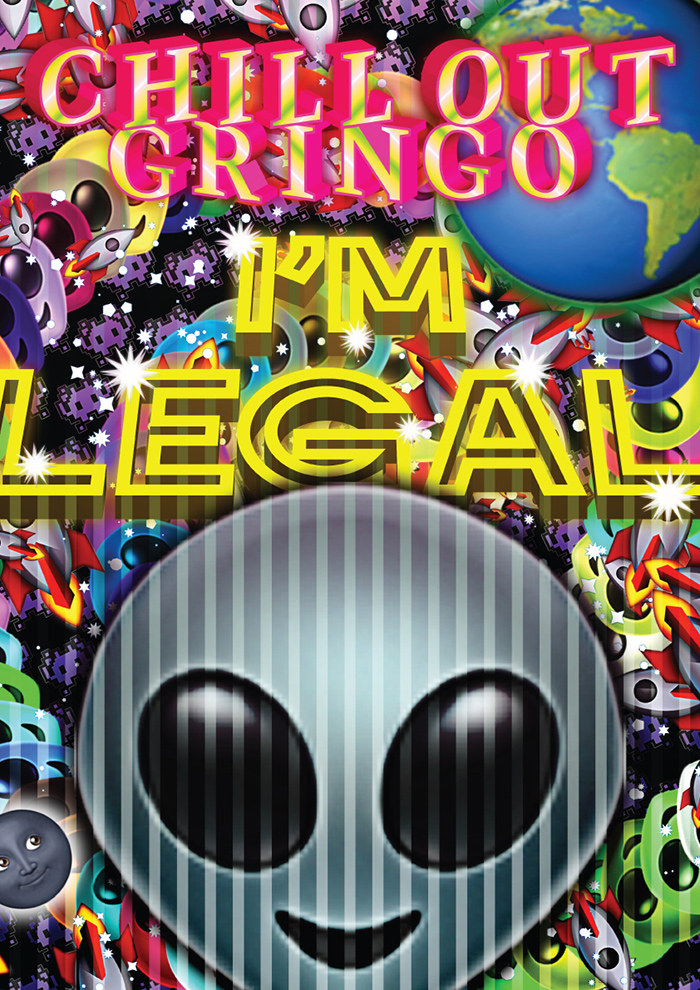
“[In 2015], I wanted to quit being a graphic designer,” began Satoru Nihei, a graphic designer and experimental artist. It was a difficult time, and depression was taking hold. “I couldn’t see myself reaching anywhere close to where I wanted to be with my design practice. I was losing my faith, my sense of hope, my belief in myself. And I was exhausted.”
When despair makes creation feel impossible, sometimes the only way forward is through the work itself. In On Darkness, Doubt, and Design, Nihei found renewal in a yearlong experiment with imperfection, proving that even in darkness, the act of making can be its own form of light.
It was quite the plot twist: the relief came in the form of an elaborate self-prank. What if part of his practice became leaning into the fear by making the worst work possible? The kind you’d be horrified to submit to a client?
Happenings
The JournalismAI Festival, supported by the Google News Initiative, is November 11–12. It’s a free, in-person and online convening of journalists, editors, and media leaders designed to explore the practical applications and future of AI in journalism. More here. (JournalismAI is a project of Polis, the journalism think-tank at the London School of Economics and Political Science.)
The 2025 AICAD Symposium, “Engaging Values,” is November 12–14 at the Pratt Institute in Brooklyn. This year’s convening focuses on the intersection of values with art, design education, and practice. Registration and information here.
The Design + AI Summit is November 13–14, online. It’s an essential how-to event that helps designers leverage the power of AI to create high-quality work more efficiently, featuring 12 sessions from internationally renowned experts covering practical techniques for mastering generative AI tools. From the good people at Print Magazine.
Design Leadership Summit is November 17–19 in downtown Toronto. It’s a conference aimed at design leaders, promising talks, workshops, and roundtables “for design leaders who want frank dialogue and tactical playbooks.” Register here.
Marketing AI Institute is holding a virtual AI Agencies Summit November 20. Everything you need to know, here.
Fortune Brainstorm Design Conference is December 2 in Macau. Fortune’s premiere event explores the intersection of business, technology, and design. This year’s theme is “Future Tense: Prototyping Tomorrow.”
BODW, or Business of Design Week, is December 3–5 in Hong Kong. One of Asia’s major annual design/business events, the conference brings together creative and business leaders to talk innovation and brand strategy and do some broad design-industry networking. This year’s theme is “Curiosity Ignites Design Innovation.”
Observed
What are you observing? Tell us.
How to rebuild Jamaica? The destruction is mind-boggling, and the assessment work has barely begun.
Four urgent lessons from Puerto Rico’s hurricane recovery. Island recovery is different, says disaster recovery expert Ivis García. “As a researcher who has extensively studied disaster recovery in Puerto Rico after Hurricane María in 2017, I know that the decisions Jamaica makes in the days and weeks following the disaster will shape its recovery for years to come.”
CNET offers three easy ways to help the food-insecure: support food banks, check for state assistance, and spread the word on special meal programs. (DoorDash has one.) Let’s add a fourth: Check in with others, especially young, low-wage colleagues, and parents with young kids.
Nike posts a future award-winning ad after the LA Dodgers’ nailbiter victory in the World Series. (Bonus: it trolls Drake!)
The NYC mayoral primary take you didn’t know you needed: the bodega-inspired aesthetic of the Zohran Mamdani campaign’s visual identity. “Nobody would credit Zohran Mamdani’s campaign graphics for his win, but they were, like his campaign, like nothing else in politics,” writes Christopher Bonanos, doing the Lord’s work, in Curbed. Meet Forge, a tiny design co-op, and designer Aneesh Bhoopathy, formerly of Queens and now living in Philadelphia. 1/2
Oh, and what is a design co-op, you ask? From Forge’s website: “Though we are a small team at the moment, we are constituted as a co-op, which means we operate as a democratic workplace and ascribe to the seven cooperative principles,” as set forth by the International Cooperative Alliance. And they donate labor to causes they care about. Take that, capitalism. 2/2
Japanese game studios are calling foul on Sora. The Content Overseas Distribution Association (CODA) — a Japanese anti-piracy organization representing numerous media and video game companies — has issued a written statement asking OpenAI to stop using its members’ content to train their LLMs.
On the Waymo to San Diego, Detroit, and Las Vegas.
Equator is a new magazine of politics, culture, and art. Check it out at equator.org.
Claude is going deep. Anthropic tells Axios that its most advanced systems are learning not just to reason like humans “but also to reflect on, and express, how they actually think.” Okay.
What would a “deeper and messier” architecture look like? In his book, Learning from the Local, British architect Piers Taylor champions a local, contextual approach to architecture that’s climate-resistant and responsive to culture.
Finally, a Buzzfeed quiz for the type nerds. Can you identify these popular television shows from the font alone?
Job Board
Assistant Professor of Graphic Design at The University of Southern Mississippi, Hattiesburg, MS.
Senior Designer at Scanner, San Francisco, CA.
Assistant Professor, Design and Disability, School of Design San Francisco State University, San Francisco, CA.
Department Head of Media Arts, Design, and Technology (MADT) at North Carolina State University, College of Design, Raleigh, NC.
Associate Dean of Research, College of Design, Architecture, Art, & Planning at University of Cincinnati, Cincinnati, OH.
Head of Department of Architecture at The Hong Kong Polytechnic University, Hong Kong.
Curiosity + cats

In good weather, Ed can clock up to five miles a day on his tracker device.
This is the web version of The Observatory, our (now weekly) dispatch from the editors and contributors at Design Observer. Want it in your inbox? Sign up here. While you’re at it, come say hi on YouTube, Reddit, or Bluesky — and don’t miss the latest gigs on our Job Board.
Observed
View all
Observed
Share on Social


By Ellen McGirt
 Ellen McGirt is an author, podcaster, speaker, community builder, and award-winning business journalist. She is the editor-in-chief of Design Observer, a media company that has maintained the same clear vision for more than two decades: to expand the definition of design in service of a better world. Ellen established the inclusive leadership beat at Fortune in 2016 with raceAhead, an award-winning newsletter on race, culture, and business. The Fortune, Time, Money, and Fast Company alumna has published over twenty magazine cover stories throughout her twenty-year career, exploring the people and ideas changing business for good. Ask her about fly fishing if you get the chance.
Related Posts

Business
Louisa Eunice|Essays
The afterlife of souvenirs: what survives between culture and commerce?

Arts + Culture
Alexis Haut|Interviews
How production designer Grace Yun turned domestic spaces into horror in ‘Hereditary’ and heartache in ‘Past Lives’

Architecture
Bruce Miller|Essays
A haunting on the prairie

Music
John Morrison|Analysis
‘6 Feet Deep:’ the hidden history of horror and occult imagery in rap music
Related Posts
Business
Louisa Eunice|Essays
The afterlife of souvenirs: what survives between culture and commerce?
Arts + Culture
Alexis Haut|Interviews
How production designer Grace Yun turned domestic spaces into horror in ‘Hereditary’ and heartache in ‘Past Lives’
Architecture
Bruce Miller|Essays
A haunting on the prairie
Music
John Morrison|Analysis