Xintian Tina Wang|Events, New York City
September 18, 2025
Your tailormade revenge dress? There’s an app for that
Making its runway debut at NYFW, Neuono promises perfectly fitted, custom garments from a selfie. As AI enters the atelier, questions loom large about labor and artistry.
The runway went dark, and all eyes turned to the massive screen. Lines of text appeared inside a glowing prompt box: “create my revenge dress.” The words dissolved into digital sketches, the sketches unfurled into fabric patterns, and, finally, the animation faded out. When the lights snapped back on, a model in the exact red dress from the sketches strode onto the stage. The crowd erupted in aha noises as a design leapt from screen to runway, an unsettling awe pervading the room as fashion unfolded without the designer ever appearing.
Prompt: create my revenge dress. Courtesy THDR Group
The design was powered by Neuono, a mobile app from Australian luxury collective THDR Group, making its runway debut at New York Fashion Week 2025. First soft-launched at London Tech Week in June, the AI-powered app promises to bring couture within reach of anyone with a smartphone. The process is straightforward: once a user uploads a selfie and completes a body scan with their phone’s camera, the app generates an avatar with their dimensions and, for this reporter, a very loose semblance of their features. Then, through a text prompt — much like ChatGPT — the user describes the garment they want. Within seconds, the design appears on their avatar with a price tag attached, ready to move into small-batch production.
Sean Fagan, Neuono’s co-founder and technology lead, argues that this business model tackles two of fashion’s oldest headaches: poor fit and overproduction. It also, he says, marks an advancement in on-demand fashion. Whereas many platforms take measurements and “dabble in customization,” Neuono is distinctive in its ability to deliver a garment as good as tailormade from a simple scan and prompt-based personalization.
As the luxury fashion industry eyes up tech to overcome the significant slowdown it’s seen in recent years, artistry hangs in the balance: what is gained or lost when design can flourish without the designer? AI-powered apps like Neuono, while promising solutions to some of fashion’s biggest challenges, also risk deepening its oversights.
“The fashion industry is built on long-standing inequitable power structures, and there is a real risk that the rise of AI could entrench and amplify these imbalances,” says Sara Ziff, founder and executive director of the Model Alliance, a nonprofit advocacy organization dedicated to advancing labor rights in the fashion industry. “AI adoption must prioritize consent, fair compensation, human creativity, and shared power.”
How it works
To ensure fit without a tape measure or rough size charts, Neuono guides users to enter their height and weight, and then capture two photos — one from the front, one from the side — using their phone’s camera. From those images, and based on trend analysis and styling algorithms trained on some 70 billion combinations of fabrics and trims, the app’s proprietary SenseThread engine builds a 3D body map that its builders say is accurate enough to generate custom patterns in seconds. The result is a system capable of generating everything from cocktail dresses to jeans, tailored to each user’s exact dimensions. Most pieces retail around $260 USD, with production taking about four weeks and shipping adding another three to four days.
Delivering on this promise depends on a carefully selected supply chain. Fabrics are sourced globally, including from premium mills in England and Europe, while construction is handled by five partner factories in China. According to Fagan, these partners were chosen not only for technical skill but also for their ability to adapt to a very different workflow: on-demand, app-generated orders rather than mass runs.
Courtesy THDR Group
Fit, waste, labor, and fashion’s old problems
Aside from addressing poor fit and overproduction, the Neuono model creates a more stable and sustainable rhythm for factory workers compared to the boom-and-bust cycles of traditional mass manufacturing, Fagan says. “For workers, that means less waste, more purpose-driven work, and a system that values quality over volume,” he explains.
Yet critics see limits in AI-powered apps. Thomai Serdari, professor of marketing at NYU Stern and director of the school’s luxury and retail MBA, notes that while on-demand systems may reduce overproduction, AI itself carries a “dangerously negative environmental impact.”
“While AI-generated models and on-demand garments are an interesting curiosity, they cannot replace models, garment workers, or creatives,” Sedari says. “The traditional supply chain respects the people who are part of it.”
Fagan acknowledges the debates and stresses Neuono’s safeguards against plagiarism. “Even if a user enters a direct prompt like ‘make me a dress like a Louis Vuitton monogram,’ the engine won’t replicate it. Instead, it interprets style cues and generates something unique,” he says.
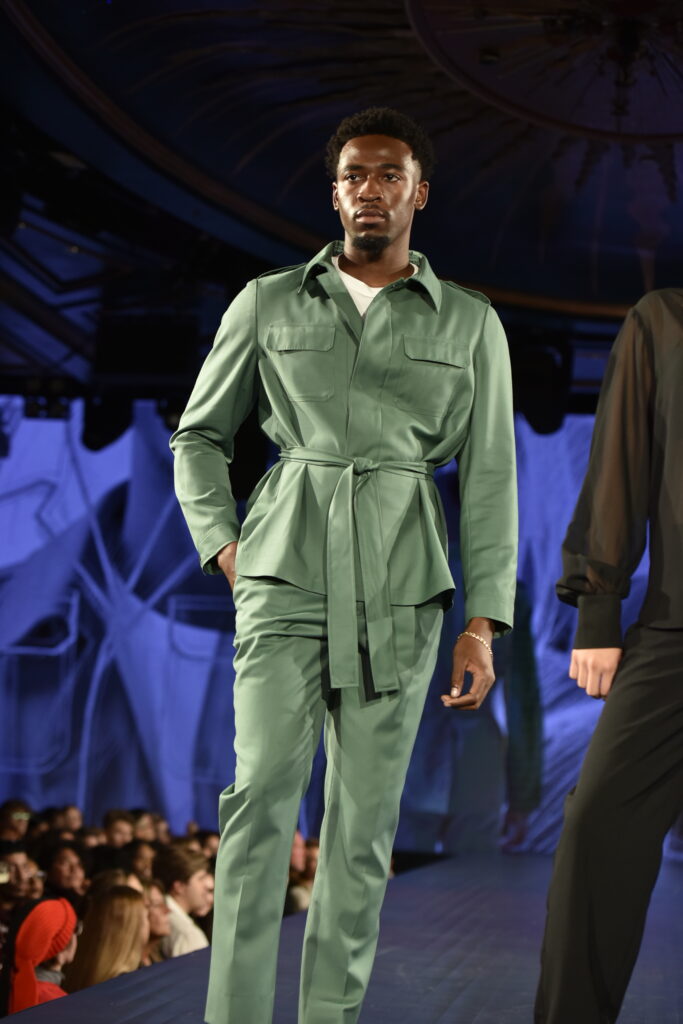
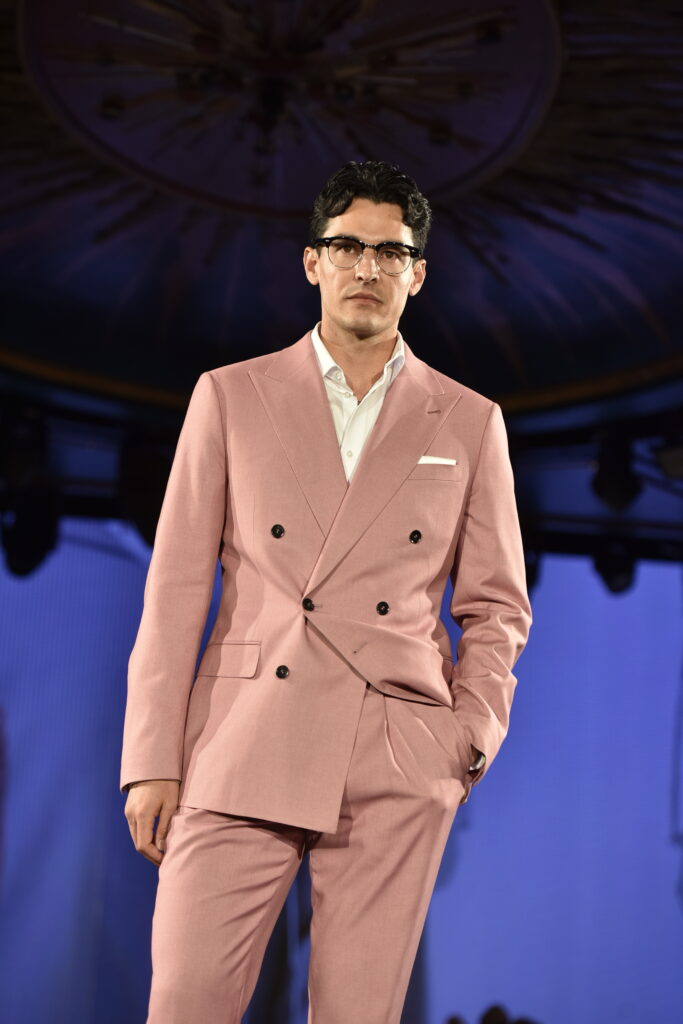
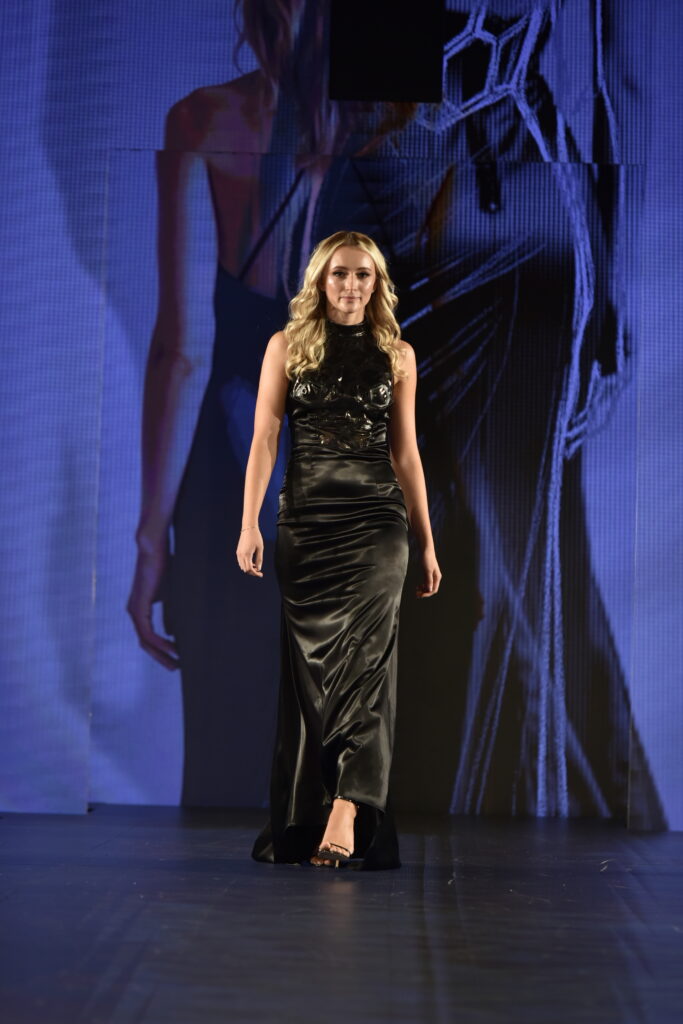
Courtesy THDR Group
‘Fashion Workers Act’ and the push for accountability
Ziff notes that AI is not inherently harmful but says its adoption must be paired with legal protections and enforceable standards to ensure a fairer fashion industry. Model Alliance is the leading organization behind the Fashion Workers Act, which took effect on June 19. Building on more than a decade of the Alliance’s advocacy, the New York State law is the first of its kind in the United States to regulate model management companies.
Crucially, the law also establishes protections against abuse of generative AI, and closes a gap that had allowed agencies and clients to exploit models’ images without their knowledge or compensation. For the first time, models must give clear, written consent before any digital replica of their likeness can be created or used. In this way, the Act not only tackles longstanding labor abuses but also sets a precedent for regulating AI in fashion.
Fagan, for his part, agrees that such regulation is necessary. “AI is moving fast, and the industry needs shared guardrails to protect creators, workers, and consumers,” he says. “Standards around data privacy, IP protection, and ethical production should be non-negotiable.”
As the industry rushes to embrace AI, the question is not only what these tools can create, but also who is protected, who is overlooked, and what new inequities may emerge. I’m so used to meeting the designer after a show, asking how their cultural background and lived experience shaped the work; at the Neuono show, the lights cut abruptly with a video that declared, “fashion the unthinkable.” I couldn’t help but wonder: if the human designer disappears, what happens to the artistry that anchors fashion itself? The app-rendered designs felt pared down, basic compared with the more daring collections presented by other designer brands at New York Fashion Week. The future may be computational, but its fairness — and its flare — will depend on the human safeguards stitched into its seams.
Observed
View all
Observed
Share on Social


By Xintian Tina Wang
 Xintian Tina Wang is an NYC-based journalist covering cultural stereotypes, innovation, and arts. Her recent work appears in TIME, ELLE, Brooklyn Rail, ARTNews, and Observer, etc. She is also president of the Asian American Journalist Association (AAJA) New York Chapter. Learn more at www.xintianwang.net.